

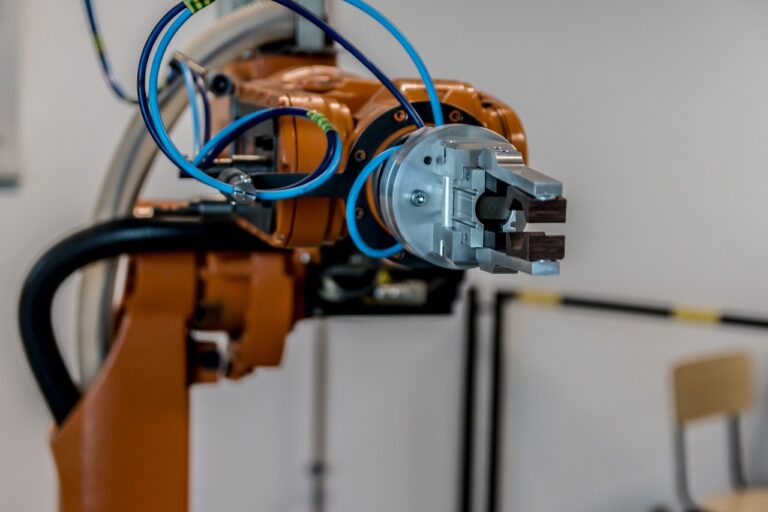

The role of artificial intelligence in modern cybersecurity
 By
Leah Morrison
By
Leah Morrison

In the shifting landscape of digital defense, the boundaries that once confined battles to physical territory have all but disappeared. Today, lines of code, not tanks, move across invisible frontiers, probing for vulnerabilities in banking, healthcare, infrastructure, and everyday communications. The surge of relentless, sophisticated cyberattacks in recent years has forced organizations and governments to reconsider traditional security paradigms. Within this context, Artificial Intelligence (AI) stands out as both the watchful sentry and the evolving chess master, learning, adapting, outpacing threats that move at machine speed. Crucial players like Darktrace, CrowdStrike, Palo Alto Networks, FireEye, Cisco, McAfee, IBM Security, SentinelOne, Splunk, and Fortinet have woven AI deeply into their defensive strategies, redefining not only how attacks are detected and mitigated, but also how digital trust is preserved in a volatile cyber ecosystem.
How Artificial Intelligence Became the Game-Changer in Cybersecurity
The early 2000s saw cybersecurity as a battle of firewalls and anti-virus lists, but modern threats are more elusive, often hiding in plain sight across vast, dynamic networks. AI has fundamentally shifted the paradigm, moving defenses from reactive responses to proactive prediction and mitigation. High-profile companies, including Palo Alto Networks and IBM Security, have pioneered AI-driven detection frameworks, enabling real-time responses and lowering the volume of false alerts that can overwhelm analysts.
- Adaptive Learning: AI systems continuously learn from new data, identifying novel attack vectors rapidly.
- Automation at Scale: Tasks such as malicious file quarantine and network segmentation can happen in milliseconds, outpacing human reaction time.
- Behavioral Analysis: Sophisticated AI models can flag subtle anomalies in user and device behavior, detecting insider threats and zero-day exploits.
- Robust Collaboration: Solutions from Splunk or FireEye aggregate and correlate insights from global attack data, enhancing detection capabilities for all clients.
These advancements have forced both defenders and attackers to evolve, underscoring the necessity of human-AI partnership in the cyber arms race.
AI’s Vision: From Massive Data to Actionable Intelligence
Unlike traditional security tools that depend on signatures or static rules, AI sees a digital world of patterns, recognizing a subtle uptick in login attempts or a shift in communication style. CrowdStrike and SentinelOne have invested in anomaly detection driven by machine learning, flagging fleet-of-foot intruders in near real-time. This capability goes beyond simple alerts, alerting teams to behavioral “ripples” that the human eye might never spot.
- AI models distill millions of logs per second into actionable signals.
- Unsupervised learning deciphers what “normal” looks like and reacts to deviations instantly.
- Deep learning identifies disguised or evolving malware, unaffected by superficial code changes.
Each of these deployments demonstrates how AI transforms raw data into a powerful, ongoing threat radar, providing both speed and adaptability that traditional systems lack.
Strategic AI Applications: Intrusion Detection, Threat Intelligence, and Response
Today’s AI strategies go far beyond basic automation. Major vendors such as McAfee, Palo Alto Networks, and Splunk have built adaptive platforms capable of protecting gigantic, decentralized digital ecosystems.
- Intrusion Detection and Prevention: Machine learning models in solutions like Fortinet and Cisco IDS/IPS adapt detection rules as new threat behaviors emerge.
- User Behavior Analytics: Platforms from IBM Security and Darktrace continuously learn from user and device activity, revealing lateral movement or suspicious privilege escalation.
- Automated Incident Response: AI-driven playbooks in SIEMs (e.g., Splunk, McAfee) automatically initiate containment and mitigation protocols within seconds of breach detection.
- NLP-powered Threat Intelligence: Natural language processing engines parse threat feeds, security blogs, and even the dark web, spotting emerging attack strategies, as integrated by FireEye and SentinelOne.
By leveraging these strategies, security operations centers drastically reduce their time-to-respond and outpace the most adaptive threat actors.
Performance and Efficiency: AI’s Edge in Real-Time Defense
AI’s integration in security infrastructure also raises questions about latency, scalability, and computational demand. The leading vendors, such as Cisco, SentinelOne, and Fortinet, are addressing these with efficient model architectures and scalable cloud deployments to ensure both security and business agility. Recent benchmarks show:
- High-accuracy anomaly detection can operate below sub-second latency thresholds.
- Hybrid AI models blend traditional rules with machine learning to minimize false positives and avoid alert fatigue.
- Resource-optimized AI delivers high security efficacy, even in edge environments and IoT.
Ultimately, the ability to balance fast analysis with minimal overhead is key to defending modern, distributed environments.
AI Under Attack: The Double-Edged Sword of Adversarial Tactics
AI is not only a defender; threat actors are adopting AI to craft personalized phishing campaigns, generate deepfakes, and design adversarial examples to bypass detection. In response, organizations, led by innovators like FireEye, Palo Alto Networks, and CrowdStrike, are hardening their AI systems through robust adversarial training and ongoing red-teaming with simulated attacks.
- Attackers use AI to automate vulnerability discovery and coordinate complex, multi-stage breaches.
- Advanced persistent threats (APTs) often employ evasive tactics powered by machine learning to remain undetected for weeks or months.
- Defenders counteract by training AI on adversarial samples, employing detection models that adapt under attack in real time.
This adversarial arms race has blurred the lines between attacker and defender, making ongoing model robustness and resilience a cornerstone of cyber defense in 2025.
Ethics, Privacy, and Trust: Navigating the Risks of AI Surveillance
While AI’s access to behavioral and traffic data enables unprecedented protection, it raises serious privacy and ethical concerns. Platforms from IBM Security and Darktrace emphasize privacy-preserving technology, such as federated learning and explainable AI, to balance threat monitoring with regulatory and ethical accountability. The most mature solutions:
- Incorporate differential privacy and anonymization in behavioral analytics.
- Offer transparent threat models and provide explanation for security decisions.
- Enable human-in-the-loop validation for high-impact automated actions.
Organizations adopting AI-driven security frameworks must remain vigilant not only against external threats but also against the misuse or overreach of their own defensive tools.
Future Directions: Quantum, Federated Learning, and Beyond
The horizon for AI in cybersecurity is continuously expanding, with emerging paradigms focused on transparency, collaboration, and resilience. Quantum computing promises to reshape both encryption and decryption, requiring AI to adapt with quantum-resistant threat models, an area where IBM Security and Palo Alto Networks are investing. Meanwhile, federated learning enables organizations to pool intelligence without sharing sensitive raw data, a strategy championed by Fortinet and Darktrace.
- Explainable AI (XAI) enhances trust by making model decisions interpretable, vital for compliance-heavy environments.
- AI-driven cyber resilience technologies focus on self-healing and adaptive responses to keep critical infrastructure operational during attacks.
- Collaborative, privacy-preserving intelligence sharing is increasing detection scope while upholding stringent regulatory standards.
Each advancement moves the field closer to an era of defense defined by speed, collective intelligence, and ethical AI stewardship, ushering in digital trust fit for a world where threats change by the minute.
AI-driven Security in Practice: Lessons from the Front Lines
Integration of AI by leaders such as SentinelOne, CrowdStrike, and Splunk has transformed security operations from passive monitoring to dynamic threat hunting and automated incident response. Real-world data show:
- Organizations deploying AI-driven SIEMs cut incident response times by more than 70% compared to manual workflows.
- Behavioral AI outperformed static models, with detection rates exceeding 95% for zero-day and fileless attacks.
- Adoption of explainable and federated AI frameworks accelerated privacy-compliant intelligence sharing across financial and healthcare sectors.
These experiences underscore that while AI is not a panacea, in the hands of skilled teams, fueled by the innovation of industry titans, its potential to revolutionize cybersecurity is undeniable.