

How to Use Artificial Intelligence in a Science Job Application Without Replacing Your Experience
Researchers can use artificial intelligence to prepare applications and interviews, but the core evidence, voice and experience in a science job application must remain their own.
 By
Daniel Hargrove
By
Daniel Hargrove

Artificial intelligence can help scientists prepare a job application, particularly when researching an employer, checking clarity and anticipating interview topics. It is less suited to supplying the substance of a CV, cover letter or interview answer. That distinction matters as recruitment processes change: Nature reports that recruiters are increasingly using artificial intelligence tools to shortlist candidates for science roles, while jobseekers are also being encouraged to use such tools responsibly in their own preparation.
In brief
- Nature’s Careers team hosted a webinar on the growing role of artificial intelligence in science recruitment and job applications.
- The webinar addresses responsible use of artificial intelligence when drafting CVs, cover letters and interview questions.
- Nature reports that recruiters are increasingly using artificial intelligence tools to shortlist candidates for science jobs.
- A Gartner survey cited by Forbes found that nearly 40% of almost 3,300 applicants used artificial intelligence during their application process.
For applicants, the practical task is not to automate the application. It is to use a tool where it can assist with review and research, then retain responsibility for the evidence, wording and professional judgement that make an application credible. This applies whether the role is in a laboratory, a research institution, a scientific company or a related technical field.
Use it to prepare, not to substitute for your record
A Nature Careers webinar, now available on demand, examines the expanding role of artificial intelligence in science recruitment and how researchers can use it when preparing CVs, cover letters and interview questions. The session is framed around using the technology “responsibly and effectively,” rather than treating it as a replacement for an applicant’s work.
That is a useful boundary for scientific candidates. A CV should document real education, methods, research experience, publications, contributions and responsibilities. A cover letter should explain the connection between that record and the advertised position. Neither document becomes stronger simply because it contains polished but general language. The details that allow a hiring team to assess a candidate still have to be accurate, specific and owned by the person applying.
Advice reported by Forbes on the dos and don’ts of using artificial intelligence in a job search makes a similar distinction. Brian Elliott, chief executive of Work Forward, said he would use it to develop a better understanding of an employer and the kinds of people it hires. He said he would not use it to write a resume or cover letter in full, although he would consider its suggestions for grammar and clearer phrasing after writing the material himself.
For a science application, this points to a measured workflow. Write from source material first: the job description, your own CV, records of projects and the employer’s public information. Then use a review tool to identify awkward sentences, repeated wording or possible grammatical issues. The final version should still be checked carefully against the original facts.

Research the role and prepare questions with care
Employer research is one area where these tools may be useful. Forbes reports that Elliott would use them to understand a company, its work and the types of people it recruits. Margaret Burke, Principal, Talent Acquisition & Development Leader at PwC, also identified company research, possible interview questions and the market affecting an employer as valuable uses.
For researchers, this can support preparation for a specific conversation. An applicant might use a tool to turn public material into a list of themes to investigate, such as a department’s research focus, the scope of an advertised project or questions arising from the job description. The underlying information should still be traced to the employer’s own materials and other reliable sources. A generated summary can be incomplete or poorly framed, so it should be a starting point for checking, not the final basis for a claim in an application.
The same principle applies to interview preparation. Nature’s webinar includes discussion of interview questions, and Forbes reports that Burke considers technology helpful for preparing for questions that may arise. A candidate can use this support to rehearse explanations of their methods, decisions and results. But the answer delivered in an interview needs to reflect the candidate’s own experience. Burke told Forbes that applicants have to discuss their true experiences and that overly generic language can be apparent to interviewers.
This is especially relevant in science, where interviews may probe how a result was obtained, why a method was selected, what went wrong in an experiment or how a researcher interpreted an unexpected finding. A broad response cannot stand in for familiarity with the work. Preparation is valuable when it helps a candidate explain that work more clearly.
Keep the applicant’s voice and judgement visible
Burke’s advice, as reported by Forbes, is that artificial intelligence can tighten a resume and enhance a cover letter, provided the documents retain the candidate’s voice and experiences. That standard offers a direct test before submitting an application: could the applicant explain, defend and expand on every statement in the document?

If the answer is no, the wording needs reconsideration. This is not only a question of style. It is a question of whether the application accurately represents the person who may later be asked to discuss it. A useful review process can therefore include checking every claim against a CV, project record, publication list or other personal source, and removing language that is too broad to be supported by an example.
Forbes also reports findings from a Gartner survey of nearly 3,300 job applicants: nearly 40% said they had used artificial intelligence during their application process. Among users, 54% said they had used it to generate text for a resume or cover letter. The figure shows that the technology is already part of many applicants’ routines, but it does not establish that one approach works for every role or employer.
Clara Shih, founder and executive director of New Work Foundation, described two modes of use to Forbes: an “apprentice mode” for learning and a “productivity mode” for people able to evaluate the output. Her warning for people who are new to a task is not to delegate the learning phase. In an application context, that suggests early-career researchers may gain more from drafting, revising and learning the conventions themselves before relying on automated wording.
What changes for science jobseekers
The immediate change is not that every science application requires a technological assistant. Rather, candidates need to be deliberate about the role it plays. Recruitment teams are increasingly using such tools to shortlist applicants, according to Nature, while applicants may use them for research, drafting support and interview preparation. The two developments make clarity and verifiable detail more important, not less.
A strong application remains anchored in the applicant’s actual record: what they studied, what they contributed, what they learned and why the position fits their next step. For broader reporting on research and scientific work, WebSearchNews’ science coverage follows developments that shape the field in which those careers are built.
Used as a reviewer and research aide, artificial intelligence can support preparation. Used to replace the applicant’s experience or judgement, it risks creating a document that cannot carry the weight of an interview. The practical standard is straightforward: keep the evidence personal, check every assertion, and ensure the final application sounds like the scientist who will be asked to discuss it.
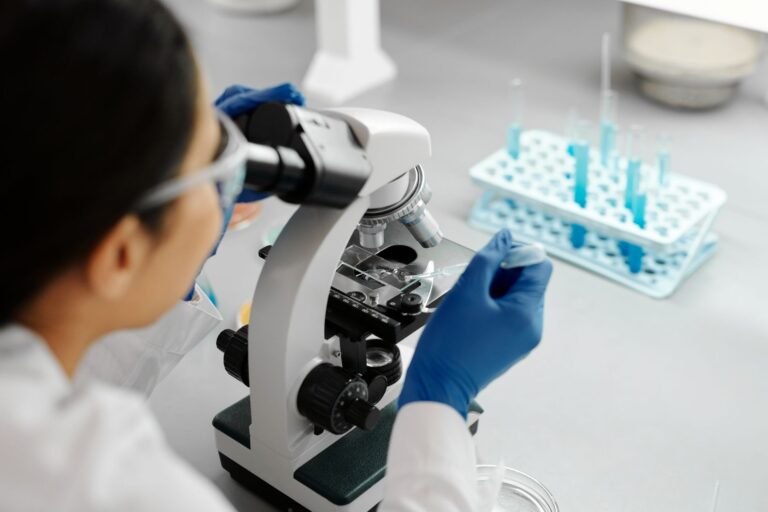
Featured image. Source: Pexels. Credit: Anna Shvets. License: Pexels License.