


How the ozone treaty is now reining in air conditioner gases
Leaking refrigerants cause about a third of cooling’s climate impact, and the 1987 Montreal Protocol, widened in Kigali in 2016, is now slowing the growth of the worst cooling gases.
 By
Ethan Reid
In brief
- Leaking refrigerants account for roughly a third of cooling’s climate impact; electricity makes up the rest.
- R-410A traps around 2,000 times more heat than CO2, kilogram for kilogram.
- The 2016 Kigali Amendment phases down HFCs, the gases in most current units.
- HFC-23 emissions far exceed what Kigali signatories officially report.
An air conditioner adds to global warming in two ways, and the refrigerant inside it is the part an international treaty can directly control. According to an analysis by atmospheric scientists Matt Rigby and Lucy Carpenter republished by Phys.org, the Montreal Protocol and its Kigali Amendment are already slowing the growth of the most problematic cooling gases, though one major gap remains unexplained.
Where cooling’s climate footprint comes from
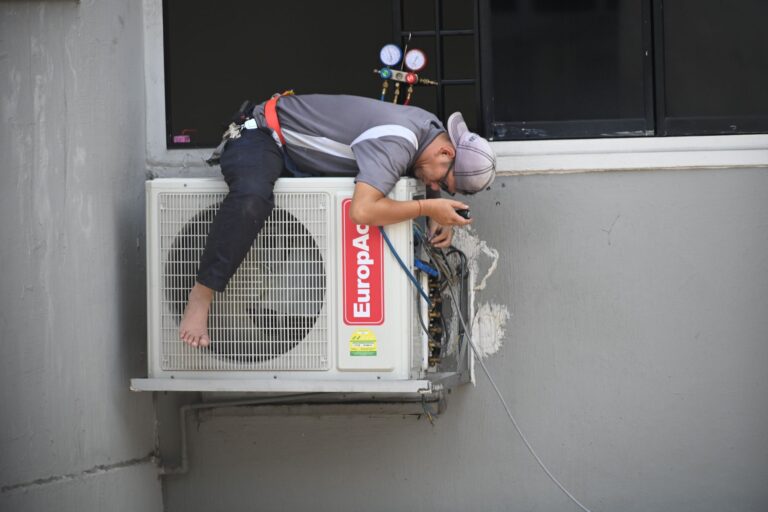
An air conditioner moves heat out of a room by pumping a refrigerant gas around a closed circuit. That circuit is never perfectly tight: some gas escapes while the unit runs for years, and more is lost when it is eventually scrapped. Many refrigerants are powerful greenhouse gases, which is why leaks matter.
Across the world, those escaped refrigerants represent roughly one-third of cooling’s climate impact. The remaining two-thirds comes from generating the electricity that powers the machines.
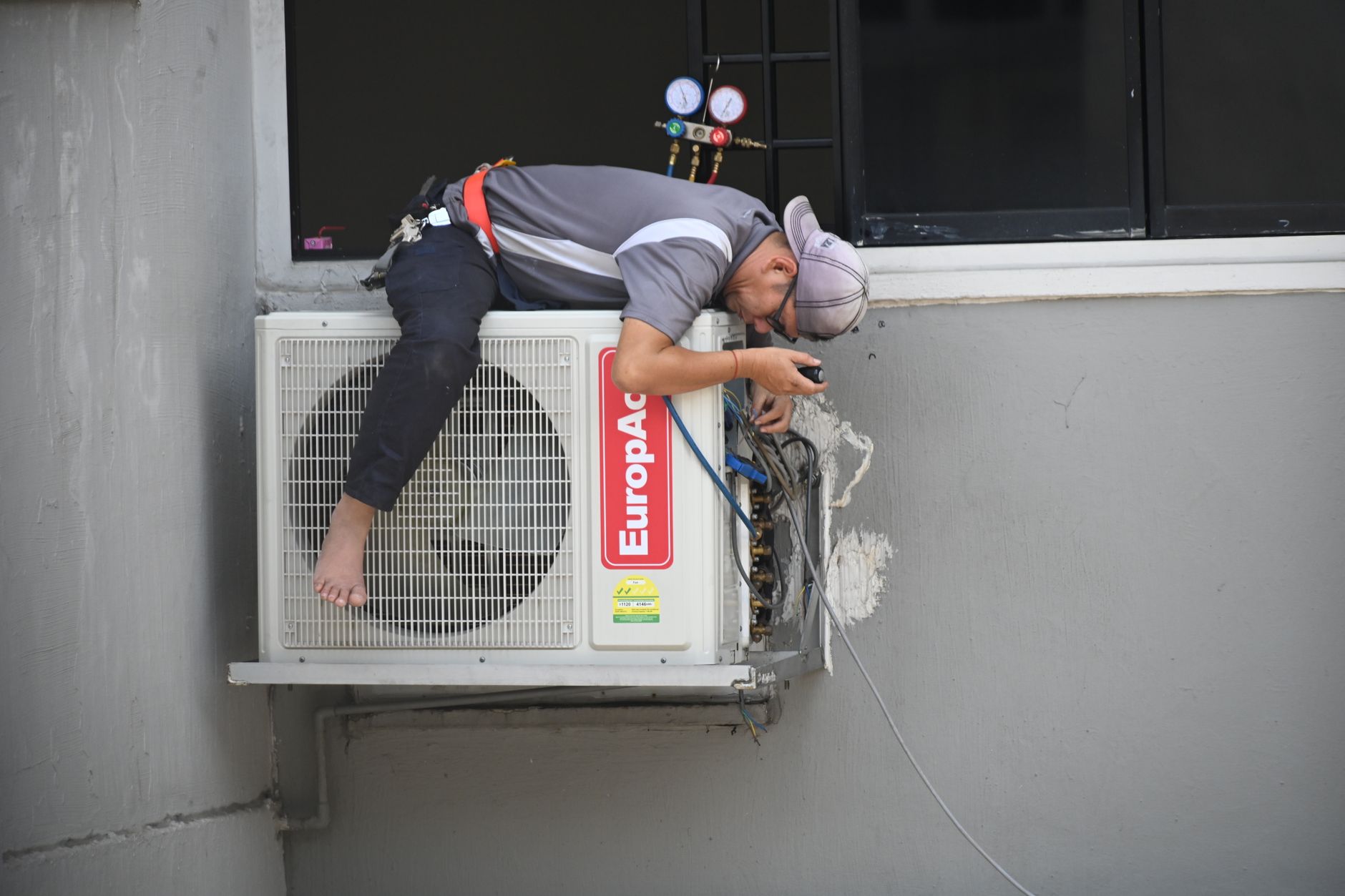
The label on your unit tells you which gas it holds. A recent installation in a home or office will probably read R-32, a single hydrofluorocarbon (HFC). Older equipment often reads R-410A, a mixture of several HFCs.
How strongly each refrigerant warms
That last figure is measured against roughly 1.2°C of warming already caused by human activity, so uncontrolled HFCs would be a substantial addition. Switching from R-410A to R-32 cuts the potency of what leaks, but R-32 remains a strong greenhouse gas.
From the ozone hole to Kigali
The treaty was not written with climate in mind. In the 1970s and 1980s, researchers found that chlorofluorocarbons (CFCs), then the dominant refrigerants, were eroding the stratospheric ozone that screens out ultraviolet radiation. The protocol and later amendments removed CFCs, tolerated HCFCs as a stopgap, and HCFCs in turn gave way to HFCs, which leave ozone untouched but heat the planet.

- Following the discovery of an ozone hole over Antarctica, countries sign the Montreal Protocol.
- The EU adopts its own rules to reduce HFCs.
- Parties meeting in Kigali, Rwanda, agree to phase down HFC production in favour of lower-warming gases, the first time the protocol targets gases solely for their climate effect.
Studies suggest that without the protocol, ozone holes might also have formed over the Arctic. The layer is now beginning to recover.
What the rules mean for buyers in Europe and the U.K.
The 2014 EU rules are what allow Europe and the U.K. to honour their Kigali pledges. For shoppers, that translates into concrete limits:
- Since 2020, portable units cannot use high-warming-potential gases.
- Since January 2025, new small split systems sold in the U.K. may no longer contain R-410A.
- By 2050, the EU intends to eliminate HFCs almost completely.
These dates apply to new equipment on those markets; they do not cover units already installed or sales elsewhere.
Is the treaty working?
The clearest test is the air itself. At Mace Head, a research station on Ireland’s west coast, instruments have tracked these gases without interruption since 1987, detecting them at a few parts per trillion. In 2019, its readings helped trace a revival of global CFC production, and emissions fell after a crackdown.
For HFCs, the picture is mixed. Their atmospheric abundance has risen substantially over the past decade, yet emissions growth has slowed and sits well below pre-Kigali projections. A 2025 study found that cooling’s climate impact could stay at or below today’s level despite much higher demand, but only if Kigali targets are met, machines become more efficient, passive options such as shading spread and electricity turns low-carbon.
One warning sign stands out. In 2025, scientists showed that emissions of HFC-23, the most potent HFC, far exceed the amounts officially reported by Kigali signatories. The shortfall equals just over half of the U.K.’s yearly greenhouse gas emissions, and researchers and governments are still investigating why.
Photo: Richard Low Hong / Pexels