


Securing Your Online Accounts With Habits That Actually Work
Many account takeovers start with reused passwords, fake login pages or forgotten recovery options. Here is how to close those gaps with a few durable habits.
 By
Leah Morrison
By
Leah Morrison
Most account takeovers do not involve clever hacking. They start with something ordinary: a password reused on several sites, a login page that looks right but is not, or a recovery option nobody ever reviewed. Securing your online accounts is less about technical skill than about a handful of habits applied consistently. This guide explains how those habits work and why each one matters.
In brief
- They start with something ordinary: a password reused on several sites, a login page that looks right but is not, or a recovery option nobody ever reviewed.
- Not all second factors offer the same protection, though.
- Most of them cost nothing, take little time once set up, and turn a typical account from an easy target into one that is not worth the effort.
Why one weak link puts everything at risk
When a website stores passwords poorly, or when a user is tricked into typing one on a fake page, that password ends up in lists traded among criminals. Automated tools then try the same email and password pair on hundreds of other services. This technique, often called credential stuffing, works because so many people reuse the same password. If your email account shares a password with a forgotten forum you joined years ago, the forum is effectively the weakest door to your inbox.
Your email account deserves special attention. Nearly every other service lets you reset a password by sending a link to your inbox, so whoever controls your email can quietly take over almost everything else. Treat it as the master key and protect it more carefully than any other account.
Length beats cleverness
A long passphrase made of several unrelated words is generally stronger and easier to remember than a short string full of substitutions. Attackers know the usual tricks, such as replacing a letter with a number or adding an exclamation mark at the end, and their tools try those variations first. What they cannot easily guess is a sequence of random words that has no personal meaning.
- Avoid names, birthdays, pet names, sports teams and anything that appears on your public profiles.
- Do not build passwords from a pattern you repeat, such as the same base word with a different ending for each site.
- Make every password unique. Uniqueness limits the damage of a single leak to a single account.
Let a password manager do the remembering
No one can memorize dozens of long, unique passwords, which is exactly why people fall back on reuse. A reputable password manager solves this by generating and storing a different strong password for every account, protected behind one strong master passphrase. Many managers also warn you when a saved password appears in a known leak and can refuse to fill credentials on a site whose address does not match the saved one, which offers a useful defense against lookalike pages.
Choose a manager that encrypts your data before it leaves your device, keep its master passphrase unique and never reuse it elsewhere, and store any recovery code it gives you offline in a safe place.
Add a second factor, and pick it wisely
Two-factor authentication means that a stolen password alone is not enough to get in. Not all second factors offer the same protection, though. In rough order of strength:
- Hardware security keys and passkeys, which are tied to the real website and cannot be handed over to a fake one.
- Authenticator apps that generate short-lived codes on your device.
- Codes sent by text message, which are better than nothing but can be intercepted or redirected through a hijacked phone number.
Enable the strongest option each service offers, starting with email, financial accounts, cloud storage and anything that can reset other accounts. Save the backup codes in a secure place, because losing your only device without them can lock you out permanently.
Recognize phishing before it works
Phishing succeeds by creating urgency: a supposed security alert, a package that cannot be delivered, an invoice you do not recognize. The message pushes you to act before you think. A few checks catch most attempts.
- Look at the actual address of the sender and of the link, not just the display name or button text.
- Be suspicious of any message that asks you to log in, confirm details or share a code you received.
- Instead of clicking, open the service by typing its address or using a saved bookmark, then check for any real notification there.
- Never read a one-time code aloud or type it into a page you reached from a message, because legitimate support does not ask for it.
Keep devices and recovery options in good shape
A strong password does little if the device typing it is compromised. Install system and browser updates promptly, since many updates fix flaws that are already being exploited. Use a screen lock on your phone and computer, install apps only from official stores, and remove browser extensions you no longer use, because extensions can read what you type.
Recovery settings are another overlooked gap. Review the backup email address, phone number and security questions on your important accounts. An old address that you no longer control, or a security answer that can be found on social media, gives an attacker an easy path around your password. Where a service allows it, replace guessable answers with random text stored in your password manager.
Build a simple routine
You do not need to fix everything in one afternoon. Start with your email and the accounts tied to money, move them to unique passwords and a strong second factor, then work through the rest over time. Every few months, check the list of devices and sessions signed in to your main accounts and remove anything unfamiliar, and delete accounts you no longer use, since an unused account is a risk with no benefit. If a service tells you it has suffered a breach, change that password at once, and change it anywhere else you used it.
No single measure makes an account unbreakable, but together these habits remove the easiest paths that attackers rely on. Most of them cost nothing, take little time once set up, and turn a typical account from an easy target into one that is not worth the effort.
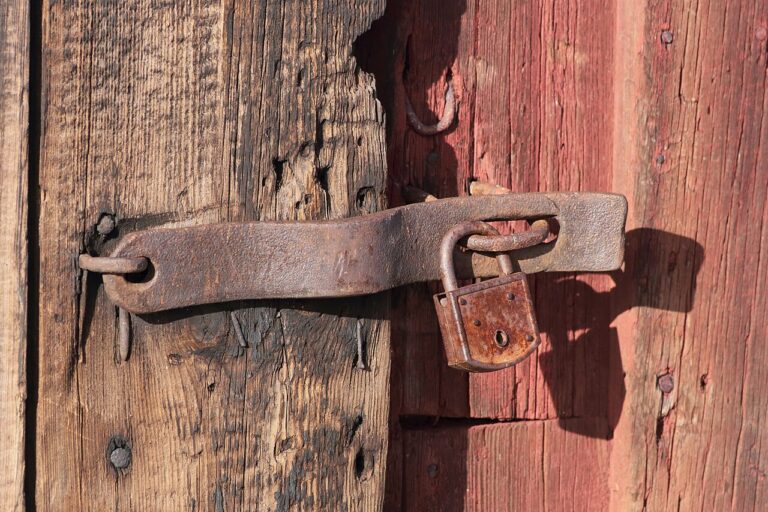
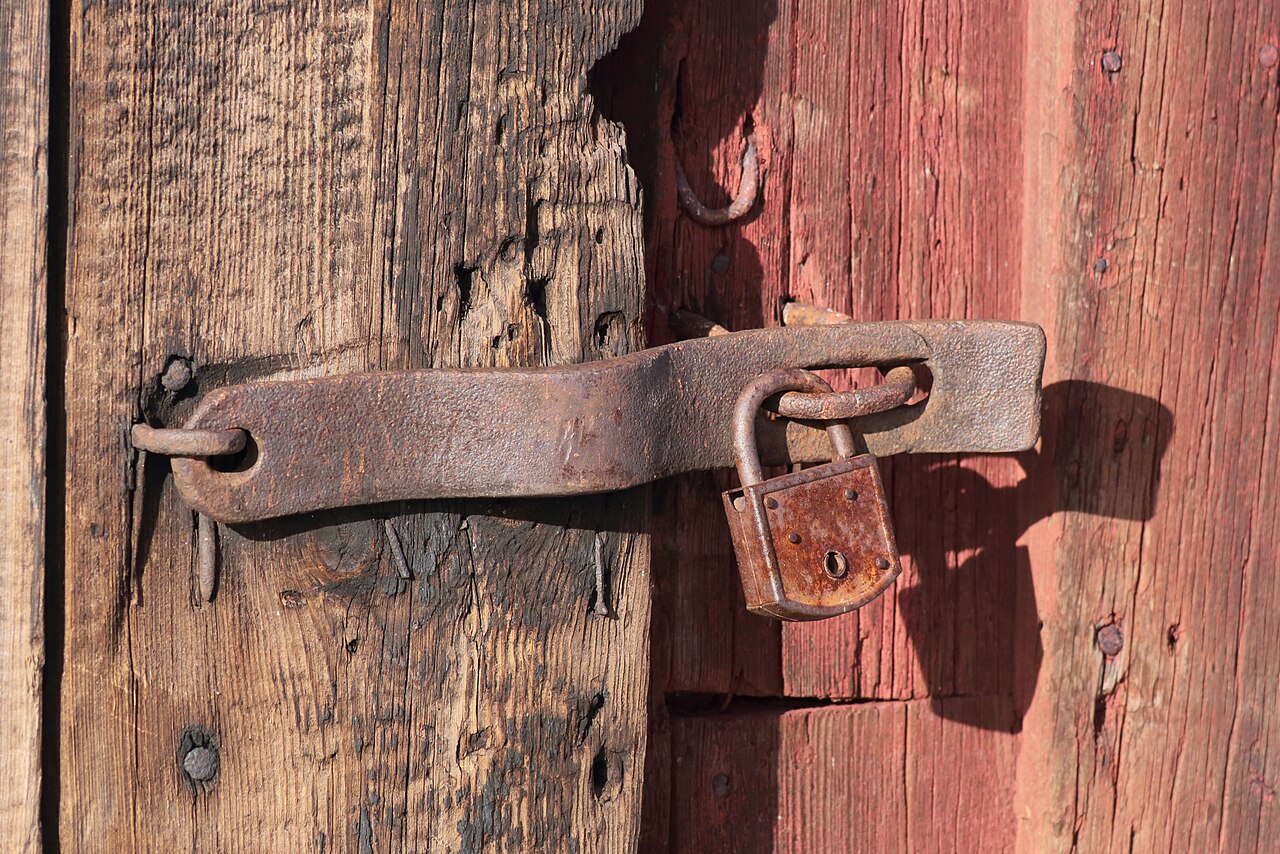
Featured image. Source: Wikimedia Commons. Credit: Estormiz. License: CC0.
Continue reading