

Former Toronto Soup Factory Planned for Photonic Quantum Manufacturing
A former Campbell Soup factory in west Toronto is planned to become a photonic quantum manufacturing site for Xanadu, supported by C$195 million in repayable federal funding.
 By
Daniel Hargrove
By
Daniel Hargrove
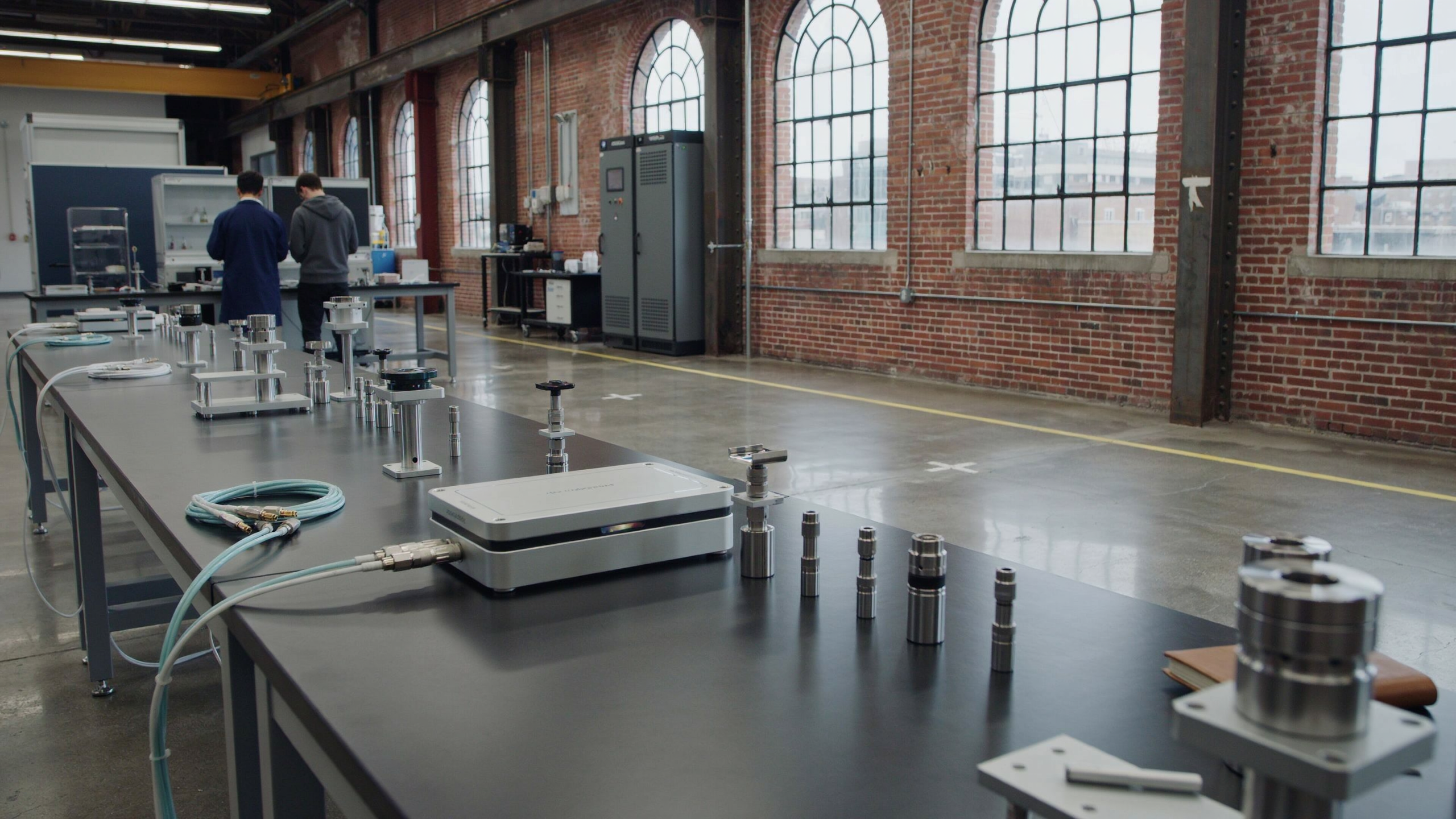
A former Campbell Soup factory in west Toronto is planned to take on a new role in advanced technology manufacturing. Xanadu Quantum Technologies intends to use the building for photonic quantum hardware, with a facility expected to cover 158,000 square feet, cost C$893 million and employ 275 people.
In brief
- Xanadu plans to convert a former Campbell Soup factory in west Toronto into an advanced photonic quantum manufacturing facility.
- The planned 158,000-square-foot site is expected to cost C$893 million, employ 275 people and receive C$195 million in repayable federal funding.
- The project focuses on light-based quantum hardware, while a fault-tolerant quantum computer remains a technical goal rather than a completed system.
The project is supported by C$195 million in repayable federal funding. The commitment is described as the Canadian federal government’s largest single financial commitment to quantum-technology manufacturing. It gives a physical scale to work that is often discussed through research milestones and experimental machines.
For readers following the Tech sector, the announcement is less about an immediate change in consumer services than about the manufacturing challenge behind emerging computing systems. Building a quantum computer requires more than demonstrating a chip or developing software. It also requires facilities able to produce specialized components and teams able to assemble and operate them.
From food production to photonic hardware
The former factory is intended to house advanced manufacturing for Xanadu’s quantum-computing work. Its proposed conversion turns an industrial building designed for food production into a site for highly specialized hardware, while the facility itself remains a plan rather than an operating plant.
Xanadu develops software and quantum computers that use light rather than electricity. In its approach, particles of light move through chips instead of electrical signals travelling through metal wiring. The company says its units largely operate at room temperature, unlike other quantum-computing systems that require substantial cooling.

That difference describes the design Xanadu is pursuing, not a guarantee that the planned factory will quickly deliver machines at commercial scale. Quantum hardware remains difficult to build reliably, and the factory is part of an effort to make the components and systems needed for the company’s longer-term goals.
The planned workforce and construction cost show that this is not simply an expansion of laboratory space. The project is aimed at manufacturing, a separate step from developing a promising device. Producing complex hardware repeatedly and at a larger scale can determine whether a technical approach moves beyond demonstrations.
Why reliable qubits remain central
A chip milestone does not complete the larger task
Quantum computers use qubits as their basic units of information. In June, Xanadu presented a chip capable of generating error-resistant photonic qubits. Reducing errors is important because quantum systems need dependable results before they can handle demanding calculations at scale.
Error-resistant qubits should not be treated as proof that a fault-tolerant quantum computer has already been built. The available details describe a manufacturing plan intended to support work toward that objective. They do not establish that Xanadu has completed such a machine or that quantum computers can currently break the encryption used by the public.
The distinction matters because quantum computing can attract broad claims about its possible applications. The confirmed development is narrower: a Toronto company working on light-based quantum hardware is preparing a manufacturing site and has secured repayable federal support for that effort.

Cybersecurity is part of the long-term context
A fault-tolerant quantum computer could have the capacity to break cybersecurity systems, Canada’s minister of artificial intelligence and digital innovation Evan Solomon said at the announcement. That prospect helps explain why quantum hardware is being viewed as an industrial and security issue, even though the capability remains a future technical target.
There is no indicated immediate shift in the security of everyday accounts, devices or online services. The significance lies in the direction of the project: manufacturing capacity is being planned for a field whose future systems could carry major implications for digital security.
The project’s most concrete measures remain the proposed building, the estimated C$893 million cost and the expected 275 jobs. Those figures describe the planned operation, not completed output or the performance of future quantum computers.
A manufacturing step with technical milestones still ahead
The federal funding is repayable, and it is tied to Xanadu’s manufacturing plans in Canada. A report on the funding announcement places the commitment within Canada’s effort to support domestic quantum-technology manufacturing.
For now, the transformation of the former soup factory is an early industrial step. It gives Xanadu a planned base for producing photonic hardware and adds a manufacturing dimension to its quantum-computing work. The larger milestones remain unresolved: reliable quantum systems must still be built, and a fault-tolerant computer has not been established by this announcement.
Featured image. Source: Ideogram. Credit: Ideogram. License: Ideogram API Terms.
Continue reading