


Soft optical fibers as sensors that feel a surface bend
A guide to how light-guiding rubber fibers can report curvature, how a sheet of them rebuilds its own shape, and where such soft sensors might help.
 By
Daniel Hargrove
By
Daniel Hargrove
A flexible surface that knows exactly how it is bent sounds like science fiction, yet the building blocks are surprisingly simple. Engineers have long used light to sense shape, because light travels along an optical fiber in a predictable way and changes when the fiber is deformed. When those fibers are made soft and stretchable and arranged across a sheet, the result is a skin-like material that can report its own curvature. This guide explains the principle, what makes soft versions different from the glass fibers in telecommunications cables, and where such sensors could be useful.
In brief
- Engineers have long used light to sense shape, because light travels along an optical fiber in a predictable way and changes when the fiber is deformed.
- A single fiber describes the bending along a line.
- Answers to these questions separate a clever demonstration from a technology that people will actually wear or rely on.
How a fiber carries light
An optical fiber is a thin strand with a transparent core surrounded by a layer called cladding. The two materials are chosen so that light entering one end keeps bouncing back toward the core instead of escaping through the sides. This is what lets a fiber carry a signal around corners and across long distances with little loss. In a conventional cable the core is glass, the cladding is a second glass or plastic layer, and the whole thing is intentionally protected from anything that would disturb the light.
For sensing, that stability is turned on its head. If the fiber is bent sharply enough, some light no longer meets the boundary at an angle that keeps it inside, and a part of it leaks out. The sharper the bend, the greater the loss. By measuring how much light arrives at the far end compared with how much was sent in, an electronic circuit can estimate how strongly the fiber is curved at that moment.
Why soft materials change the picture
Glass fibers break if they are bent too far and cannot stretch. Fibers made from clear silicone or other rubbery polymers behave very differently: they bend, twist and stretch repeatedly without cracking. That makes them suited to anything that moves against a body or inside a machine, such as a glove, a sleeve, or the skin of a soft robot. The trade-off is that rubbery materials lose more light along their length, so a soft fiber works over short distances and calls for sensitive detectors.
Designers can also shape the fiber to encode more information. Roughening one side of the core, for example, makes the loss depend on the direction of the bend, not just its size. A fiber treated this way can tell whether it is curling toward one side or the other. Placing several fibers across a sheet in a deliberate pattern provides readings from many positions, and an algorithm can combine those readings into a picture of the whole surface.
From many readings to a full shape
A single fiber describes the bending along a line. A sheet needs more. Engineers therefore weave or embed fibers in crisscross or zigzag patterns, so that each region of the sheet is crossed by several of them. Software then solves a reconstruction problem: given the amount of light lost in every fiber, which three-dimensional surface would produce exactly that pattern? The more fibers and the smarter the layout, the better the reconstruction tends to be.
Calibration matters a great deal. Before the sheet is used, it is bent into known shapes, and the system learns how the light readings correspond to them. Because soft materials stretch, age and respond to temperature, calibration needs to be repeated or at least checked from time to time. Redundancy helps too. When many fibers overlap, the sheet can keep working if one of them is damaged, because the others still carry enough information to estimate the shape.
Where soft shape sensors could be used
The appeal lies in contact. A rigid sensor feels awkward against skin, and it can be a hazard when a robot works near people. A sensor that is entirely compliant is gentler and often safer. Possible uses include:
- wearable garments that capture body posture for games, animation or remote control of a machine;
- rehabilitation tools that record how far a joint moves during an exercise session;
- soft robot skins that tell the machine how its own body is deformed;
- medical or industrial devices that need to follow a curved surface closely.
It is worth being careful with such lists. A concept demonstrated on a laboratory bench is not the same thing as a product tested in hospitals or on factory floors. Moving from one to the other involves durability, washing, comfort, cost and safety checks, and many promising sensors never make the trip.
Strengths and limits
Light-based soft sensors have clear strengths. They do not rely on electrical signals running through stretching wires, they are immune to many electromagnetic disturbances, and they can be built from inexpensive materials. They also have limits: the electronics that generate and read the light are usually rigid and sit at the edge of the sheet, the signal weakens in long fibers, and the readings can drift as the material wears.
For readers following research in this area, a few questions are useful. How accurate is the reconstruction, and how was that measured? What happens after thousands of bends? How thin can the fibers become before the signal is too weak? And is the system sensing a real surface or just a simulated one? Answers to these questions separate a clever demonstration from a technology that people will actually wear or rely on.
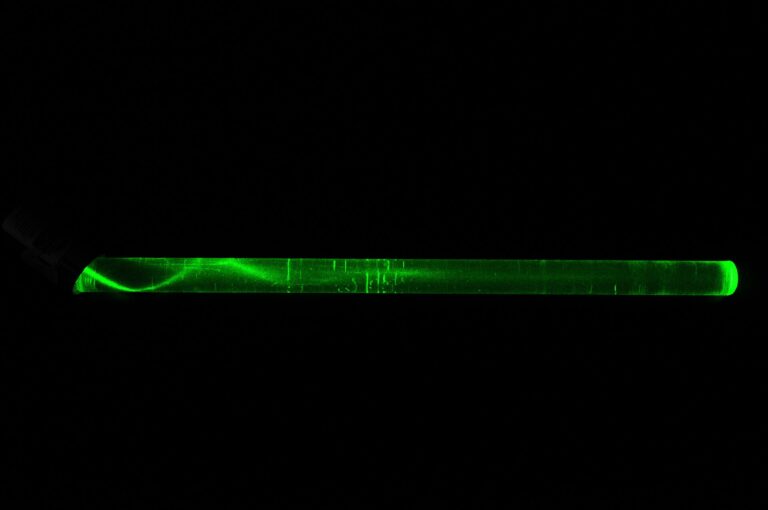
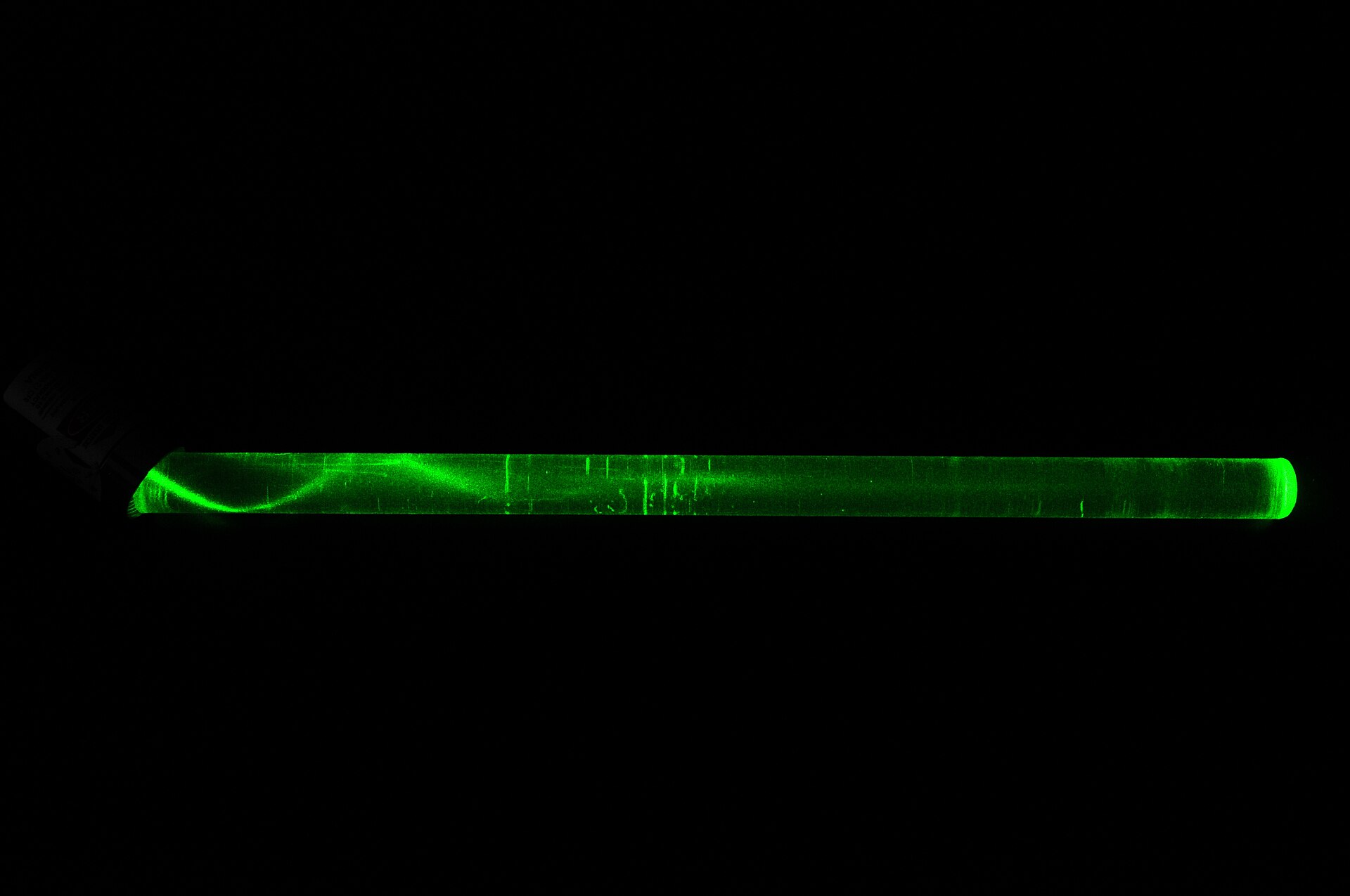
Featured image. Source: Wikimedia Commons. Credit: AZToshkov. License: CC BY-SA 3.0.