
“Elon Has Lost His Grip”: Tesla’s Plummet Exposes AI Obsession as Profits Crash: Financial Panic Erupts!
 By
Ethan Reid
By
Ethan Reid

| IN A NUTSHELL |
|
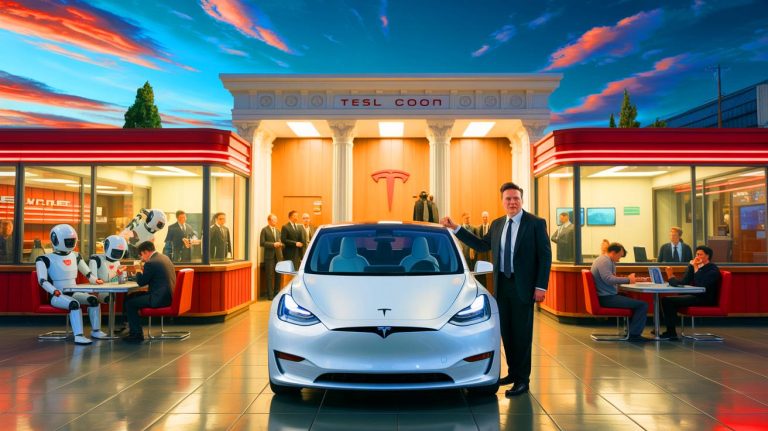
Elon Musk’s recent presentation of Tesla’s financial results was expected to be a reassuring affair, but it turned into an unexpected monologue. As Tesla announced a halving of its profits and a declining revenue, the focus shifted dramatically. Musk chose to talk about artificial intelligence, autonomous taxis, and his humanoid robot, Optimus. This stark contrast has left analysts and investors questioning whether Tesla remains an automotive manufacturer or has become a sci-fi startup. The following sections delve into the implications of this shift and its impact on Tesla’s future.
Tesla Reports Plummeting Results But Diverts Attention
On Tuesday, July 22, Tesla held its quarterly conference with investors, revealing alarming figures. The company reported a revenue of $22.5 billion, reflecting a 12% year-over-year decline, while its net profit was halved. The immediate consequence was an 8% drop in stock value. Surprisingly, the company remained silent about these poor results. Tesla didn’t address stagnant sales, the collapse of margins, or the almost complete silence regarding European deliveries. It seems that manufacturing and selling cars have taken a backseat, despite being the core of Tesla’s revenue.
This apparent strategy of diverting attention from financial woes to futuristic projects is a risky gamble. By not engaging in a detailed analysis of its declining figures, Tesla risks alienating investors who are looking for transparency and accountability. The silence leaves many to wonder whether the company is deliberately shifting focus to steer clear of difficult questions about its current market position.
Musk Talks Robotaxis and AI but Avoids the Difficult Topics
Instead of dissecting the disappointing performance, Elon Musk chose to discuss his technological projects. He highlighted the testing of robotaxis in Austin, the strategic future of artificial intelligence, and Optimus, his humanoid robot, which is supposed to revolutionize our lives someday. Musk vaguely acknowledged that “we are in a strange transition phase” but provided no clarity on the future direction. Meanwhile, he carefully sidestepped burning issues such as the disappearance of tax incentives, low deliveries, and declining interest in the European market.
Analysts like Ross Gerber, a historical investor, interpret this as a “diversion strategy”, a term that is becoming increasingly common in discussions about Tesla. Instead of calming the markets, Tesla seems to prefer maintaining the dream and betting on escapism. This approach, while intriguing, raises questions about the company’s long-term viability and its commitment to addressing current operational challenges.
Tesla Dreams of a Technological Future but Neglects Its Role as a Manufacturer
This discourse raises a crucial question: Does Tesla still believe in its role as an automotive manufacturer? Certainly, production lines are operational, and vehicles are being delivered. However, Musk’s messaging no longer emphasizes these activities. Now, enthusiasm appears reserved for futuristic projects, whose real-world applications remain uncertain. By prioritizing speculative technology over industrial performance, Tesla risks losing its leadership position. Competitors like BYD and Hyundai are focusing on concrete products, competitive pricing, and pragmatic communication.
This strategic shift could pose significant risks for Tesla. While innovation is key to staying ahead, neglecting the core business of vehicle manufacturing can lead to a loss of market share. As other car manufacturers continue to deliver tangible results, Tesla must find a balance between its visionary projects and the practical realities of the automotive industry.
The Time Has Come for Musk to Clarify Tesla’s Vision
The July 2025 conference was not just disappointing; it exposed a growing gap between Musk’s futuristic vision and market expectations. Shareholders are demanding tangible answers, a clear strategy, and a solid plan to steer the ship back on course. Today, Tesla stands at a crossroads. It can continue to captivate with bold promises, but it must also reconnect with industrial execution, rebuild trust, and reacquaint itself with reality. Elon Musk seems to have made his choice, but will investors continue to follow his lead?
As Musk continues to push the boundaries of what’s possible, Tesla must address its current challenges to maintain investor confidence. The balance between innovation and practical execution is delicate, and the company’s future success depends on its ability to manage both. Can Tesla evolve into a tech giant without losing its automotive roots, or will it need to redefine its core identity to survive in the competitive landscape?
Continue reading