


Australian Space Program Criticized: “Our Goals Are Pathetically Small” After 12-Second Flight Ends in Tragic Crash
 By
Ethan Reid
By
Ethan Reid
| IN A NUTSHELL |
|
Australia’s aspirations to establish itself as a significant player in the global space industry faced a setback with the recent failure of a locally developed rocket. The Eris rocket, from Gilmour Space, was expected to symbolize a new era in Australian aerospace. However, it flew for only 12 seconds before crashing. This technical failure has highlighted broader challenges within the Australian space sector, raising questions about its readiness and long-term vision. Despite its potential, Australia has struggled to capitalize on opportunities, and this incident underscores the need for strategic direction and investment.
An Innovative Hybrid Rocket Hampered by Technical Issues
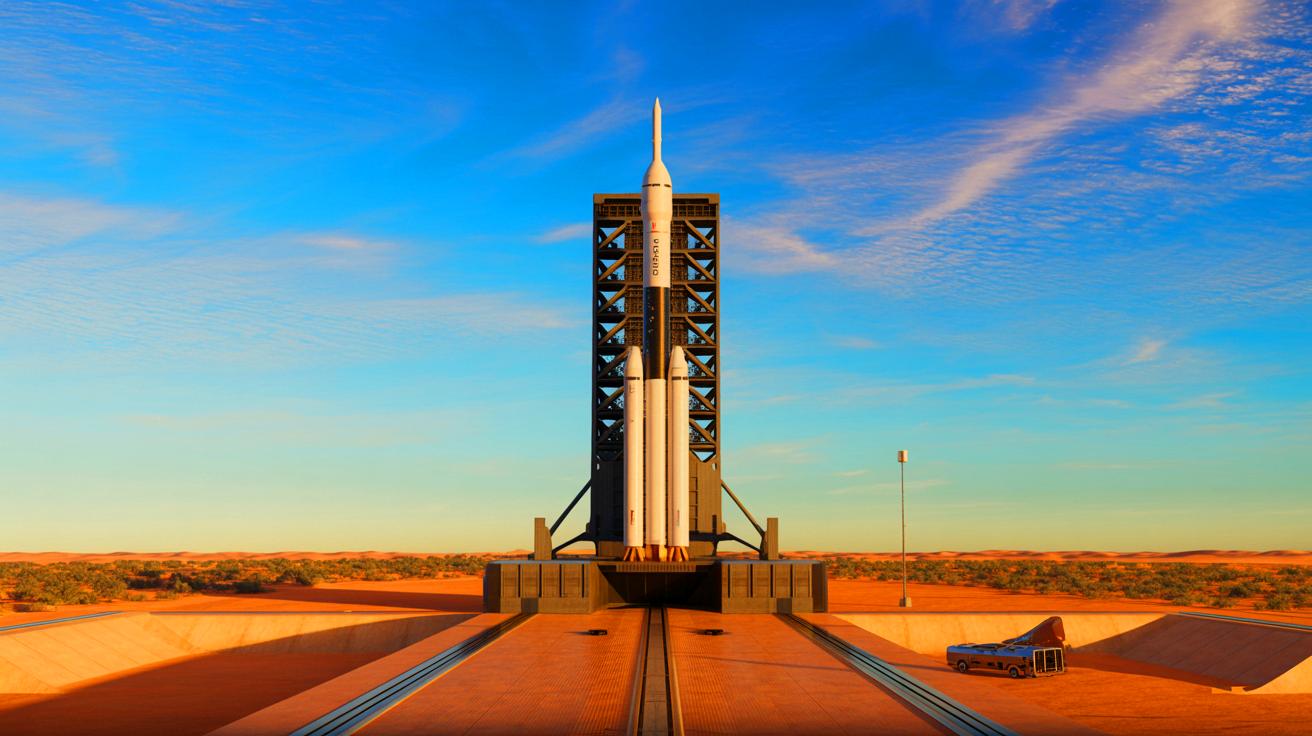
The Eris rocket stands at 82 feet and is a three-stage vehicle, featuring hybrid propulsion for the first two stages and a liquid propellant in the final stage for precise orbital placement. It was designed to carry payloads up to 660 pounds into low Earth orbit, positioning itself as a beacon of hope for Australia’s renewed space ambitions. The project, initiated in 2012, has faced a protracted development phase. This included numerous tests on sounding rockets, aiming to refine the technology.
However, the journey was marred by delays due to adverse weather conditions and technical hiccups, including an electrical glitch that prematurely ejected the rocket’s nose cone before a previous test launch. On the day of the failed launch, two out of four engines in the first stage malfunctioned, causing the rocket to slow down, veer off course, and ultimately crash. Despite this setback, the launch pad emerged unscathed, offering a small consolation to the team.
Australia’s Ideal Yet Underutilized Launch Conditions
Australia possesses unique geographical advantages that make it an ideal location for rocket launches. Its vast, sparsely populated areas provide optimal conditions for targeting both geostationary and sun-synchronous orbits. Historically, the Woomera range was used for the launch of the British satellite Prospero in the 1970s. However, since then, activity has waned, only recently reignited by private ventures and commercial spaceports.
Foreign companies, like France’s Sirius Space, have shown interest in Australian launch sites. Yet, political instability and land disputes have dissuaded some, with Sirius Space opting for European alternatives. This pattern of missed opportunities highlights the need for consistent policies and solid infrastructure to attract and retain international investments and partnerships.
Space Ambitions Undermined by Political Choices and Budget Cuts
The Australian government’s substantial cuts to the national space budget have weakened the fledgling national space agency. Critical projects, such as a secure military satellite system, have been canceled. Despite efforts to strengthen ties with the United States, these policy decisions have hindered the sector’s growth and potential.
Australia’s first astronaut, Katherine Bennell-Pegg, trained alongside her French counterpart Sophie Adenot, still awaits a mission opportunity. This situation exemplifies the country’s struggle to establish a long-term vision for its space endeavors. Without a clear strategy and sustained investment, Australia risks falling behind in the competitive arena of international space exploration.
A Technical Failure as a Wake-up Call for Australian Space Conquest
The anticipated success of the Eris rocket was meant to be a statement of Australian capability. Instead, its failure serves as a reminder that despite its potential, Australia has yet to secure a strong position in the global space community. Nonetheless, the upcoming International Astronautical Congress, set to be hosted in Australia, presents a valuable opportunity to showcase national ambitions and capabilities.
For Gilmour Space, the recent setback has not dampened their resolve. However, transforming a failed launch into a successful industry will require more than just determination. It demands a coherent strategy, reliable funding, and most importantly, a genuine commitment to achieving orbital objectives. The path forward will be challenging, yet this failure could catalyze the necessary changes to propel Australia into the forefront of space exploration.
As Australia grapples with the reality of its current space capabilities, the question remains: will this recent failure ignite the drive needed to overcome obstacles and achieve a sustainable and competitive presence in the global space industry?