

MIT Unleashes Game-Changing AI: “Robots Will Soon Obey Instantly,” Says Top Scientist, Sparking Global Debate
 By
Ethan Reid
By
Ethan Reid
| IN A NUTSHELL |
|
Imagine a world where robots learn to control themselves simply by observing their own movements. This is no longer a futuristic dream but a reality, thanks to an innovative AI system developed by researchers at MIT. This groundbreaking technology allows robots to operate without the need for complex sensors, radically transforming the way machines are programmed and interact with their environment. The implications are vast, potentially revolutionizing industries ranging from healthcare to agriculture, and even space exploration.
Revolutionizing Robotics with Visual Learning
Traditionally, programming a robot involves intricate sensor setups, mathematical models, and countless hours of training. However, MIT’s Computer Science and Artificial Intelligence Laboratory (CSAIL) has pioneered a new approach that bypasses these traditional methods. By using an AI that learns through visual observation, the system drastically reduces the time and resources needed for robot training.
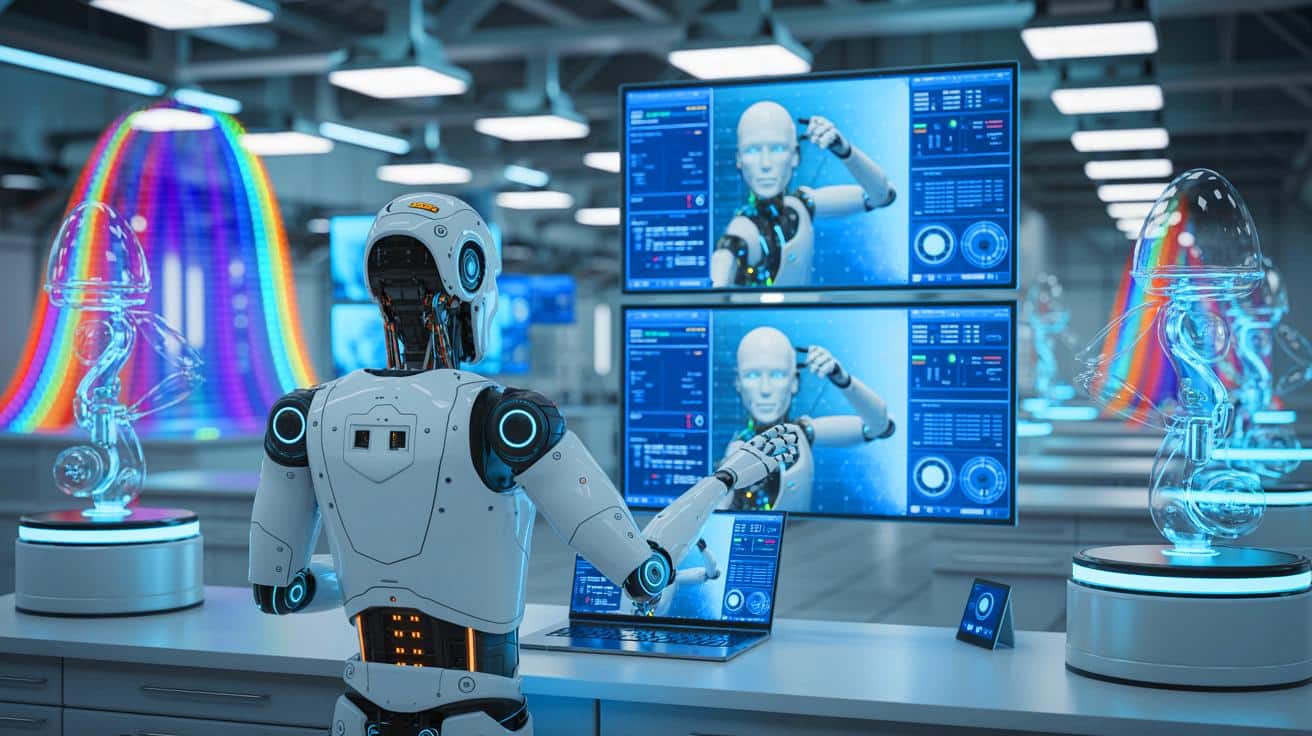
The process involves the AI observing videos of a robot’s random movements. These visuals are sufficient to create a dynamic 3D model, allowing the AI to understand how the robot’s parts interact with its motors. This technique utilizes the visuomotor Jacobian field, a conceptual map linking the visible positions of robot components to their internal commands. Thus, the AI can predict the outcome of each command, adjusting its actions with remarkable precision, all without physical sensors.
Adapting to Any Robot Design
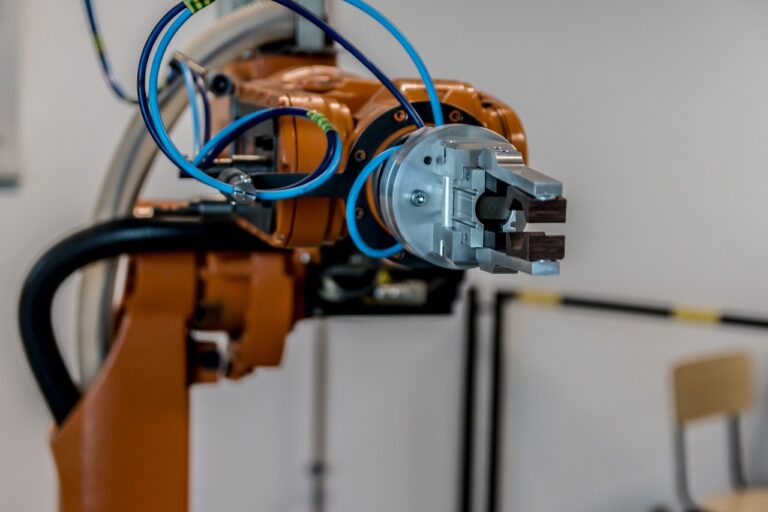
The versatility of this system is one of its most striking features. Whether dealing with an articulated arm, a flexible hand, or a hybrid structure, the AI can establish an internal model from videos captured from various angles in just a few hours.
Researchers have rigorously tested the system’s robustness. Even when parts of the robot were obscured or the view was distorted, the AI maintained accurate control. It successfully reconstructed a reliable 3D map where traditional methods often failed. This advancement significantly accelerates deployment, removing the need for expensive sensors and lengthy calibration processes.
Pioneering Human-Like Learning in Robots
This AI mimics the way a child learns to move their fingers: through observation, correction, and repetition. As a result, it could lead to the development of more autonomous and adaptable robots. The potential applications are extensive, spanning healthcare, logistics, agriculture, and space exploration.
“Our AI functions like a child experimenting and learning. By observing, it becomes capable of piloting any robotic architecture without prior knowledge.”
Sizhe Lester Li, doctoral candidate at MIT
This breakthrough opens new possibilities: quicker deployment, adaptation to unforeseen environments, and reduced costs. With just a camera and a few hours of observation, a machine can learn to control itself. If this approach becomes widespread, it could fundamentally change our perception of robotics, making the technology more akin to living organisms.
The Future of Robotics and Human Interaction
The implications of this technology extend beyond technical advancements. The ability for machines to learn through observation could redefine the relationship between humans and robots. As robots become more intuitive and responsive to their surroundings, they could take on more complex tasks, reducing human labor in hazardous or repetitive environments.
Furthermore, this development could democratize robotics, making it accessible to a broader range of industries and applications. By eliminating the need for specialized sensors and extensive programming, smaller companies and startups could leverage robotic technologies more easily, driving innovation and economic growth.
This innovative approach to robotic learning represents a significant leap forward in automation and artificial intelligence. As these systems evolve, they pose intriguing questions about the future of work, ethics, and human interaction with machines. How will society adapt to these changes, and what new opportunities and challenges will arise as robots become more self-sufficient and integrated into our daily lives?