

How robotics is revolutionizing manufacturing processes
 By
Leah Morrison
By
Leah Morrison
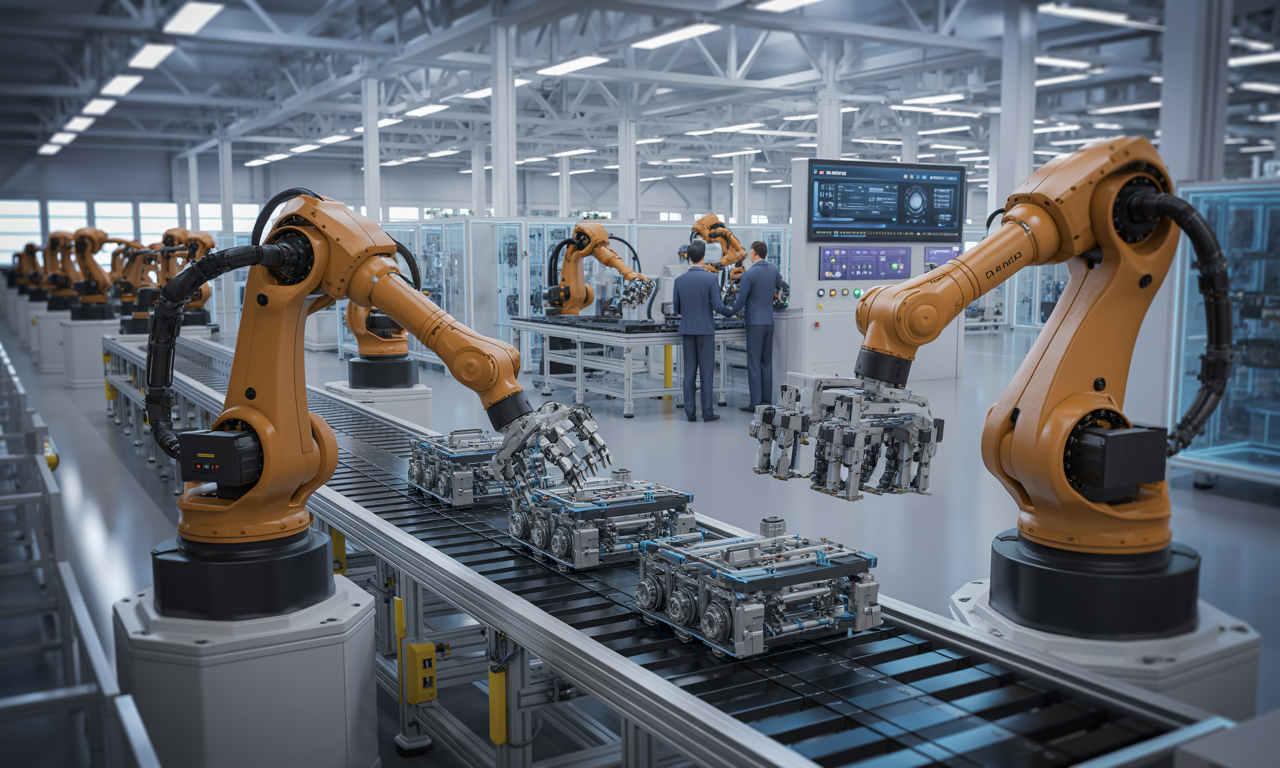
Manufacturing has reached a pivotal era where robotics is no longer a distant vision but a daily reality on factory floors worldwide. This unprecedented shift is driven by pressing demands for safety, efficiency, and quality. Major industry leaders, such as ABB, FANUC, KUKA, Siemens, Rockwell Automation, Tesla, and Universal Robots, are spearheading initiatives that redefine production models. The evolution extends far beyond simple automation: intelligent machines now collaborate with humans, revolutionizing everything from hazardous tasks to supply chain management. As robots minimize risks and maximize output, manufacturers are seizing new competitive advantages. And with the global push for smarter, cleaner, and more adaptive manufacturing, robotics is poised to reshape the entire landscape by 2025.
Robotics Enhancing Workplace Safety and Mitigating Industrial Risks
One of the most profound impacts of robotics in manufacturing is the dramatic reduction of workplace injuries and associated financial losses. In high-risk operations, such as welding or chemical handling, robots step in to shield human workers from danger.
- Ford’s deployments of over 3,000 industrial robots resulted in a 75% drop in injury rates in welding and painting activities (2023 report).
- Equipment damage decreased by 62% after robots replaced manual handling in hazardous zones.
- International Labour Organization estimates put global annual economic losses from industrial accidents at over $3.9 trillion, an area where automation saves millions for manufacturers every year.
By entrusting perilous operations to robotics systems from ABB or FANUC, companies actively protect their teams and safeguard their bottom line.
Key Technologies Improving Safety
Leaders like KUKA and Universal Robots integrate vision-guided systems and modular grippers, ensuring precision and real-time monitoring. This not only curtails human error but also creates safer plant environments.
- Collaborative robots (cobots): Work side by side with humans without safety cages.
- Sensors and AI analytics: Predict equipment failures before accidents occur.
- Remote diagnostics: Enabled by Siemens’ platforms, they reduce the need for risky on-site inspections.
By 2025, the era of dangerous manual tasks is fading fast as robotics takes center stage in manufacturing safety strategies.
Uninterrupted Production: Robotics Transforming Efficiency and Responsiveness
Robots operate around the clock with minimal downtime, transforming the productivity landscape for manufacturers under mounting global demand. Giants like Rockwell Automation and Tesla utilize intelligent automation to keep assembly lines moving, in sync with today’s fast-paced consumer markets.
- International Federation of Robotics (2024): Robot-equipped factories saw productivity gains between 30, 50% and cut delivery times by 25%.
- Foxconn’s integration of collaborative robots: Raised iPhone assembly efficiency by 40% and shrank labor costs by 30%.
- Universal Robots’ modular solutions: Allow quick retooling and reduced production cycle times.
This consistent, scalable performance is pivotal for companies looking to outpace competitors while managing costs.
Adaptability to Market Fluctuations
Automated lines powered by providers like Yaskawa and KUKA can be reprogrammed for new products on short timelines, something manual methods simply cannot achieve at scale.
- Dynamic reprogramming: Swiftly adapts lines for new product launches.
- Remote monitoring: Enables proactive adjustments during market surges.
- Predictive maintenance from Siemens: Minimizes interruptions by forecasting wear and tear.
For modern manufacturers, 24/7 robotic workforces are a strategic asset, ensuring speed, consistency, and reliability in every production run.
From Repetitive Tasks to High-Skill Careers: Robotics Creating New Job Opportunities
While robotics replaces monotonous functions, technology is also giving rise to new, high-value roles that reshape industrial employment. In 2025, the focus is on reskilling for the digital era.
- For every 1,000 robots deployed, 3.6 new high-skill jobs are created in programming, diagnostics, and management (McKinsey Global Institute, 2025).
- Germany’s Industry 4.0 strategy: Pioneers large-scale upskilling, turning former manual laborers into robotics specialists.
- Rockwell Automation’s digital training programs: Accelerate workforce transformation for future-ready factories.
This ongoing transformation ensures people remain central, bringing innovation and oversight as automation expands.
Major Players Catalyzing Workforce Evolution
Companies like Tesla and ABB invest heavily in training programs, fostering a culture of lifelong learning and adaptability. The symbiosis of humans and machines brings out the full potential of both.
- On-site technical academies: Hosted by Siemens and KUKA for frontline workers.
- Remote learning modules: Developed by ABB to train global teams.
- Mentorship programs: Match experienced staff with tech-savvy recruits, facilitating knowledge transfer.
The next wave of manufacturing will demand agility, placing hands-on expertise and digital savvy at the core of industrial growth.
Unmatched Precision and Cost Optimization Through Smart Robotics
Modern robots deliver accuracy at levels unattainable by manual labor. With advanced algorithms and real-time feedback, companies are seeing enhanced product quality and reduced waste.
- Robotic vision systems: Lowered auto part defects from 5% to just 0.1% according to a 2024 PwC study.
- AI-optimized workflows: Refined with Siemens and Rockwell Automation platforms, minimize resource wastage.
- Cost reductions of 20, 30% observed by U.S. firms adopting robotics (Association of American Manufacturers).
This heightened precision empowers brands like Universal Robots and FANUC to reclaim market share and increase competitiveness globally.
Integrating Data for Continuous Improvement
Leading manufacturers synchronize robotics with advanced analytics for constant refinement. This closed-loop approach unlocks new pathways for productivity.
- Real-time sensors: Detect flaws before they reach assembly.
- Continuous feedback loops: Drive iterative product improvements.
- Industry benchmarks: Set by companies leveraging Boston Dynamics’ adaptive robotics.
Robotics drives a relentless pursuit of excellence, where efficiency, sustainability, and competitiveness align.
Collaborative Robotics and Smart Supply Chains: The Next Industrial Revolution
Collaboration between humans and robots is reshaping how products move from factories to consumers. Integration of robotics with IoT and AI is powering a new wave of supply chain intelligence, with Amazon and Tesla leading by example.
- Amazon warehouses: Achieved a 50% efficiency leap by combining robotics and human teams.
- Boston Dynamics’ robots: Expand application footprints to logistics, healthcare, and educational services.
- IoT-connected systems: From Siemens and Rockwell Automation, enable real-time resource tracking and agile inventory management.
This collaborative paradigm is setting new standards in agility and customer responsiveness across sectors.
The Future Outlook: Humanoid Robotics and Beyond
According to Goldman Sachs, the global humanoid robot market could reach $154 billion by 2035 as service and manufacturing lines further merge. Innovations from iRobot and Universal Robots point toward even greater synergy between industries.
- Next-gen robots: Handle delicate logistics and complex assembly work.
- Adaptive learning: Machines evolve alongside changing business needs.
- Cross-sector breakthroughs: Manufacturing, healthcare, and home services converge via robotics platforms.
As boundaries between fields blur, robotics stands as the cornerstone for tomorrow’s dynamic, interconnected industries, and for the organizations bold enough to lead, the rewards will be profound.