

How robotics is transforming industries in 2025
 By
Leah Morrison
By
Leah Morrison
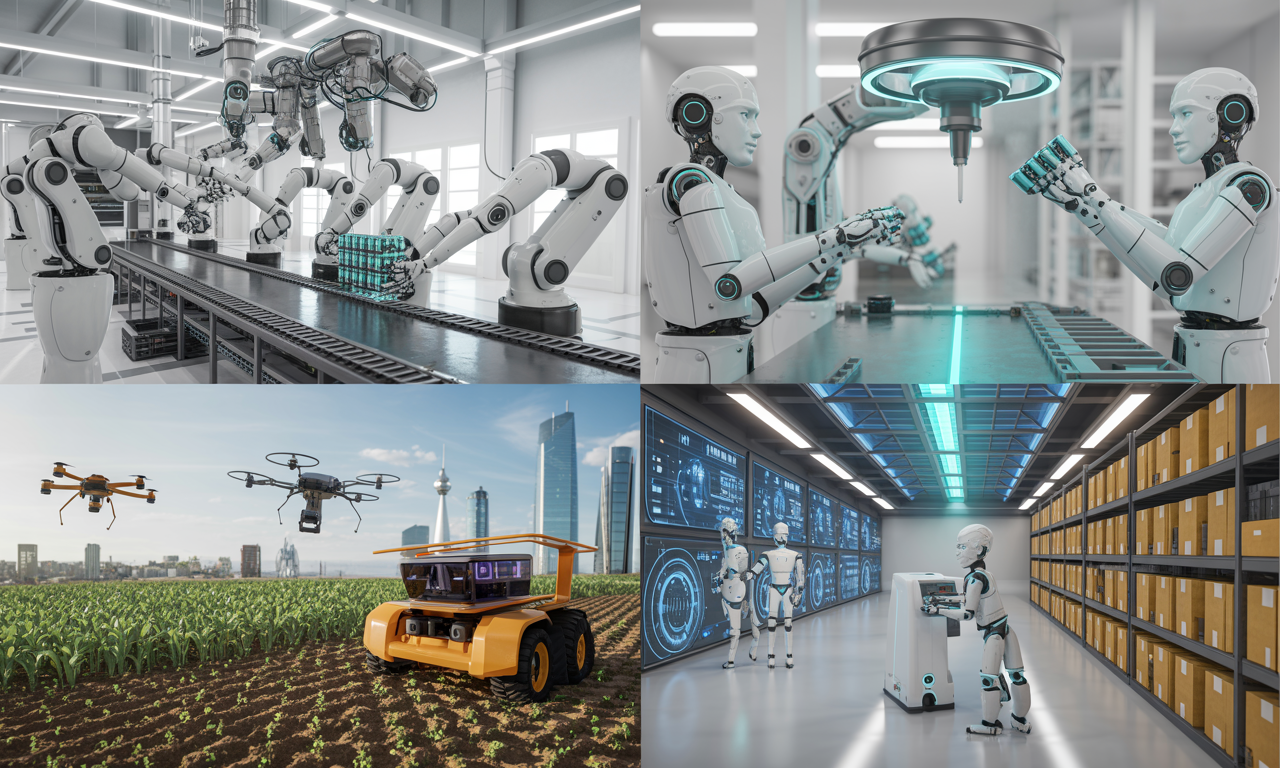
Robotics stands at a turning point in 2025, with advanced automation, AI-driven machines, and open-source platforms converging to reshape industries at all levels. The robotics sector has seen critical breakthroughs, as evidenced by Amazon’s millionth warehouse robot milestone and the deployment of over 10 million autonomous rides by Google’s Waymo. Major players like Hugging Face and Pollen Robotics are democratizing access to programmable robots, while startups such as CosmicBrain push the frontier of machine learning-driven robotic skills. The integration of Industrial AI Solutions, automation innovations, and smart devices signals not just higher productivity, but the arrival of connected, intelligent systems that empower businesses, developers, and consumers alike. This transformation is not limited to manufacturing and logistics; service, healthcare, and even home environments are witnessing the profound impact of robotics in daily tasks, workforce dynamics, and digital infrastructure development.
AI-Powered Robotics and the Rise of Cognitive Automation
The fusion of artificial intelligence with automation is redefining what robots can achieve in 2025. Robots powered by Industrial AI Solutions and Cognitive Robotics now possess advanced reasoning, pattern recognition, and real-time decision-making abilities. Cutting-edge systems like NVIDIA’s first open humanoid foundation model, GROOT N1, exemplify this progress, leveraging vast datasets to execute complex tasks ranging from predictive maintenance to adaptive operations on the factory floor.
- Real-time data interpretation for predictive fault detection
- Dynamic adaptation in rapidly changing environments
- Enhanced human-robot collaboration through natural language interfaces
This technology wave enables a new generation of smart machines, an evolution marked by improved safety, efficiency, and the seamless integration of automation innovations into critical sectors. The result is not merely automation but the rise of intelligent systems, blurring the boundaries between machine and human expertise.
Collaborative Robots (Cobots) and Workforce Transformation
Collaborative robots, or cobots, have become pivotal in redefining workforce dynamics across industry verticals. With their enhanced adaptability and ease of use, companies like SmartTech Robotics and RoboDynamics have made cobots accessible for small businesses as well as large-scale enterprises. The democratization of robotics has been driven by simplified interfaces and robust safety protocols, enabling a broader spectrum of users to leverage these technologies.
- Plug-and-play automation with minimal technical expertise
- Integrated safety systems for secure human-robot interaction
- Flexible deployment in manufacturing, warehousing, and healthcare
The ripple effect is an empowered workforce that collaborates rather than competes with machines, augmenting productivity and opening new roles in programming, troubleshooting, and managing robotic fleets. As cobots continue to evolve, they pave the way for a more inclusive vision of NextGen Automation.
The Digital Twin Revolution: Simulation, Optimization, and SmartTech
Digital Twin technology in 2025 is no longer a futuristic idea; it’s a business necessity. By creating digital replicas of physical robotic systems, Industrial AI Solutions and platforms like IntelliMachinery can perform exhaustive testing, optimize robot behavior, and predict maintenance issues without halting production. This drives down costs and supports the hyper-efficient management of operations in manufacturing, logistics, and beyond.
- Virtual scenario testing before real-world deployment
- Continuous monitoring and calibration for performance gains
- Reduced downtime through predictive analytics
Such optimization platforms ensure that organizations remain resilient amidst volatility, nurturing continual improvement and data-driven innovation through precise, risk-free experimentation.
Humanoid Robots and Personal Robotics: The Emerging Home and Service Frontier
2025 sees a new era for service and personal robotics, with open-source projects like Reachy Mini by Hugging Face and K-Bot from K-Scale Labs setting benchmarks for accessibility and versatility. Designed for both developers and families, these robots can be programmed in Python and tailored for countless tasks, from household chores to eldercare, extending the FutureWorks vision to every home and workplace.
- Voice control and conversational AI for intuitive interaction
- Customizable module designs for specific needs
- Personal assistants and educational supports for diverse users
The acceleration of humanoid and personal robotics marks a social shift: robots are becoming approachable partners, not just distant industrial machines. This signals vast opportunity for developers, educators, and startups to build on open platforms and establish new skill-based economies.
Customization, Modularity, and Sustainable Automation Innovations
The drive for modular and sustainable robotics solutions has intensified in 2025. Firms like Robotix and Precision Robotics create robots with interchangeable components, supporting sector-specific needs from cleanroom manufacturing to extreme environment inspection. RoboDynamics spearheads the adoption of green practices, utilizing recyclable materials and energy-efficient systems to align with growing environmental commitments.
- Modular architectures enabling fast adaptation to new tasks
- Energy-optimized hardware that reduces operational costs
- Eco-friendly manufacturing to minimize carbon footprint
As the need for efficient, adaptable, and responsible technology grows, the modular and sustainable approach is becoming industry standard, setting the foundation for long-term, scalable automation strategies.
The Emerging Economy of Robotics: Data, Platforms, and New Value Chains
The explosive growth forecast, reaching an estimated $124.77 billion market by 2030, according to NASDAQ, reflects not just technological advancement but the creation of new economies centered on platforms, data, and robotic skills. Startups like CosmicBrain are envisioning app stores for robots: comprehensive marketplaces where developers, students, and businesses buy and deploy robotic skill sets, all while maintaining control over proprietary data.
- Skillset marketplaces unlocking new revenue streams
- Plug-and-play apps for rapid deployment across industries
- Data-driven innovation, with privacy-centric strategies
This ecosystem mirrors the software revolutions of previous decades, only now, it is physical, touchable, and visible in sectors from agriculture and logistics to retail and eldercare. The development of this vibrant platform-centric marketplace underlines how automation is not just transforming industries, but creating new ones.