

Top robotics trends to watch in 2025
 By
Leah Morrison
By
Leah Morrison
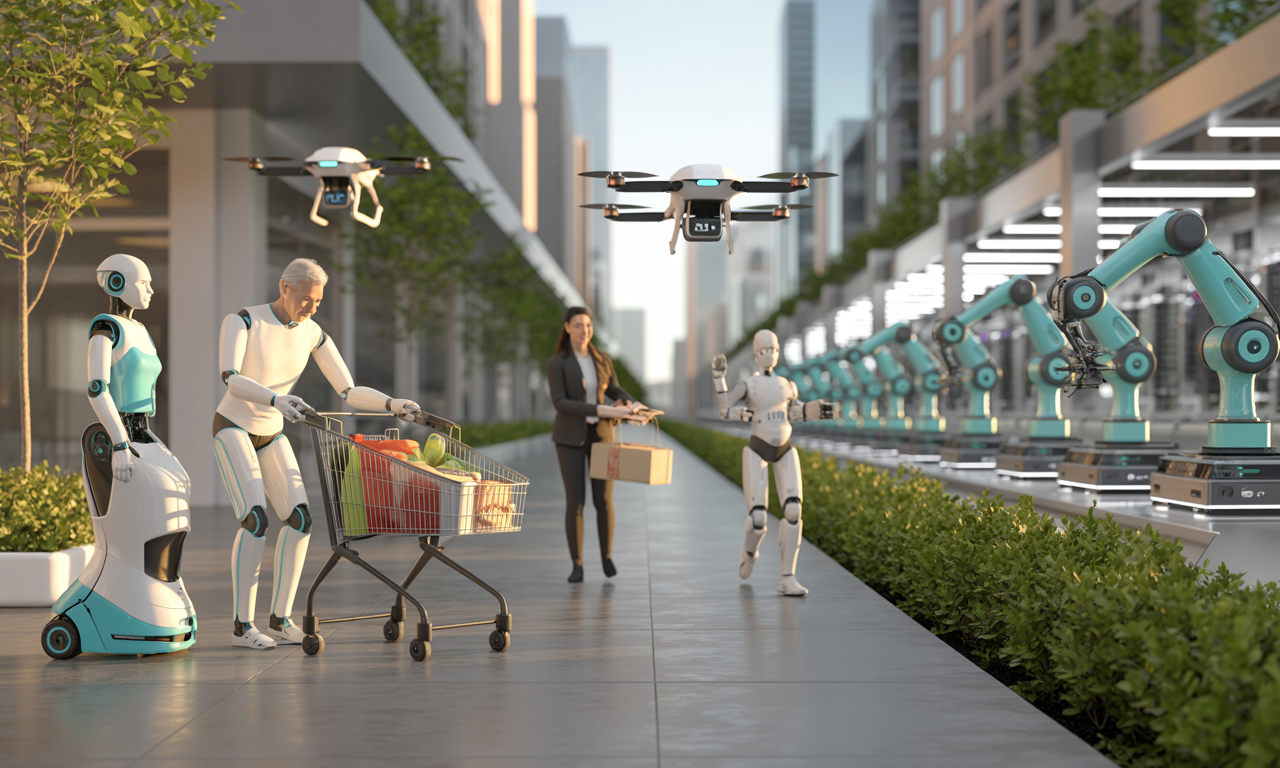
Robotics is advancing at a pace rarely seen in technology fields, with 2025 set to be a defining year for both industry and education. From the classrooms embracing affordable robotics kits to manufacturing floors incorporating the latest innovations from pioneers like Boston Dynamics, NVIDIA, and ABB Robotics, the landscape is transforming rapidly. The surge in demand for intelligent automation is driven not only by market needs but also by significant technological breakthroughs and shifting workforce realities. Notably, the global market value for industrial robot installations has reached an all-time high of $16.5 billion, with companies like KUKA, Fanuc, Universal Robots, Intuitive Surgical, Yaskawa Electric, and DJI leading the charge. The following trends illustrate how robotics is extending its influence, offering new opportunities and challenging traditional paradigms in 2025.
AI-Driven Innovations: The Powering Force Behind Robotics in 2025
Artificial Intelligence remains at the core of robotics evolution. As we enter 2025, the integration of analytical, physical, and generative AI into machines is redefining what robots can achieve. With companies like NVIDIA designing AI-centric hardware, robots now possess sophisticated vision and decision-making capabilities, allowing them to analyze massive datasets and adapt to variability in real time. This leap is not isolated to software, hardware advancements from ABB Robotics and Yaskawa Electric continue to support the expansion of AI functionalities.
- Analytical AI: Processes data from multiple sensors to optimize accuracy and operational speed.
- Physical AI: Trains robots in virtual environments, enabling self-learning for complex tasks.
- Generative AI: Powers intuitive, context-aware behavior in both industrial and service robots.
As traditional programming gives way to learning by experience, industries will increasingly see robots adapting swiftly to new environments and use cases. The era of “AI-powered automation” is more than a buzzword, it’s redefining global standards.
How Startups and Market Leaders Push the AI Envelope
Startups and robotics giants such as Boston Dynamics and iRobot continue to push AI boundaries. Their investment in generative AI for robotics aims to create tools responsive enough for both homes and industrial settings. For instance, service robots powered by generative AI can seamlessly transition between handling fragile objects and conducting quality inspections, thus multiplying productivity.
- Startups developing generative AI-driven physical robots for logistics and service applications
- Industrial leaders refining AI vision systems for precision manufacturing
- Consumer applications blending AI with home automation products
Humanoid Robots and Their Expanding Role in Industry
The rise of humanoids captures both media attention and industry interest. In 2025, these robots are emerging beyond spectacle: automotive giants and warehousing innovators are pioneering humanoids for highly specific, repeatable tasks, with KUKA and Fanuc developing purpose-built models designed to work safely with humans. The focus is not on replacing every worker but rather elevating productivity where human-like capabilities are uniquely beneficial.
- Automotive assembly: Humanoids supporting repetitive or ergonomically taxing processes
- Warehouse logistics: Flexible robots undertaking sorting and packaging with advanced dexterity
- Healthcare assistance: Early-stage trials by innovators like Intuitive Surgical
Although total cost and scalability remain under scrutiny, these pilots signal a shift toward general-purpose, adaptable automation, hinting at broad, cross-sector applications soon becoming standard.
Industry Case: Warehousing and Logistics Transformation
Logistics operators, faced with variability and volume, increasingly turn to humanoid prototypes for material handling and inventory tasks. Supported by precise sensors and lightweight actuators, these robots are set to expand beyond demonstration into operational reliability. Mountains of data gathered from pilot programs suggest humanoids excel in roles demanding intuitive movement or object recognition.
- Pilots with collaborative humanoid robots in e-commerce fulfillment centers
- Early results indicating lower error rates and increased throughput
Sustainability, Energy Efficiency, and Robotics
Sustainability regulations and global climate targets demand not just efficient robots, but manufacturing processes that minimize waste and environmental impact. Robotics players like ABB Robotics and Universal Robots lead with both design and deployment, engineering lightweight components and advanced grippers that consume less energy while maximizing precision. Robotics interventions are crucial in sectors manufacturing green tech, think solar panels, batteries, or recycling systems.
- Energy-efficient actuators that power robots with minimal loss
- Intelligent sleep modes reducing hardware’s idle energy draw
- Bionic-inspired grippers for high-strength, low-energy manipulation
By integrating sustainable practices, manufacturers hit environmental goals while enhancing long-term resilience, a trend reinforced by evolving regulations worldwide.
Greener Manufacturing with Leading Robotics Brands
Top brands such as Fanuc, ABB Robotics, and Yaskawa Electric are incorporating eco-design principles at every stage. Their efforts are most visible in industries pivoting to green energy solutions, where robots are deployed from assembly through to recycling.
- Robots enabling fast scaling of solar panel and battery production
- Automation ensuring consistent, low-waste output for recyclable products
Robotics for New Business Fields and Education
The robotics revolution reaches far beyond traditional manufacturing. In 2025, education and new industries, including construction and laboratory automation, are seizing opportunities to automate with flexibility. Companies like Universal Robots and DJI introduce cost-efficient, adaptable systems, while Robot-as-a-Service (RaaS) models lower barriers for SMEs. Additionally, affordable educational kits powered by advanced microcontrollers such as the Raspberry Pi 5 and new Arduino boards are catalyzing widespread STEM adoption.
- Robotics kits bringing hands-on STEM learning to classrooms worldwide
- RaaS enabling SMEs to leverage high-level automation without up-front capital
- Microcontroller advances sparking a new era of creativity and accessibility
The democratization of robotics is evident as schools and startups innovate faster, building solutions adapted to local needs and skills. This fuels a virtuous cycle, creating future engineers as well as sparking entrepreneurial energy.
Expanding Markets: From Classrooms to Construction Sites
With automation needs growing in sectors such as construction and laboratory sciences, robotics firms are targeting fresh customer segments. Adapting their solutions, they address challenges from workforce shortages to supply chain risks, an imperative highlighted by recent geopolitical and economic crises.
- Construction automation for increased efficiency and worker safety
- Laboratory robots accelerating research and diagnostics
- Mobile robots enabling flexible, on-demand operations
Addressing Labor Shortages with Smart Robotics
Labor shortages remain a persistent challenge in manufacturing and logistics, exacerbated by demographic trends and economic uncertainty. Robotics provides a pragmatic answer, automating hazardous, repetitive, or delicate tasks so human talent can focus on innovation and high-value contributions. Companies like Intuitive Surgical and Universal Robots lead with collaborative and mobile platforms that fill critical gaps on factory floors and in hospitals alike.
- Collaborative robots supporting physically demanding or dangerous jobs
- Mobile manipulators tackling shortages with adaptable deployments
- Automation improving job quality and worker satisfaction
The ability of robotics to address workforce challenges will remain a decisive differentiator for manufacturers and service providers navigating uncertain times.
Human-Robot Teams: The Future of Work
The workplace of 2025 will feature seamless human-robot collaboration. Devices from leaders like Boston Dynamics, Fanuc, and Universal Robots are designed for safe, close cooperation. They enable workers to supervise, adapt, and optimize automated operations, turning potential disruptions into opportunities for upskilling and organizational growth.
- Platforms with intuitive controls for operator oversight
- Training programs to integrate robotics skills at all workforce levels