


Scientists Plunge 33,000 Feet to Find “Astonishing Alien World” That Could Shatter Everything We Know About Marine Life
 By
Ethan Reid
By
Ethan Reid
| IN A NUTSHELL |
|
In the icy darkness of the ocean’s depths, a groundbreaking discovery is challenging our understanding of marine life. A Chinese expedition has unveiled an unexpected ecosystem in one of the world’s deepest oceanic trenches. This revelation has the potential to transform our perceptions of life in extreme environments. The Kuril-Kamchatka Trench, a place few have dared to explore, has now become a focal point for scientific curiosity. The findings from this expedition are not only expanding our knowledge but also raising important questions about the sustainable management of these fragile ecosystems.
Exploring the Depths: Discoveries in the Kuril-Kamchatka Trench
The Kuril-Kamchatka Trench is one of the most profound zones on the planet, plunging over 34,500 feet into the Pacific Ocean. It is a place where light never penetrates, and the immense pressure is enough to crush most known forms of life. Yet, in 2024, a team of Chinese researchers embarked on a daring mission to explore these abyssal depths using an experimental submersible. Their journey into the trench aimed to uncover the mysteries that lay hidden beneath the ocean’s surface.
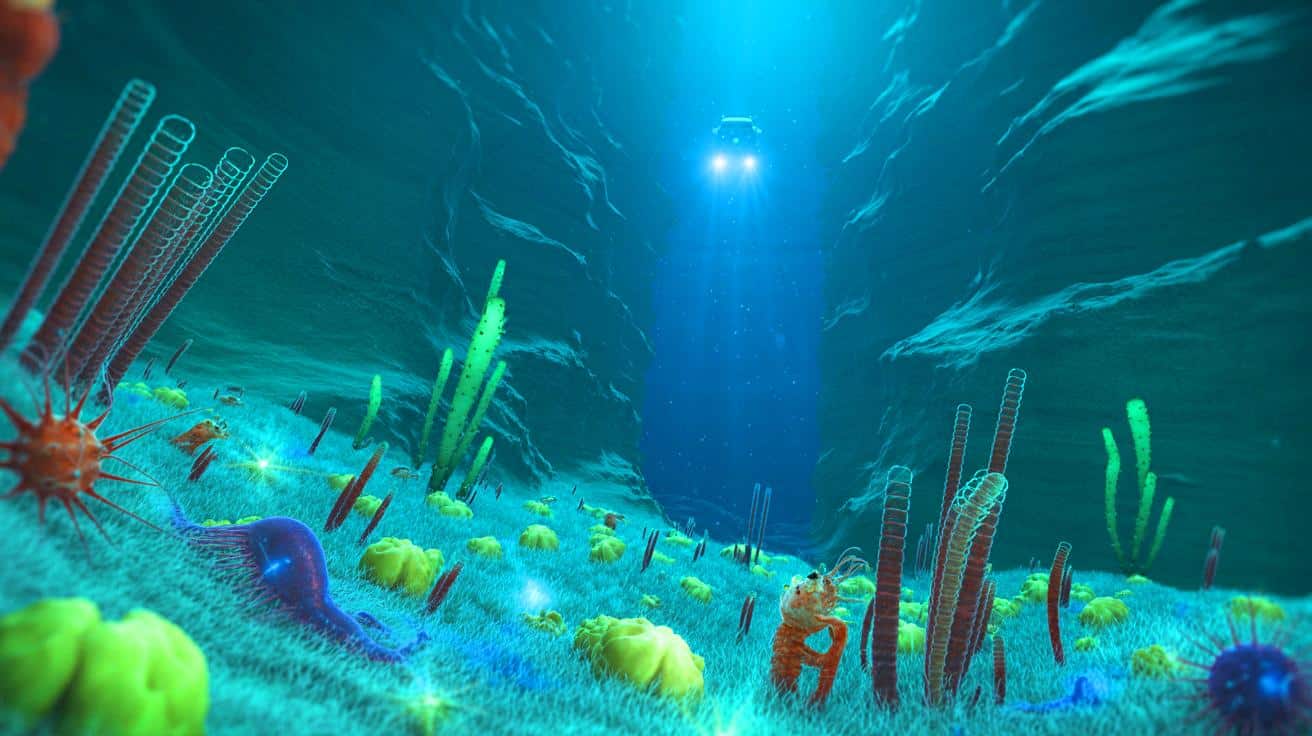
What they found defied all expectations. Contrary to prior beliefs, life was not only present but thriving. The trench’s floor was teeming with tube worms measuring nearly 12 inches, crustaceans, mollusks, and sea cucumbers. It was an undiscovered ecosystem, flourishing in conditions previously thought inhospitable to complex life. This discovery has significant implications for our understanding of life’s resilience and adaptability in extreme environments.
Survival in the Abyss: The Role of Chemosynthesis
The survival of these deep-sea creatures hinges on a process called chemosynthesis. Unlike plants and algae that rely on sunlight for energy through photosynthesis, these organisms derive their energy from chemical compounds such as methane and carbon dioxide, emanating from the ocean floor’s fissures. These energy sources, though rare, are stable, allowing specialized bacteria to thrive. These bacteria form the foundation of entire food chains, creating oases of life in what was once thought to be a void.
Scientists have identified several distinct zones within the trench, each harboring unique life forms. This suggests that similar ecosystems could exist in other deep-sea trenches around the world. The discovery opens new avenues for research into extreme environments both on Earth and potentially on other celestial bodies. The adaptability of these organisms challenges our understanding of the limits of life and raises intriguing possibilities for life beyond our planet.
Protecting Fragile Ecosystems Amidst Resource Exploitation
This remarkable discovery also reignites a critical debate: should we exploit the deep ocean’s resources? Countries like China and the United States are planning deep-sea mining projects to extract rare metals. However, scientists warn that such activities could devastate ecosystems we have only just begun to understand. These abyssal ecosystems, akin to extraterrestrial life due to their environments, remind us of the mysteries our planet still holds. The true challenge of the 21st century may be to protect what we do not yet fully comprehend.
“Intervening in these zones could simply annihilate ecosystems we are only beginning to recognize.”
The race for minerals must consider the potential loss of biodiversity and the irreversible damage to these unique ecosystems. The discovery highlights the need for a balanced approach that prioritizes ecological preservation alongside resource utilization. The future of deep-sea exploration and exploitation will require careful consideration of the impact on these delicate environments.
Implications for Future Research and Conservation
The findings from the Kuril-Kamchatka Trench have far-reaching implications for scientific research and conservation efforts. As we continue to explore the ocean’s depths, we must balance the pursuit of knowledge with the responsibility to preserve our planet’s biodiversity. The discovery of thriving ecosystems in the deepest parts of the ocean challenges us to rethink our approach to marine conservation.
Future research could focus on understanding the unique adaptations that enable these organisms to survive and thrive under extreme conditions. This knowledge could inform conservation strategies and help us identify other potential habitats for life in extreme environments. The protection of these ecosystems is vital to maintaining the biodiversity and health of our planet’s oceans.
As we push the boundaries of exploration, the question remains: how can we responsibly manage the delicate balance between scientific discovery, resource extraction, and conservation? The answers we seek may determine the future of our planet’s oceans and the life they harbor.