
“Unbelievable Ancestral Shock Hits Humanity” as Researchers Reveal Mind-Bending Twist in Our Evolutionary Tale
 By
Ethan Reid
By
Ethan Reid
| IN A NUTSHELL |
|
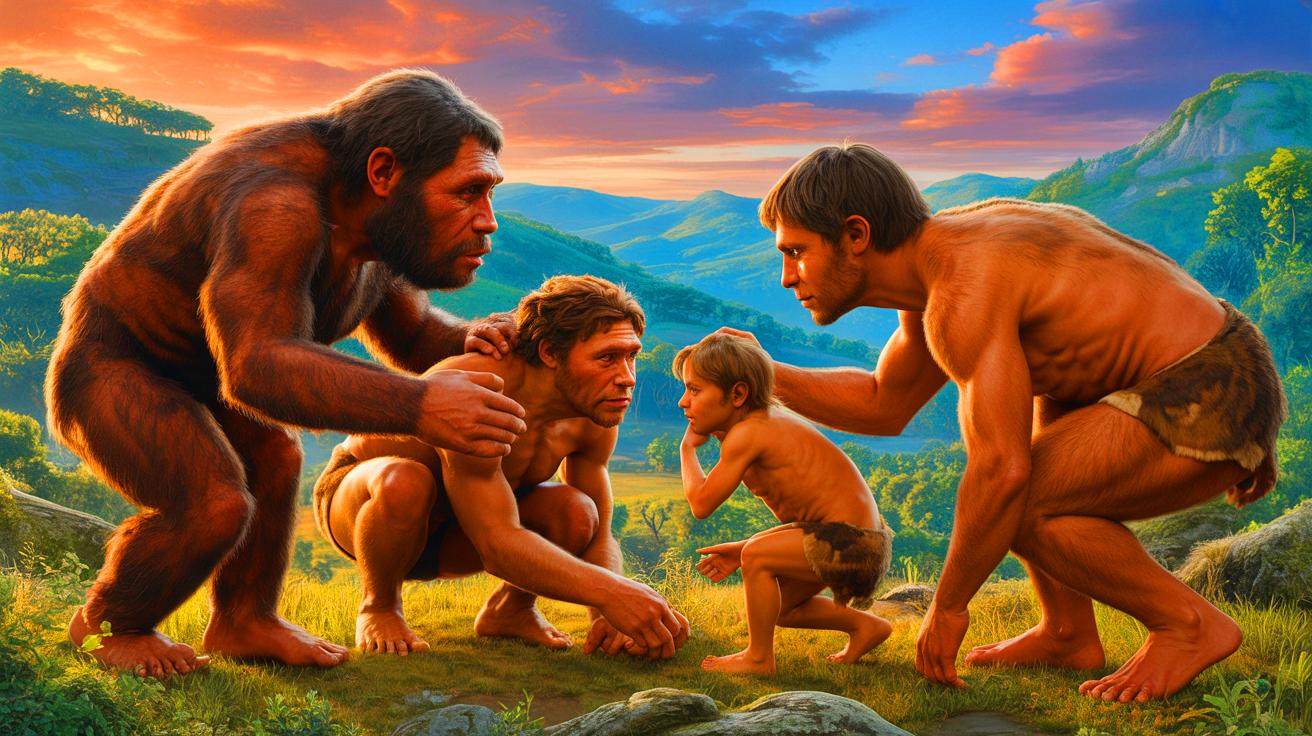
In the realm of human evolution, recent discoveries have challenged long-held beliefs about the lineage of our species. Approximately 47,000 years ago, Neanderthals and Homo sapiens shared more than just the European landscape; they interbred, giving rise to hybrid offspring. These findings, derived from ancient DNA analyses, suggest that human evolution was not a linear progression but a complex web of genetic intermingling. This revelation prompts a reevaluation of our evolutionary history, suggesting a narrative rich with integration and adaptation, rather than isolated development.
The Intimate Coexistence of Neanderthals and Homo Sapiens
In Europe, 47,000 years ago, a pivotal moment in human history unfolded. Homo sapiens, new arrivals from Africa, encountered their Neanderthal cousins. This was not merely a territorial overlap; it was an intimate coexistence. Researchers from Oxford University and the Max Planck Institute have used advanced DNA analyses to demonstrate that these two distinct groups produced offspring together. This genetic mingling is evidenced by the presence of Neanderthal genes in modern human DNA, indicating that our ancestors were not separate entities but intertwined branches of the human tree.
The discovery reshapes our understanding of human evolution. The narrative of a straight-line progression is replaced by a tapestry woven with genetic exchanges. The presence of Neanderthal DNA in contemporary humans is a testament to these ancient unions. It challenges previous conceptions and invites us to explore the depths of our genetic heritage. This genetic blending not only enriched our DNA but also contributed to our adaptability and survival in diverse environments.
An Unprecedented Portrait of Hybrid Offspring
The hybrid offspring of Neanderthals and Homo sapiens were not mere anomalies of prehistoric times. They represented a significant biological milestone. Their physical traits were a blend of both lineages: robust Neanderthal builds combined with the finer features of Homo sapiens. This unique combination was more than skin deep; it extended to their immune systems, bone structures, and resilience to cold climates.
Modern humans carry between 1% and 2% of Neanderthal DNA, a tangible legacy of these ancient encounters. These genetic fragments influence various aspects of our biology, from skin and metabolism to immune responses and bone density. Some genes are linked to resistance to certain viruses, while others affect UV response. This ancient interbreeding was not an evolutionary quirk but a strategic advantage, enhancing our ancestors’ ability to thrive in harsh Eurasian environments.
Modern Genetics Illuminating Our Shared Past
The confirmation of hybridization between Neanderthals and Homo sapiens is made possible by the advancements in modern genetics. Researchers employ cutting-edge sequencing techniques to extract DNA from minute fossilized bone fragments. Notable specimens include the Ust’-Ishim man from Siberia and the Zlatý kůň woman from the Czech Republic. Through meticulous analysis, scientists have pinpointed the interbreeding event to approximately 47,000 years ago.
This precise dating is achieved through a combination of genetic modeling and radiocarbon dating. Such detailed work allows researchers to trace back the intricate roots of our ancestry. The methods used are akin to skilled craftsmanship, piecing together the fragmented pages of our evolutionary story. This scientific endeavor not only illuminates the past but also enhances our understanding of the genetic legacy we carry today.
A Naturally Diverse Humanity, More Complex Than Imagined
The revelation of Neanderthal and Homo sapiens hybridization is more than a scientific footnote; it transforms our perception of humanity. It underscores that our species is the product of mixtures, encounters, and continuous adaptation. Humanity is not a straightforward lineage but a vibrant array of connections where each branch intersects with others.
These hybrid children were not exceptions but perhaps a forgotten norm, reminding us to value our diversity and shared past. By rediscovering these ancient links, we learn to appreciate the complexities that define us as humans. Such understanding prompts us to reflect on our current identity and consider how our intertwined past might shape our future. How will this knowledge of our diverse origins influence our perception of humanity in the years to come?