


“5000-Year-Old Cult Found!”: Electricians Stumble Upon Ancient Forgotten Ritual Site in Germany, Sparking Frenzied Archaeological Investigation
 By
Ethan Reid
By
Ethan Reid
| IN A NUTSHELL |
|
The discovery of a Neolithic site in Saxony-Anhalt, Germany, has sparked significant interest in the archaeological community. Unearthed during routine electrical work near Gerstewitz, this site offers a glimpse into a complex ritualistic culture dating back 5,000 years. The artifacts and structures reveal a world where fire, sacrifice, and ceremonial practices were deeply intertwined with the community’s spiritual and social life. As modern machinery peeled back layers of soil, it uncovered a sacred space that once played a crucial role in the lives of its ancient inhabitants.
The Unveiling of a Neolithic Sanctuary
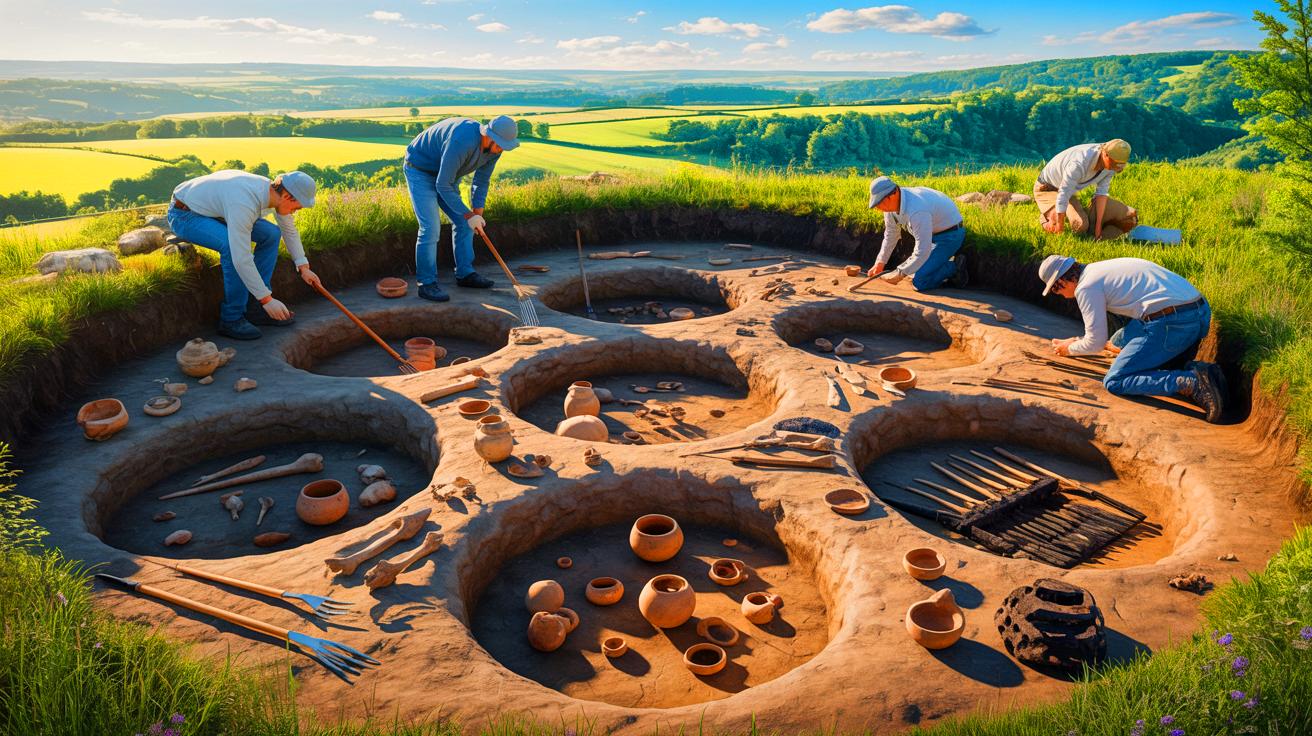
Near the village of Gerstewitz, the construction of the SuedOstLink power line unexpectedly led to a remarkable archaeological discovery. As the ground was excavated, archaeologists from the Landesamt für Denkmalpflege und Archäologie found a series of well-preserved circular pits. These features quickly proved to be more than simple dwellings or graves.
The site, dating from 3400 to 3050 BCE, is associated with the Salzmünde culture, known for its elaborate ritual systems. Artifacts include human and animal remains, intact ceramics, and evidence of buildings deliberately set on fire. Each find contributes to the understanding of a sacred site where controlled destruction was an integral part of ceremonies. This discovery sheds light on a culture where symbolic acts of destruction played a pivotal role in their spiritual and communal practices.
Ritual Deposits Combining Fire, Bones, and Offerings
Detailed examination of the pits revealed a precise organization. Some contained entire burned houses, while others held isolated human skulls or animal sacrifices. Intriguingly, intact ceramic vessels were found placed with care, contrasting with the typical practice of breaking pottery for ritual purposes.
The use of fire, selection of remains, and meticulous arrangement of objects suggest a well-established ceremonial choreography. According to archaeologist Philipp Roskoschinski, these actions likely formed part of a regular ceremonial cycle. The choice to destroy complete dwellings rather than mere pyres indicates a highly symbolic act, possibly meant to leave a lasting impression on collective memory or honor supernatural forces. These deposits tell stories of death and communal rituals imbued with shared meaning.
A Cult Shaped by Neolithic Climate and Cultural Tensions
The site’s timeline coincides with a pivotal period in central Europe, marked by climatic shifts to cooler and wetter conditions that disrupted agriculture and threatened livelihoods. Simultaneously, the Salzmünde culture encountered the Bernburg culture, leading to territorial tensions.
The rituals observed at Gerstewitz might reflect a collective response to instability. Sacrifices, fires, and intentional deposits could have been attempts to restore symbolic order in a changing world. As Susanne Friederich notes, “These rituals express a need for continuity amid major social and environmental upheavals.” This unexpected discovery revives a forgotten fragment of European Neolithic history, illustrating how modern projects sometimes awaken ancient beliefs.
The Broader Implications of the Discovery
The findings at Gerstewitz offer profound insights into the spiritual and social dynamics of Neolithic communities. They reveal how ancient peoples used ritual to confront environmental and cultural challenges. The site’s complex ceremonial practices highlight the importance of community cohesion and shared beliefs in times of uncertainty.
This archaeological treasure trove not only enriches our understanding of the Salzmünde culture but also prompts reflection on how past societies navigated change. The discovery challenges modern perceptions of ancient peoples as unsophisticated, showcasing their intricate spiritual lives and adaptive strategies. It raises questions about how contemporary societies might draw lessons from the past in addressing their own challenges.
As the Gerstewitz site continues to be studied, it promises to advance our knowledge of Neolithic life and the cultural evolution of early European societies. The findings underscore the significance of archaeology in uncovering humanity’s collective past. What other ancient secrets might still lie buried beneath our feet, waiting to be discovered by the next turn of a spade?