

“Alien Cosmic Visitor”: Astronomers Film “Without Knowing” for Weeks, Unveiling a Mystifying Celestial Mystery
 By
Ethan Reid
By
Ethan Reid
| IN A NUTSHELL |
|
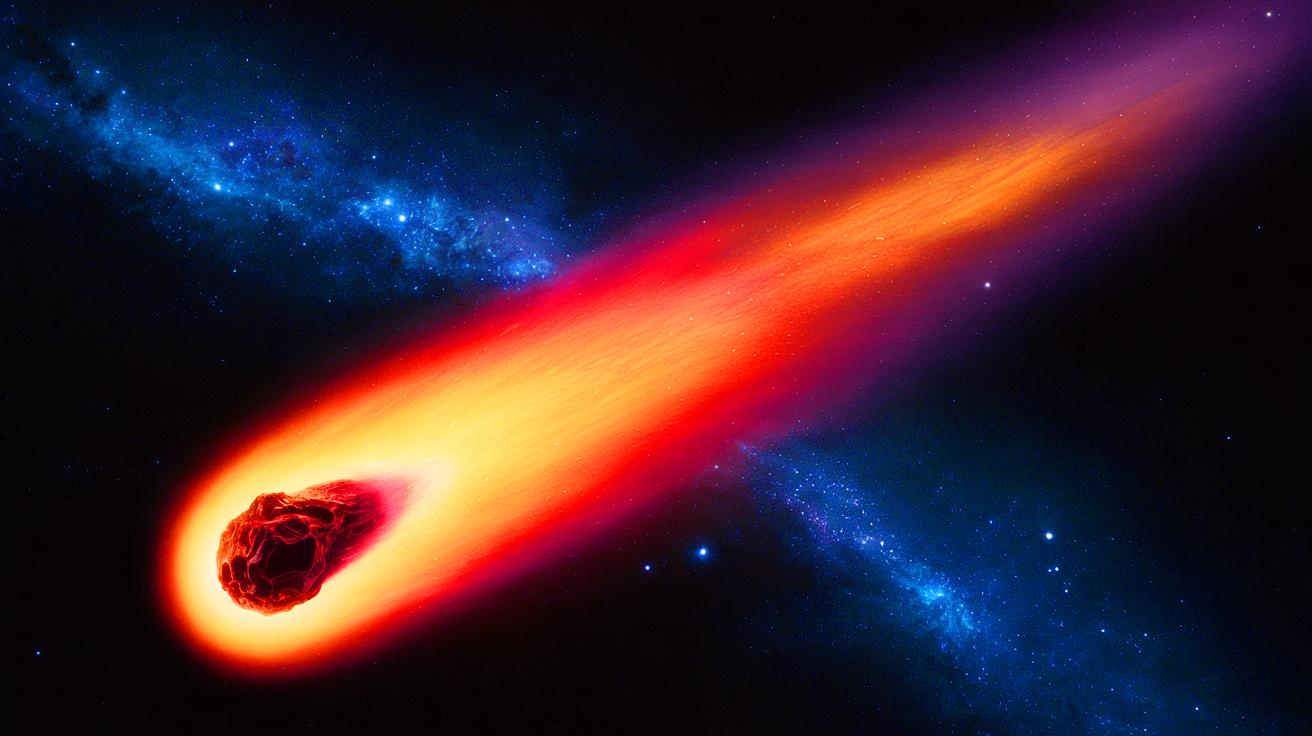
In July 2025, astronomers identified 3I/ATLAS as a rare interstellar visitor in our solar system. This marked only the third time such an object had been observed coming from beyond our celestial neighborhood. Initially, it seemed like a typical cometary discovery. However, further investigation revealed that the object had been captured in images as early as May of the same year. This realization came through data archived by the Transiting Exoplanet Survey Satellite (TESS). The event underscored the potential within older astronomical data, as new analytical techniques can transform these archives into sources of groundbreaking discoveries.
3I/ATLAS: An Interstellar Discovery Hidden in Archives
The identification of 3I/ATLAS as an interstellar object was a significant event in the field of astronomy. Initially found in July 2025, it was soon discovered that TESS had captured its images two months earlier, in May. This lag between image capture and identification highlights the treasure trove of information lying dormant in astronomical archives. Scientists from the University of Michigan and Auburn University meticulously examined historical data. Their efforts revealed the object’s presence during two distinct periods between May and June.
Such findings demonstrate the value of revisiting archived data. By applying modern analytical techniques, researchers can unlock new insights from old records. The 3I/ATLAS discovery is a testament to this approach, offering a glimpse into the potential for future astronomical revelations. This process emphasizes not only the importance of diligent data analysis but also the exciting possibilities that await in the vast expanse of archived astronomical images.
The Shift-Stacking Technique: A Key to Unlocking Hidden Celestial Objects
To unveil 3I/ATLAS amid the noise of stellar images, astronomers employed a technique known as shift-stacking. This method involves predicting the trajectory of an object across a series of images, allowing researchers to stack data so the object becomes clearly visible. This meticulous process revealed a startling increase in brightness for 3I/ATLAS, which quintupled between May 7 and June 2. Such a dramatic change in luminosity is highly unusual for a comet, whose brightness typically increases gradually as it approaches the Sun.
The anomaly in 3I/ATLAS’s behavior underscores the potential for advanced techniques like shift-stacking to uncover celestial phenomena previously missed. This approach not only aids in identifying interstellar visitors but also challenges existing paradigms about cometary behavior. By continuing to refine these techniques, astronomers can unlock more secrets hidden within the cosmos, providing new insights into the processes that govern our universe.
Unveiling the Composition of an Interstellar Visitor
Unlike typical solar system comets, which primarily contain water vapor, 3I/ATLAS may harbor hypervolatile compounds such as carbon monoxide and carbon dioxide. These substances can sublimate at much lower temperatures, explaining the object’s unusual brightness increase. This suggests that 3I/ATLAS is a primitive object, originating from a planetary system vastly different from our own.
As a time capsule from a distant world, 3I/ATLAS offers a unique opportunity to study the chemical signatures of other planetary systems. This interstellar visitor provides a rare glimpse into what our solar system might have been like billions of years ago. Understanding its composition could help scientists piece together the puzzle of our cosmic history and the evolution of planetary systems beyond our own.
Revolutionizing Astronomy Through Archived Data
The discovery of 3I/ATLAS illustrates the power of archived data in transforming our understanding of the universe. Scientists have shown that with advanced analytical methods, these archives become cosmic time machines, revealing aspects of the universe previously unseen. Each interstellar visitor like 3I/ATLAS adds a new dimension to our understanding of galactic dynamics.
By re-evaluating existing data, astronomers can challenge long-held assumptions and expand our knowledge of celestial phenomena. The story of 3I/ATLAS is not just about a single comet but about the potential within the data we have already collected. It hints at the many undiscovered wonders that lie in wait, promising new insights into the vast and diverse universe we inhabit.
The discovery of 3I/ATLAS has opened new avenues for understanding the universe and the potential of archived astronomical data. As researchers continue to delve into these resources, what other cosmic mysteries might they uncover? Could these methods lead to further discoveries that reshape our understanding of the cosmos and our place within it?