

“Breath of Extinction”: Dinosaur Teeth Reveal Shocking 150-Million-Year-Old Air Secrets
 By
Ethan Reid
By
Ethan Reid
| IN A NUTSHELL |
|
The study of fossilized dinosaur teeth has unveiled a groundbreaking method of understanding ancient climates, offering a new dimension to paleoclimatology. Traditionally, scientists have relied on ice cores, sediment layers, and ancient rocks to decipher the Earth’s climatic past. However, the enamel of dinosaur teeth, preserved for millions of years, now provides direct insight into the atmospheric composition of ancient eras. This revolutionary approach, led by geochemist Dingsu Feng and her team at the University of Göttingen, utilizes isotope analysis to uncover the climatic secrets of the Mesozoic era, offering a fresh perspective on the conditions under which these magnificent creatures thrived.
The Enamel’s Ancient Secrets
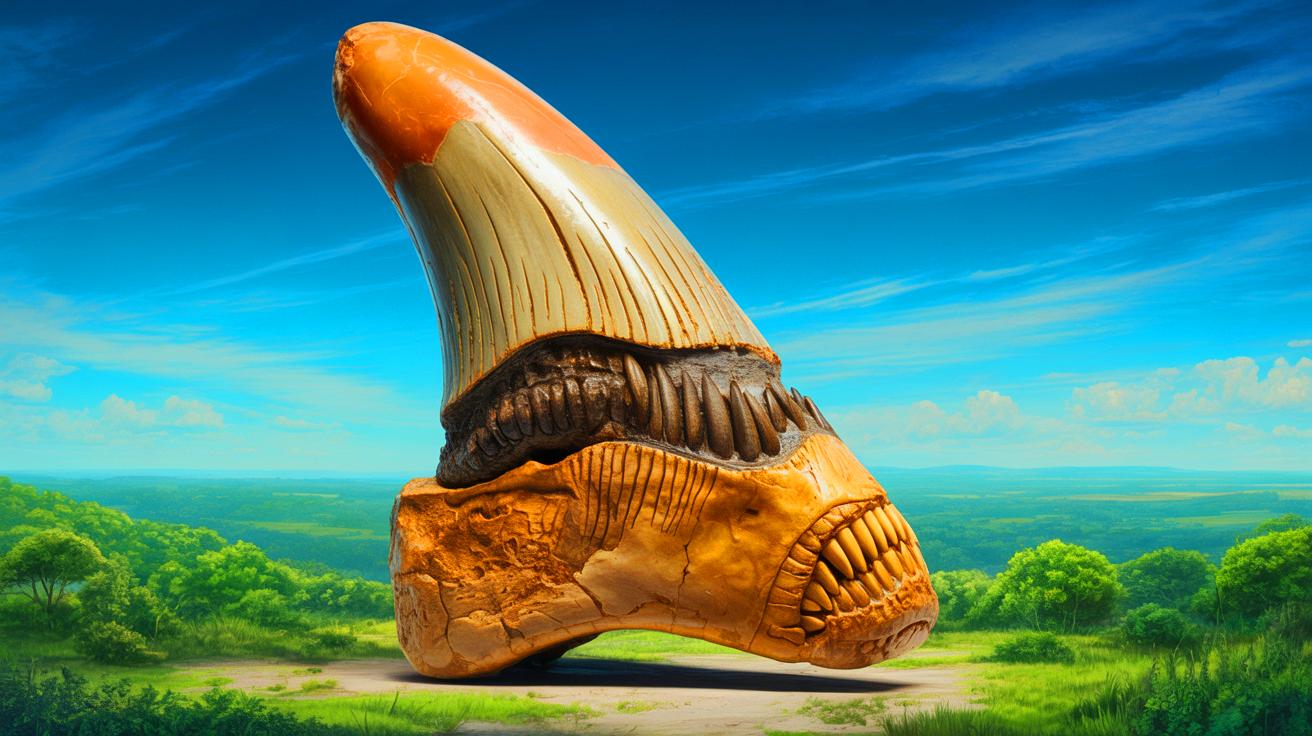
Fossilized dinosaur teeth, long thought to be mere artifacts for reconstructing jaws, have now been found to hold a direct record of the air dinosaurs breathed 150 million years ago. This discovery marks a significant shift in the field of paleoclimatology. The enamel on these teeth is remarkably stable, preserving isotopic traces of atmospheric oxygen that were present during the time of the dinosaurs.
Under the leadership of Dingsu Feng, researchers have developed a method to analyze the triple isotopes of oxygen in these teeth. This technique has allowed scientists to determine the composition of the Jurassic atmosphere by examining fossils from various continents, including Africa, North America, and Europe. Unlike other fossilized tissues that degrade over time, the enamel remains intact, retaining isotopic information linked to respiration. This new source of data offers an invaluable glimpse into past climate variations, which were previously inferred primarily from marine deposits and sediments.
Carbon Dioxide’s Dominance in the Jurassic
The findings from this study reveal that carbon dioxide levels during the late Jurassic period were significantly higher than they are today. At that time, the atmosphere contained approximately 1,200 parts per million (ppm) of carbon dioxide, which decreased to around 750 ppm during the late Cretaceous. Despite this reduction, these values were still double the pre-industrial levels of carbon dioxide.
In contrast, modern atmospheric carbon dioxide levels hover around 430 ppm, highlighting the intense greenhouse effect present during the age of dinosaurs. This elevated concentration likely enhanced plant photosynthesis, supporting a lush and diverse ecosystem. Such conditions would have been ideal for sustaining the massive herbivores like sauropods. Additionally, isotopic anomalies found in the teeth of species such as Tyrannosaurus rex and Kaatedocus siberi suggest episodic spikes in carbon dioxide, potentially triggered by massive volcanic events like the Deccan Traps eruptions, which released vast quantities of gas in short periods.
Revolutionizing Our Understanding of Ancient Climates
The ability to directly analyze the Mesozoic atmosphere through dinosaur teeth represents a paradigm shift in the study of ancient climates. Previously, researchers could only infer atmospheric conditions indirectly. Now, these teeth offer a direct, granular reading of the past atmosphere, providing a complementary tool alongside traditional geological analyses.
This approach not only enhances our understanding of ancient climate fluctuations but also underscores the rapid and sometimes violent changes that occurred over short timescales. The evidence captured in the enamel of these dinosaurs’ teeth speaks volumes about the dynamic environment in which they lived. It reminds us that these ancient giants continue to communicate with us through the traces they left behind, challenging us to listen and learn.
Broader Implications for Climate Science
The insights gained from analyzing dinosaur teeth extend beyond paleontology and have far-reaching implications for modern climate science. Understanding the levels of carbon dioxide and the atmospheric conditions of the Mesozoic era can shed light on the potential impacts of current and future climate changes. As we grapple with rising carbon dioxide levels and their effects on our planet, the ancient data preserved in fossilized teeth can offer valuable analogs for present-day scenarios.
This research underscores the importance of interdisciplinary approaches, combining paleontological data with modern climate models to predict future climatic shifts. By examining the past, scientists can better anticipate the potential consequences of human-induced climate change, fostering more informed decision-making and policy development. The study of ancient climates, therefore, not only enriches our understanding of Earth’s history but also equips us with the knowledge to navigate the challenges of the 21st century.
As we continue to unravel the mysteries hidden within fossilized teeth, we are reminded of the intricate connections between past and present climates. This research invites us to consider how lessons from millions of years ago can inform our approach to safeguarding the planet’s future. How might these ancient atmospheric records influence our understanding of climate resilience and adaptation strategies in the years to come?