

“Mystery Unfolds as Shadows Stretch Across the Moon” Sparks Global Debate Over New Lunar Colonization Vision
 By
Ethan Reid
By
Ethan Reid
| IN A NUTSHELL |
|
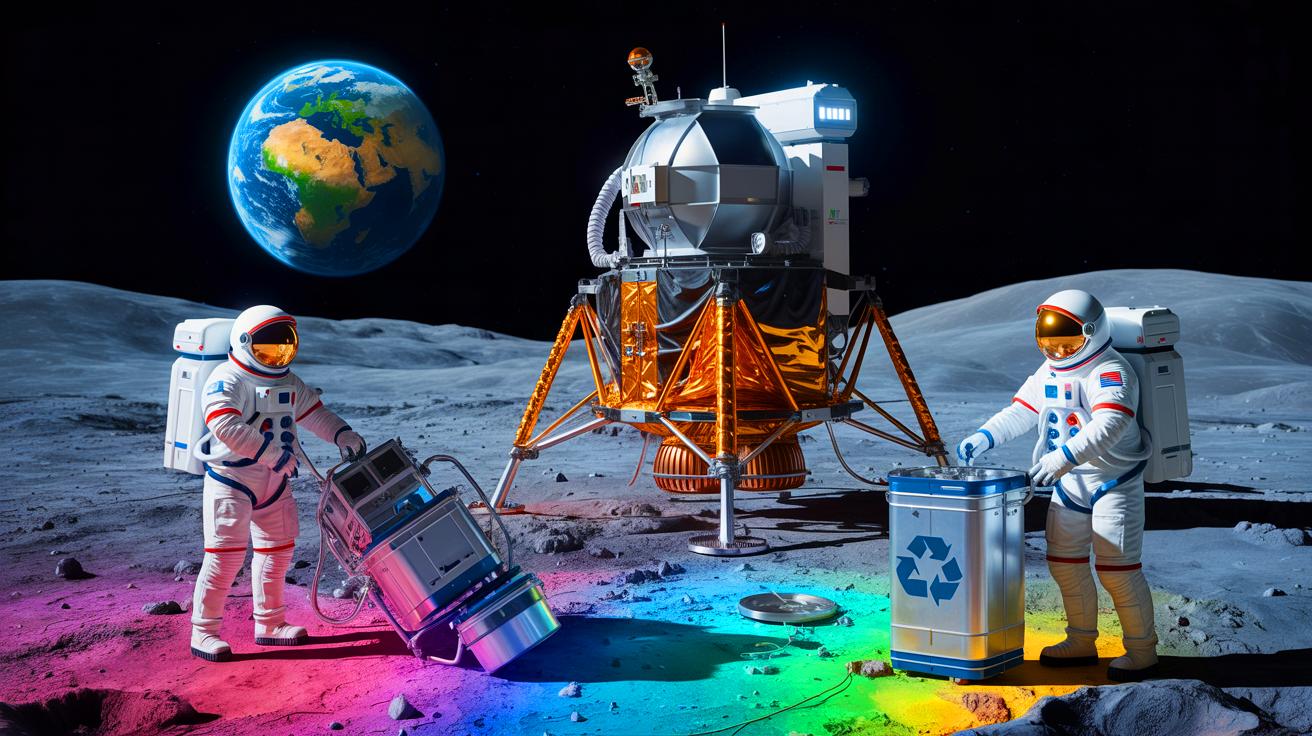
NASA’s Artemis program is taking a groundbreaking approach to lunar exploration by focusing on sustainability. Recognizing the environmental risks of prolonged human presence in space, NASA has launched the LunaRecycle Challenge. This international competition aims to transform waste management in space exploration, setting a precedent for future missions. As astronauts test a recycling module on the lunar surface, the initiative marks a pivotal step towards reducing space pollution and ensuring a sustainable presence on the Moon.
Turning Lunar Waste Into Opportunities for Future Missions
The Artemis missions are not just about returning humans to the Moon; they aim to establish a sustainable presence. However, this goal presents significant challenges, primarily the management of waste generated by each mission. Items such as food packaging, clothing, and obsolete tools contribute to pollution that could compromise lunar landing sites and the environment. NASA understands that addressing these issues is crucial for the success of inhabited bases on the Moon.
To tackle these challenges, NASA is investing in technological innovations. The LunaRecycle Challenge encourages scientists to develop systems capable of reducing, recycling, or reusing waste in the Moon’s harsh environment. Such systems could eliminate the need to send waste back to Earth, conserving resources and safeguarding the lunar environment. This approach is vital to maintaining the integrity of future lunar missions while minimizing their ecological impact.
Developing Prototypes for Closed-Loop Waste Management
The LunaRecycle Challenge has attracted over 1,200 participants, the highest number since the Centennial Challenges began in 2005. From this pool, 17 winning teams have been selected to advance to the second phase, which continues until February 2026. This phase focuses on creating functional prototypes that enable sustainable and autonomous waste management.
Each project must propose solutions capable of processing over 4,600 pounds of waste annually, produced by a crew of four astronauts. The dual objectives are to maximize on-site material reuse and reduce transportation needs, all while ensuring crew safety. The proposed methods include advanced technologies like gasification, pyrolysis, nanotechnologies, and biological processes such as composting. These technologies have the potential to convert waste into construction materials, fuel, potable water, or oxygen, meeting essential needs for long-duration missions.
Space Innovation Strategy With Sustainable Earth Benefits
Space recycling extends beyond lunar exploration; it is also critical for future manned missions to Mars. Moreover, the technologies developed through the LunaRecycle Challenge have potential terrestrial applications. They could revolutionize the management of industrial, medical, and domestic waste on Earth.
This dual utility is attracting increasing investment, fostering the creation of specialized startups, and stimulating collaboration among researchers, engineers, and entrepreneurs. By integrating recycling and sustainability into its objectives, NASA is spearheading a silent revolution in space exploration. Through these efforts, waste will no longer be a burden but a key resource for building a more responsible future, both in space and on Earth.
Innovating for a Cleaner, Safer Space Environment
As the Artemis program progresses, it is setting new standards for environmental responsibility in space exploration. The LunaRecycle Challenge is not just a competition but a catalyst for innovation that promises to reshape how we approach waste in extraterrestrial environments. The prototypes developed could pave the way for more efficient and eco-friendly missions, reducing the ecological footprint of space exploration.
Such advancements are crucial as humanity looks to extend its reach beyond the Moon and Mars. The success of these initiatives could lead to technologies that ensure the sustainability of future space endeavors. By turning waste into a valuable resource, NASA is not only safeguarding the space environment but also inspiring a new era of exploration that harmonizes with nature.
As NASA continues to push the boundaries of space exploration, the Artemis program and the LunaRecycle Challenge highlight the importance of sustainable practices. These efforts raise an important question: How can the lessons learned from these initiatives be applied to address Earth’s own waste management challenges?