

Nuclear Fusion Breakthrough Sparks Outrage as Critics Warn “This Could Turn Power Plants into Gold Factories” While Promoters Hail It as a $10 Billion Revolution
 By
Ethan Reid
By
Ethan Reid
| IN A NUTSHELL |
|
Nuclear fusion, long considered the Holy Grail of energy production, promises an abundant supply of clean power. Yet, recent scientific explorations have added an unexpected twist: the potential to convert mercury into gold. This concept, reminiscent of alchemical dreams, is now being backed by serious scientific calculations. As researchers push the boundaries of what fusion technology can achieve, they are also rekindling age-old myths about transforming base metals into precious ones. These developments raise fundamental questions about the future of fusion and its role in modern energy and economics.
Neutron-Powered Alchemy: From Mercury to Gold
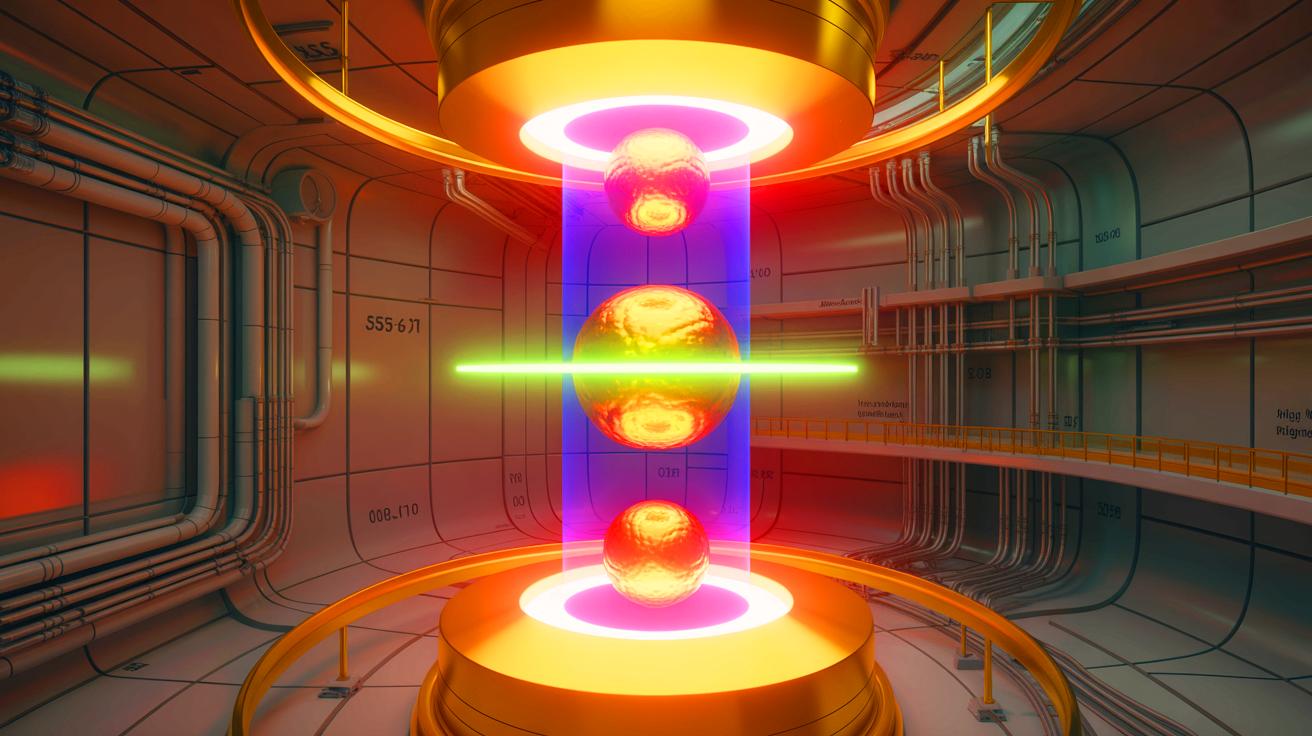
The process begins with thermonuclear fusion reactions within a Tokamak reactor, like the one being developed by the ITER project. This reaction generates high-energy neutrons, specifically those at 14 MeV, which are potent enough to convert stable mercury-198 into mercury-197. Mercury-197 then decays into gold-197, a stable isotope of gold. Researchers at Marathon Fusion envision embedding mercury into the reactor’s tritium breeding blanket to facilitate this transformation.
This approach is grounded in utilizing the neutrons produced during fusion, thereby achieving two outcomes: generating energy and producing gold. This method of controlled nucleosynthesis echoes the dreams of modern alchemy, yet it is firmly rooted in particle physics. The implications are profound, suggesting a dual-purpose functionality for future fusion reactors. Still, the complexity of this process invites skepticism and necessitates rigorous scientific validation.
A Viable Production Method or an Elusive Dream?
According to models presented on the arXiv platform, a fusion reactor could potentially yield several tons of gold per gigawatt of thermal energy annually. This projection assumes a continuous irradiation of mercury-198 with energetic neutrons. However, several significant challenges remain.
First and foremost, the gold produced via this method would initially be radioactive, rendering it unusable until it stabilizes. Additionally, ITER is not a commercial power plant but a research facility. The industrial-scale project DEMO would be the one to potentially implement this dual-production model. Moreover, the feasibility of this endeavor is currently speculative due to the high costs and technical challenges associated with controlled fusion. Thus, while the concept is intriguing, its practical implementation is far from assured.
A Double-Edged Sword: Innovation or Mirage?
As the push for clean energy progresses, the potential to produce valuable resources like gold sparks both excitement and caution. On one hand, fusion offers the prospect of an infinite, clean energy source. On the other, the ability to manufacture precious metals necessitates careful consideration of regulation, security, and ethical implications.
This project also raises concerns about the sustainability of materials, management of radioactive byproducts, and potential impacts on the precious metals market. It prompts reflection on the motivations driving scientific research: Are we seeking energy solutions, technological innovation, or material gain? Ultimately, the fusion-to-gold project is more than a scientific curiosity; it is an exploration of humanity’s ability to manipulate matter, posing a critical question about our priorities in energy production.
Reviving Ancient Myths in Modern Labs
The notion of turning lead into gold is no longer confined to the realm of ancient legend. Under the fluorescent lights of Tokamak reactors, the myth of the Cities of Gold is being reborn. However, this modern alchemy demands a deep reflection on the kind of future we wish to build. While the promise of creating both energy and gold is alluring, it also compels us to consider the broader implications for society and the planet.
Will the pursuit of dual-purpose fusion technology lead to a sustainable and equitable energy landscape, or will it exacerbate existing challenges and inequalities? As scientists and policymakers ponder the potential of this groundbreaking technology, the answers to these questions will shape the future of energy and economic development.
As we stand on the brink of a new era in energy production, the fusion-to-gold concept challenges us to rethink our approach to innovation. How can we balance the potential benefits with the ethical and practical considerations of such transformative technology?