



The Discovery: Scientists Stunned by Vapor Planet’s Potential, “This Changes Our Understanding”
 By
Leah Morrison
By
Leah Morrison
| IN A NUTSHELL |
|
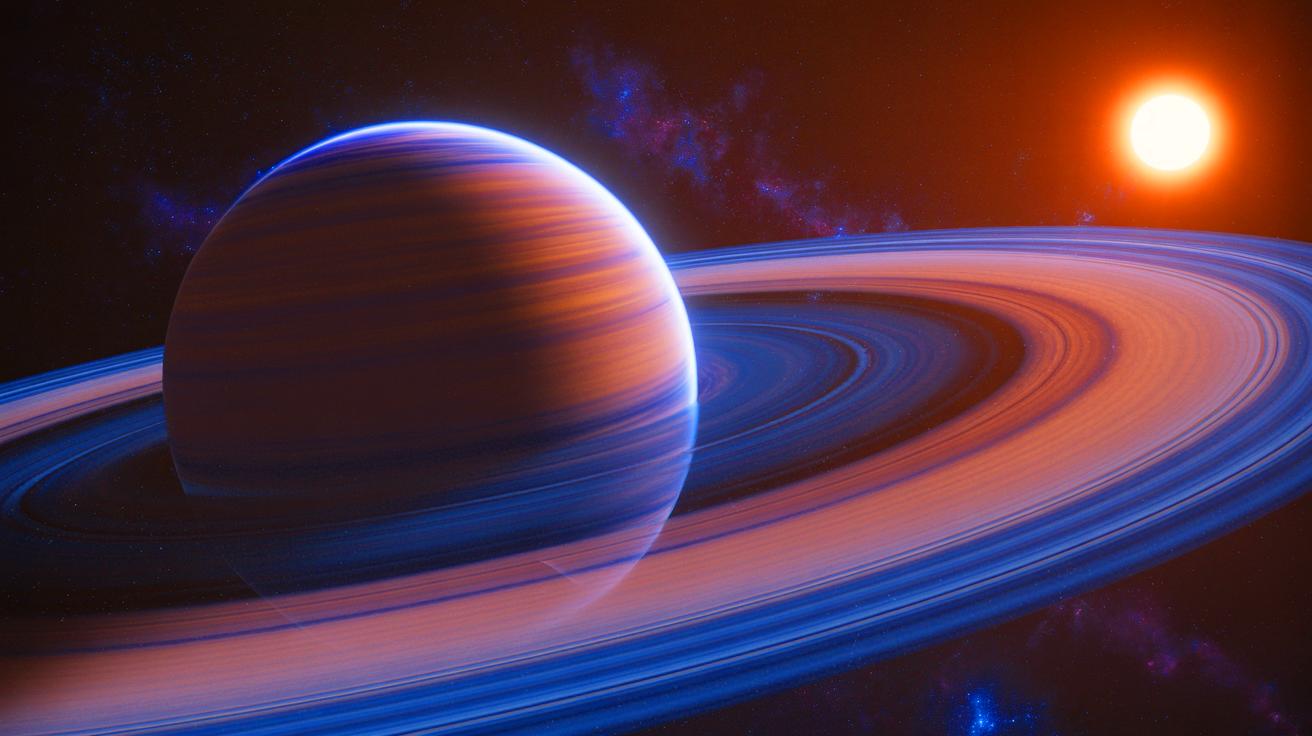
In recent years, the discovery of “vapor planets” has captivated the astronomical community. These celestial bodies, larger than Earth but smaller than Neptune, are characterized by atmospheres rich in water vapor. Despite being too hot to support liquid water, they remain crucial in the search for habitable planets. With the advancement of new scientific models, researchers aim to gain deeper insights into their composition and origin, which could pave the way for identifying other potentially viable worlds.
The Significance of Vapor Planets
Vapor planets have drawn attention since the detection of GJ 9827 d, discovered by the James Webb Space Telescope in October 2024. Located approximately 100 light-years away, this planet features an atmosphere almost entirely composed of water vapor, marking it as the first confirmed vapor planet. Following this discovery, astronomers have identified additional similar exoplanets, each offering new opportunities for study.
These planets typically orbit closer to their stars than Earth does to the Sun, resulting in surface temperatures too high to sustain liquid water. Instead, water exists only as vapor in thick atmospheric layers. This distinct characteristic makes them subjects of interest as they challenge our understanding of planetary environments and the conditions necessary for habitability.
A breakthrough model developed by a team from the University of California, Santa Cruz, provides a more precise way to analyze these planets. It considers various states of water, including pure vapor, supercritical fluid, and superionic ice. These states are difficult to replicate on Earth but are likely present within vapor planets, offering crucial insights into their unique properties.
Exploring Extreme Worlds in the Search for Life
Previous models relied heavily on data from icy bodies like Jupiter’s moon Europa or Saturn’s moon Enceladus. However, vapor planets present a different set of challenges and opportunities. They are more massive, up to 100 times so, and significantly hotter. This extreme environment allows for internal pressures that can transform water into superionic ice, a form that remains largely unstudied.
Black Hole Emerges in Cosmic Void: ‘This Is a Game-Changer for Space Science,’ Says Astrophysicist
According to Natalie Batalha, an astrobiologist, these planets act as natural laboratories, enabling the study of conditions impossible to reproduce in terrestrial labs. Their unique characteristics could even uncover unexpected niches for life within our galaxy. By understanding these planets better, scientists might redefine the criteria for habitability and expand the horizons of astrobiological research.
Promising Tools for Validating Hypotheses
One of the primary objectives is to compare vapor planets with oceanic planets, which could potentially harbor life. By refining our understanding of vapor planets, scientists hope to direct the search for life toward more promising candidates, thus increasing the chances of discovering extraterrestrial life.
The newly developed model will undergo testing with the upcoming PLATO mission, scheduled for launch by the European Space Agency in 2026. PLATO aims to identify Earth-sized planets within the habitable zones of their stars, and it will also evaluate whether the theoretical predictions about vapor planets hold true in real-world scenarios.
Even if vapor planets themselves are not habitable, their study is fundamental. They refine selection criteria and steer efforts toward the most promising worlds in the quest for extraterrestrial life. Understanding their atmospheres and compositions can illuminate the pathways to discovering life beyond our planet.
The Future of Exoplanetary Research
The ongoing exploration of vapor planets represents a significant step forward in our quest to comprehend the vast array of planetary types in our galaxy. As scientists continue to develop and refine their models, these planets provide a benchmark against which other exoplanetary environments can be compared. This comparative approach is essential in identifying planets that may host life.
Furthermore, each discovery pushes the boundaries of our scientific knowledge and challenges existing paradigms about what constitutes a habitable environment. With missions like PLATO on the horizon, the future of exoplanetary research looks promising, promising to yield even more insights.
The study of vapor planets is reshaping our understanding of the cosmos. As we advance our scientific capabilities and expand our search for life, what other types of planets might we discover, and what secrets do they hold? The answers may lie in the uncharted territories of our galaxy, waiting to be uncovered.