



“Unbelievable Treasure Surfaces”: 2,500-Year-Old Ship Found Intact in Sicily Stuns the World
 By
Leah Morrison
By
Leah Morrison
| IN A NUTSHELL |
|
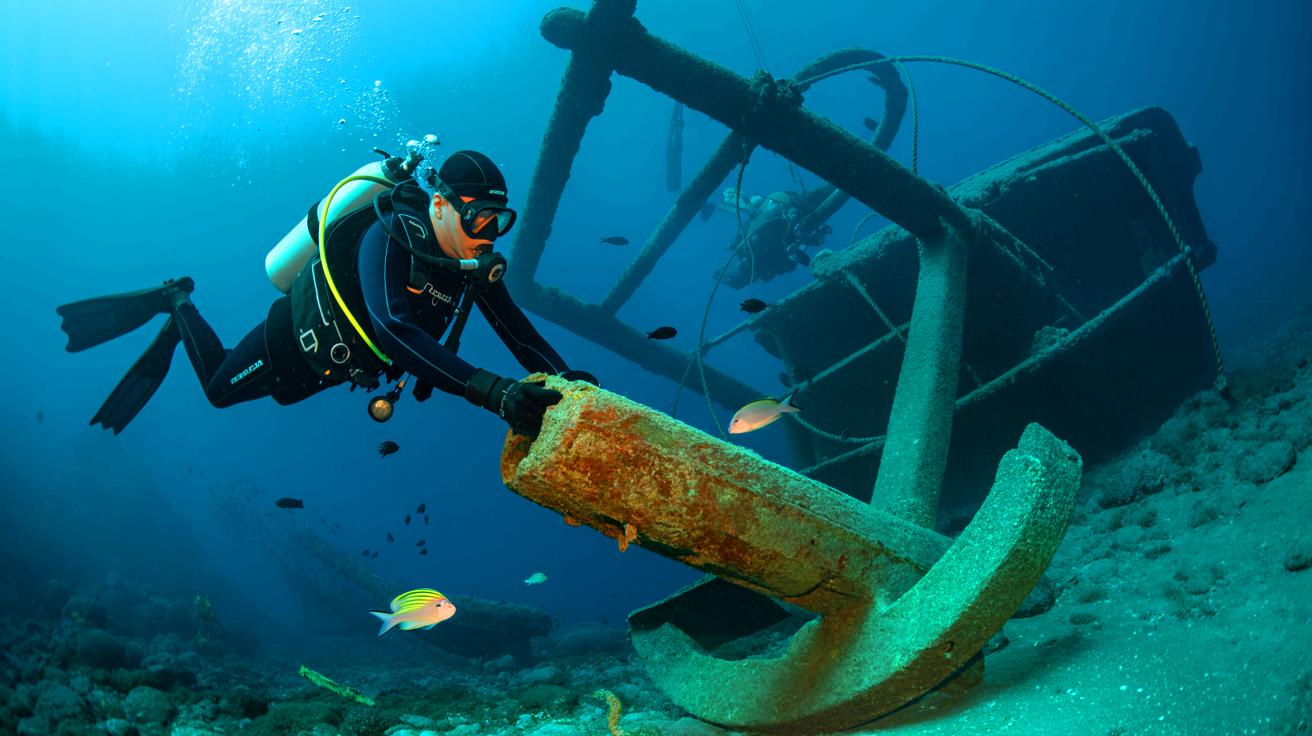
In the azure depths off the coast of Santa Maria del Focallo, Sicily, a team of divers has uncovered a remarkably well-preserved ancient shipwreck. This finding, alongside four massive anchors, sheds light on Sicily’s strategic role in ancient maritime trade between Greece and the wider Mediterranean. The discovery combines chance with expertise and provides fresh insights into the intricate web of historical trade routes. Sicily, often considered a cultural melting pot, stands at the crossroads of civilizations, and this shipwreck is a testament to its historical significance in facilitating commerce and cultural exchanges.
Unearthing Evidence of Ancient Maritime Trade
The Superintendence of the Sea in Sicily has released detailed photographs and preliminary analyses of the shipwreck. Researchers have dated the vessel to the 6th or 5th century BCE. The discovery was made during excavations led by the Department of Humanities and Cultural Heritage at a local university. Evidence suggests that the ship was likely a merchant vessel, as its structure and size align with those used by Greek colonies along the Sicilian coast.
Notably, the four anchors found alongside the wreck bolster the hypothesis of its commercial purpose. The ship likely sailed between Sicily and several Greek ports, carrying precious goods. “This discovery,” said Francesco Paolo Scarpinato, the regional cultural heritage advisor, “illustrates the central importance of the island in ancient maritime routes and reflects the intensity of cultural exchanges in the Mediterranean.”
This finding paints a vivid picture of ancient trade, highlighting the economic and cultural ties that bound the Mediterranean world. It underscores how Sicily was not merely a passive waypoint but an active participant in a vibrant network of exchange.
Scientific Significance Amidst Fragile Conditions
Under the guidance of Professor Massimo Capulli, a specialist in naval archaeology, the divers proceeded with caution. Although the hull is identifiable, it has suffered significant damage from marine mollusks, which is expected at such depths. These deteriorations make any direct handling risky.
To mitigate the risk of information loss, the team plans a complete 3D modeling of the shipwreck. This method will allow them to analyze each element without endangering the original structure. According to Capulli, this ship serves as a direct witness to a pivotal era: the transition from Archaic Greece to Classical Greece.
Before Roman dominance, Greeks and Phoenicians were already vying for strategic control of the seas surrounding Sicily. This shipwreck offers a rare glimpse into the maritime conflicts and collaborations that shaped the ancient Mediterranean.
Three Weeks of Intensive Excavation
The excavation spanned three weeks, involving the third diving unit of the Messina Coast Guard, the Pozzallo Port Authority, and the underwater archaeology team from the University of Friuli. This collaboration ensured the site was meticulously documented and secured.
The mission is part of the Kaukana Project, initiated in 2017, with the aim of reconstructing the ancient coastal landscape between Ispica, Kaukana, and Kamarina, while cataloging submerged heritage. Each excavation campaign enriches our understanding of the Mediterranean’s maritime past.
This endeavor reminds us that the ocean floors still hold many treasures capable of transforming our historical narratives. The project’s success highlights the importance of international cooperation in archaeological research, as only through such collaborations can we piece together the vast puzzle of our shared history.
The Broader Implications of the Discovery
As the details of this shipwreck continue to unfold, the implications extend beyond mere historical curiosity. This find offers insights into the technological advancements and navigational techniques of ancient seafarers. It also opens new avenues for exploring the cultural exchanges facilitated by maritime trade.
The discovery serves as a poignant reminder of the interconnectedness of ancient societies. It prompts us to reconsider the ways in which trade and travel have historically influenced cultural development. Furthermore, it underscores the ongoing importance of preserving underwater cultural heritage, which remains vulnerable to both natural and human threats.
As we continue to explore the depths of our oceans, what other secrets from our past might we uncover, and how will they reshape our understanding of history?