


Antarctica’s 100-Foot Ice Secret: “30 Million-Year-Old World” Sparks Global Fury Over Earth’s True History
 By
Ethan Reid
By
Ethan Reid
| IN A NUTSHELL |
|
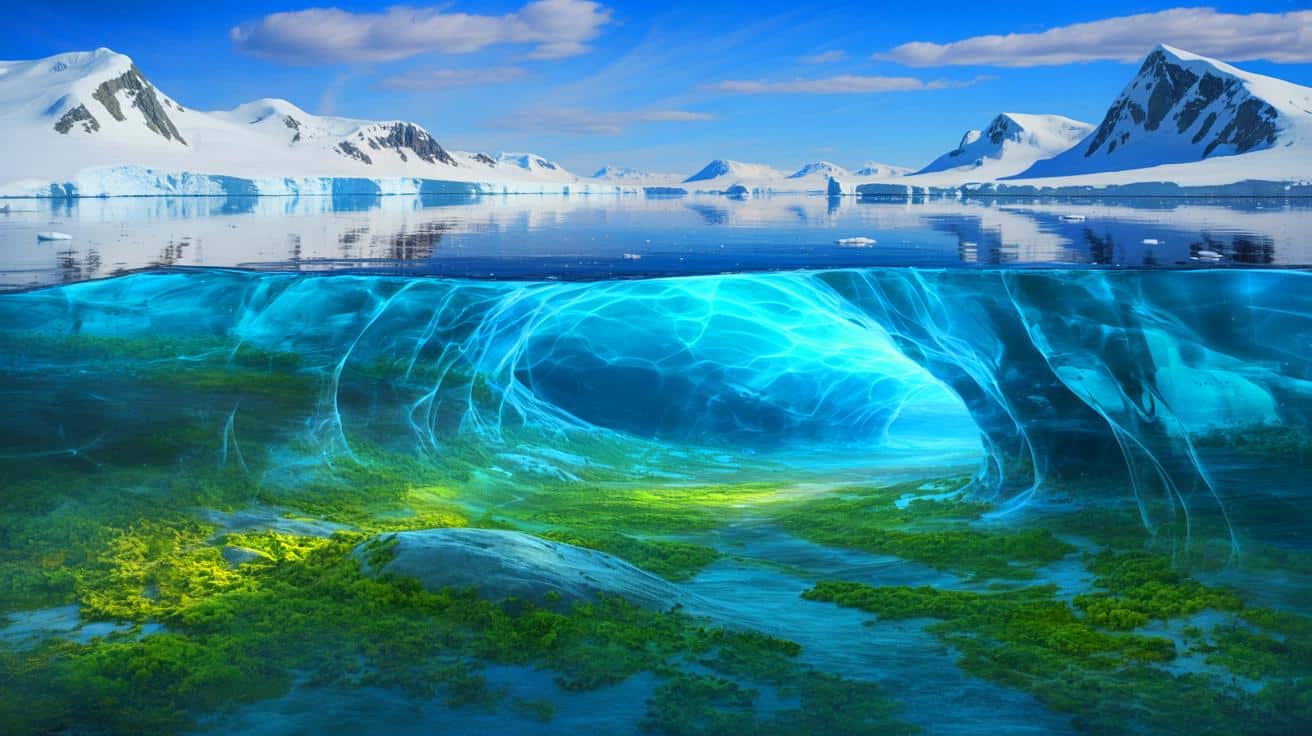
In a groundbreaking revelation, scientists have uncovered an ancient ecosystem beneath the ice of East Antarctica, hidden for over 30 million years. This discovery offers an unprecedented glimpse into a world frozen in time, potentially reshaping our understanding of Earth’s climate history. As researchers delve deeper into this pristine environment, they uncover landscapes that have remained untouched since the age of early mammals. The implications of these findings extend beyond mere curiosity, providing critical insights into the mechanisms that govern ice flow and sea level changes, crucial for predicting future climate scenarios.
A Prehistoric Landscape Unveiled
The discovery takes us back to a time between 80 and 34 million years ago, when Antarctica was not the icy desert we know today. During this period, the continent was part of the supercontinent Gondwana, characterized by vast river systems that sculpted the ancient plains, deep valleys, and remarkably flat terrains. These geological formations, stretching over 2,175 miles, tell a story of fluvial erosion that shaped the continent long before the ice sheet formed.
These landscapes are relics of a bygone era, preserved in rock beneath the ice. The imprints of ancient rivers reveal the dynamic processes that once molded this isolated continent. This glimpse into the past provides a unique opportunity to understand the forces that have long been hidden beneath layers of ice, offering valuable context for current geological and climatic conditions.
Advanced Technology Unlocks Subglacial Secrets
The breakthrough in uncovering this hidden world would not have been possible without recent advancements in radar imaging technology. Scientists utilized data from four aerial exploration campaigns to map the topography concealed beneath miles of ice. The findings were surprising: consistently flat surfaces were found across all regions analyzed, suggesting a widespread geological process that occurred before Antarctica’s glacial period.
Contrary to previous assumptions, the ice sheet has not always eroded these ancient formations. In some cases, it has acted as a protective layer, preserving these surfaces against the passage of time. This revelation highlights the complex interactions between ice and underlying geology, challenging existing theories about the continent’s geological history.
Impact on Ice Melt and Sea Levels
The significance of this discovery extends beyond geological interest. It has direct implications for current climate models. The fossilized landscapes influence how Antarctic ice flows towards the ocean. Flat surfaces slow down the movement of ice, while deep valleys create corridors for rapid melting. This knowledge is crucial for understanding how changes in ice dynamics affect global sea levels.
Antarctica holds enough ice to cause a sea level rise of over 164 feet. Understanding the mechanisms of ice flow is vital for anticipating the impacts of climate change. Researchers are now incorporating these findings into climate models to refine future predictions, emphasizing the importance of integrating geological insights into climate science.
A Geological Time Capsule for the Future
This buried world serves as a genuine geological time capsule, offering insights into both Earth’s past and its potential future. By exploring this fossilized environment, scientists are not only uncovering how the planet has evolved but also gaining clues about how it may respond to future climatic shifts. The next step involves drilling through the ice to collect rock samples, which will provide further understanding of this ancient landscape’s history.
This remarkable discovery underscores a fundamental truth: to predict our climate future, we must sometimes look deep into the past. The findings challenge us to consider the long-term geological processes that continue to shape our world, urging a deeper exploration of Earth’s hidden histories.
As we uncover more about this ancient ecosystem beneath Antarctica’s ice, we are reminded of the intricate connections between past and present climates. What other secrets might this frozen continent hold, and how will they inform our understanding of Earth’s climatic future?