


Archaeologists Uncover Viking Head: “This Changes Everything About Our History,” Declares Leading Expert
 By
Ethan Reid
By
Ethan Reid
| IN A NUTSHELL |
|
On a windswept island in the north of Scotland, a remarkable archaeological discovery has reignited interest in the forgotten Viking past. A 900-year-old stone head has been unearthed, its gaze fixed and almost lifelike. The questions it raises are intriguing: What was its purpose there? Whom does it represent? And why is its nose broken? These questions are sparking debates among archaeologists and historians alike, offering a glimpse into a culture long silent. This discovery not only captures the imagination but also serves as a testament to the enduring mysteries of the Viking era.
The Accidental Discovery on Rousay’s Viking Lands
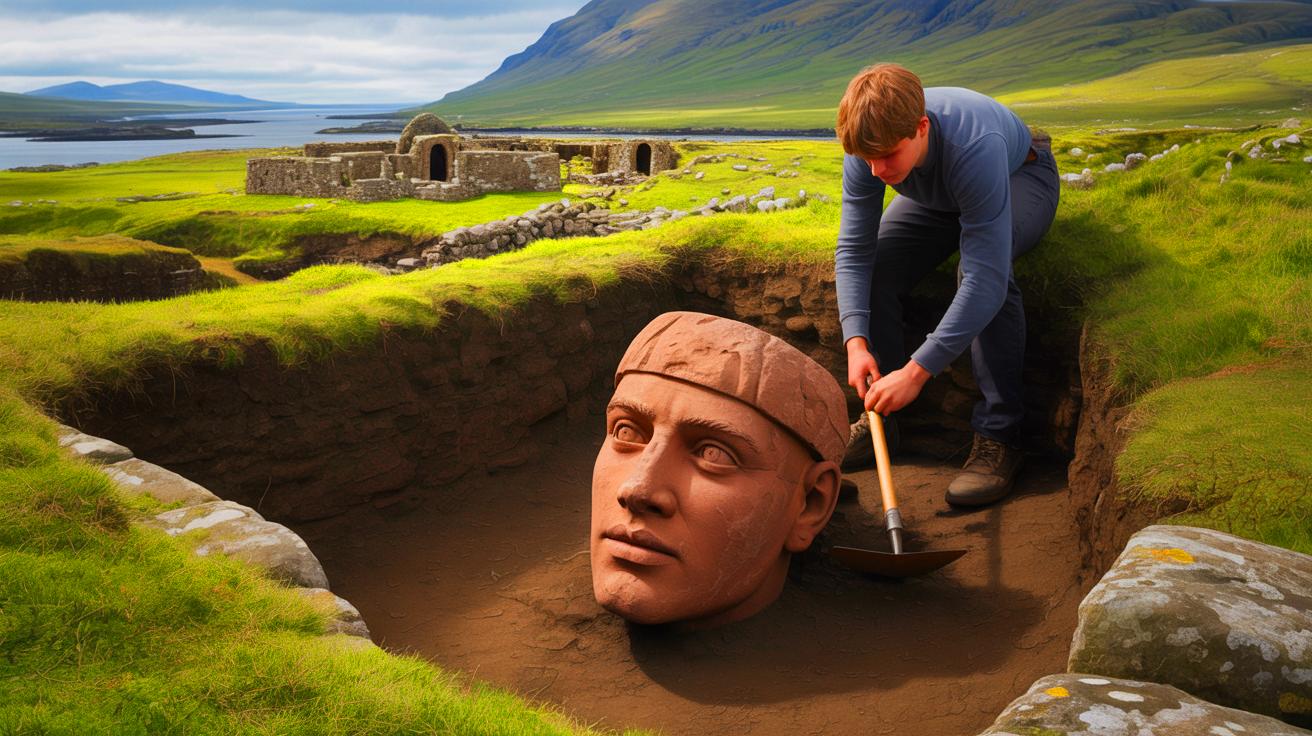
In the summer of 2025, on the island of Rousay in the Orkney archipelago, the Skaill farm site buzzed with archaeologists hunting for remnants of the past. Among them was Katie Joss, an archaeology student who stumbled upon what seemed to be just another red stone. Upon closer examination, however, she froze in awe, a sculpted face stared back at her.
This red sandstone head, likely carved in the 12th century, is a marvel of expression with its asymmetrical eyebrows and a nearly amused squint. Yet, its nose is conspicuously broken, suggesting a possibility of symbolic vandalism or perhaps the deliberate destruction of a religious figure. The sandstone, sourced from the nearby island of Eday known for its warm red hue, reveals a richly rooted craftsmanship in the island’s landscape. Thus, it sketches the contours of a past that has remained silent for centuries.
St. Magnus Cathedral and Medieval Nordic Influences
The Orkney Islands, once a Viking stronghold, are teeming with archaeological mysteries. Rousay, often called the “Egypt of the North,” is home to over 150 ancient sites. The Skaill head may have belonged to a vanished religious building or been linked to a significant figure like 12th-century Viking chieftain Sigurd of Westness. As such, it is a crucial piece for understanding the cross-cultural influences that have shaped the archipelago’s identity.
Experts are particularly intrigued by the striking similarity to another sculpture at St. Magnus Cathedral in Kirkwall. The same hairstyle, artistic style, and type of stone suggest the possibility of a shared workshop or a regional sculptural tradition. Moreover, this opens avenues for new research on the connections between the religious power centers of that era. Yet, a mystery lingers: how did a work from the 11th or 12th century end up buried in a 15th-century embankment? Was it reused as material, hidden intentionally, or simply forgotten until fate made it visible again?
A Silent Enigma Bridging Two Worlds
“When we turned it over, we saw a face looking at us,” recounts Katie Joss, still moved by her find. This face continues to pose questions. For archaeologists, this discovery transcends a mere artifact. It becomes a bridge between two eras, connecting sacred art and secular memories, Nordic culture and British heritage.
A simple stone fragment, yet one that tells a story far wider, denser, and more human. With its fixed gaze, it invites us to question what we think we know about our shared past. Perhaps it reveals that civilizations never truly die; they continue to watch us silently from the layers of history.
The Broader Implications for Archaeological Research
The discovery of the stone head on Rousay island is not just an isolated incident but part of a broader narrative that enriches our understanding of historical connections. The artifact’s ties to the St. Magnus Cathedral and the potential religious implications highlight the intricate web of cultural and spiritual exchanges in medieval times. This find encourages a reevaluation of the influence of Norse traditions on Britain’s northern territories.
Furthermore, the continuing research could provide insights into the societal structures of the time, revealing the roles of artisans and religious leaders in shaping the cultural landscape. As researchers delve deeper, they may uncover more artifacts that could change our understanding of the Viking presence in the British Isles. The question remains: what other secrets lie beneath the surface of these ancient lands?
As archaeologists continue to piece together this puzzle, they are left to ponder the enduring impact of such discoveries on our comprehension of history. What other forgotten tales and connections might these silent witnesses to history reveal?