


“Frozen Giants Resurface”: Prehistoric Sharks Trapped for 325 Million Years Emerge from Depths to Stun the World
 By
Ethan Reid
By
Ethan Reid
| IN A NUTSHELL |
|
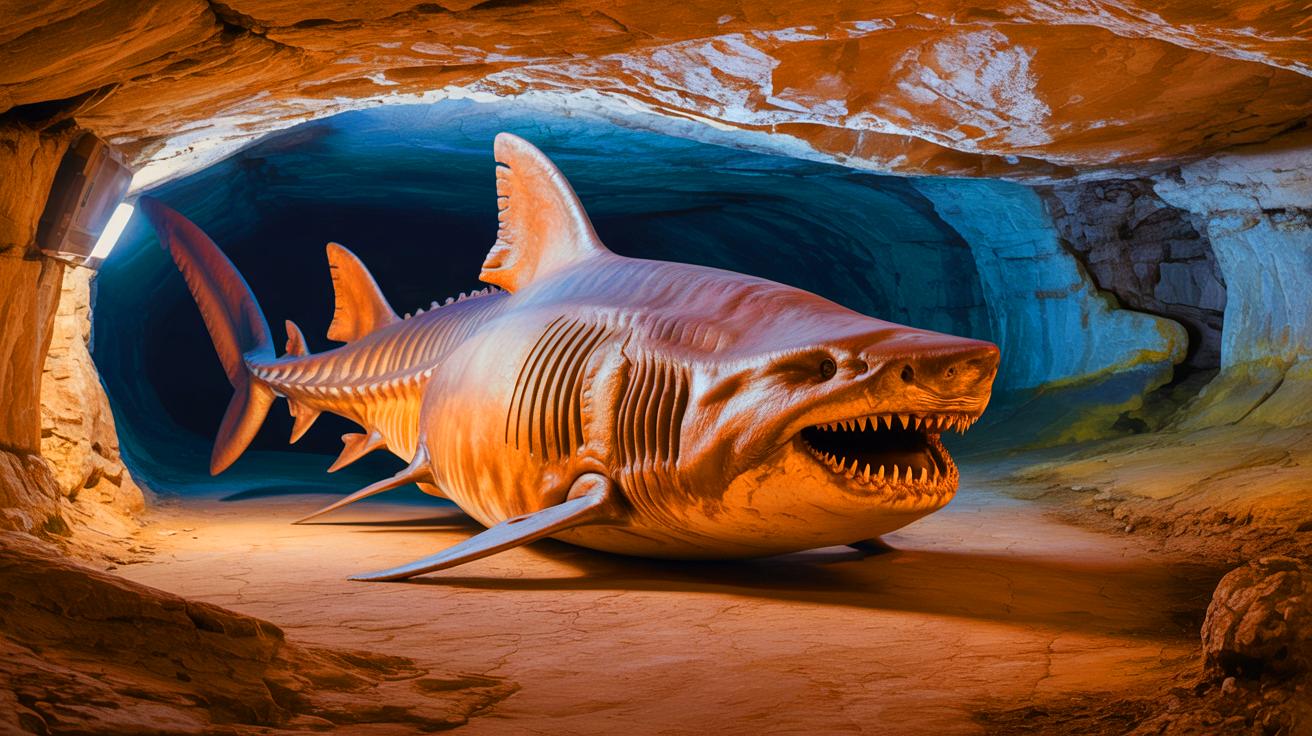
The discovery of ancient shark fossils within the depths of Mammoth Cave in Kentucky and another cavern in Alabama has shed light on the complex history of marine predators that once roamed the Earth. These fossils, dating back 325 million years, reveal a fascinating glimpse into the past, showcasing the evolutionary journey of these oceanic giants. As we delve deeper into the significance of these findings, we uncover the intricate processes that have preserved these relics and the story they tell about the environment of the Carboniferous period.
How Mammoth Cave Turned Marine Carcasses into Pristine Archives
Deep within the 420-mile stretch of Mammoth Cave lies a unique environment that has contributed to the exceptional preservation of fossils. The cave maintains a consistent temperature of 55°F and an impressive humidity level of over 98%, ideal conditions for fossil preservation. This stable climate allows organic material to mineralize gradually, resulting in the discovery of remarkably intact remains. These fossils appear almost as if they were from yesterday, not 325 million years ago.
During the Carboniferous period, the region that is now Kentucky and Alabama was covered by an inland sea connecting North America to other basins. The formation of the supercontinent Pangaea caused these marine beds to rise, trapping carcasses within limestone sediments. Over time, as waters receded, karst caves formed, creating natural time capsules that protected these fossils. The absence of external disturbances and the stability of the cave’s microclimate have preserved rare details such as skin imprints, mineralized internal organs, and wear marks on teeth, providing a unique window into prehistoric marine life.
Troglocladodus and Glikmanius: Anatomy and Adaptations of Carboniferous Lords
Paleontologists have identified two remarkable species from these fossils: Troglocladodus trimblei and Glikmanius careforum. Troglocladodus, a 10-foot-long ctenacanth shark, had distinct forked teeth specialized for grasping fast-moving fish without crushing them. Microscopic striations on the teeth indicate frequent captures of orthocones and small bony fish.
In contrast, Glikmanius, measuring approximately 12 feet, possessed a powerful jaw and comb-shaped defensive spines along its spine. These spines likely served as anti-predator mechanisms and helped stabilize the shark in ocean currents. Both species dominated the coastal food chain, their sizes comparable to that of modern great white sharks, marking them as apex predators of their time. They thrived in shallow waters near reefs and lush marine fern forests, showcasing their adaptability and evolutionary prowess.
From Ancient Shores to Underground Galleries: A Geological Odyssey
Imagine a coastline alternating between deltaic plains and crinoid reefs, where each tide brought nutrients and sediments that naturally buried shells, fish, and sharks. Over time, tectonic movements merged Africa, North America, and Europe into Pangaea, causing marine waters to recede and transform deposits into limestone. Faults and folds eventually led to the formation of caves.
Rainfall and infiltration gradually dissolved rocks, carving out deep caverns. Beneath a protective layer of limestone, these fossils lay undisturbed until targeted excavations and geophysical surveys facilitated their recovery. This geological journey highlights the intricate processes that have safeguarded these ancient remnants, underscoring the dynamic history of our planet’s surface.
Protecting Our Caves, Guardians of Earth’s Secrets
The rediscovery of Troglocladodus and Glikmanius enriches our understanding of the Carboniferous period, a pivotal era for marine life. However, these findings also emphasize the urgent need to preserve our caves amidst threats from tourism and mining activities. Each cavern serves as a natural archive, housing precious testimonies of extinct species. Protecting these sites is essential for safeguarding the planet’s memory. Indeed, beneath our feet, the Earth still harbors its marine secrets, remnants of a world predating the dinosaurs.
As we continue to explore the mysteries buried within our planet, these ancient marine fossils remind us of the ever-evolving story of life on Earth. What other secrets lie hidden, waiting to be uncovered in the depths of our world’s geological history?