

NASA Faces Backlash: “This Bold Experiment Risks Lives” as Four Simulate Year-Long Mars Mission on Earth
 By
Ethan Reid
By
Ethan Reid
| IN A NUTSHELL |
|
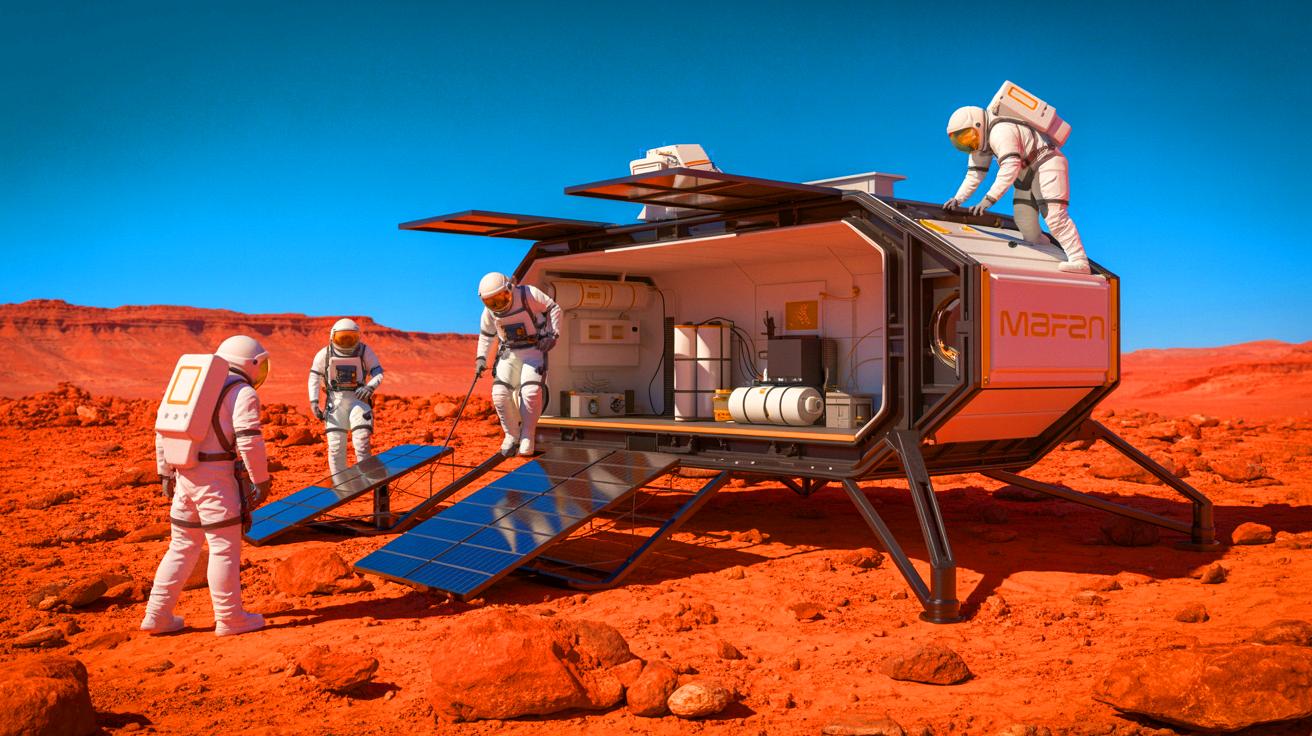
In a bold experiment aimed at advancing human exploration of Mars, four volunteers are set to spend an entire year in isolation at a research center in Houston. This mission, known as CHAPEA, will simulate the harsh conditions of the Red Planet, including limited resources, delayed communications, and prolonged confinement. The habitat, although located on Earth, is a meticulously crafted 3D-printed environment that mirrors the challenges of living on Mars. The findings from this mission will provide invaluable insights into the physical and psychological demands of future manned missions to Mars.
A 3D-Printed Habitat for Simulating Mars Conditions
NASA’s ambitious project to simulate life on Mars takes place within the Mars Dune Alpha habitat, a structure created using advanced 3D-printing technology. This habitat is designed to replicate the rigorous challenges astronauts would face on an actual Mars mission. Over the course of 378 days, the four participants will live in total isolation from the outside world, grappling with limited access to water, energy, and human contact. Suzanne Bell, co-leader of the project, emphasizes the importance of imposing these constraints to accurately reflect Martian conditions. “We impose the restrictions of resources, prolonged isolation, and even the delays of communication with Earth,” she explained. Such meticulous planning ensures that the simulation closely resembles the real-life challenges of a Martian expedition.
The Mars Dune Alpha serves as a testbed for assessing various survival strategies and technological solutions. By living under these simulated conditions, the volunteers will help researchers identify potential pitfalls and refine plans for future missions. This experiment is crucial for understanding how to maintain human life on Mars, where the environment poses significant risks to health and well-being.
A Year of Isolation to Test Human Limits
Spending a year confined in an enclosed environment presents a formidable challenge, even when simulating Mars on Earth. The participants will have no direct contact with family and friends, and their daily routines will be strictly monitored and analyzed. This mission is designed to study the psychological and physical effects of stress, isolation, and cooperation in extreme conditions. The insights gained will be vital for preparing astronauts for the mental and emotional strains of a real journey to Mars.
However, not everyone shares NASA’s optimistic outlook. Some experts caution that the challenges of a manned mission to Mars are more complex than they appear. Marie-Ange Sanguy, editor-in-chief of Espace & Exploration, notes that the journey to Mars is long, and the conditions on the planet are harsher than those on the Moon. Her observations highlight the importance of human resilience alongside technological advancements in overcoming the obstacles of Martian exploration.
Scientific Ambition and Global Competition: Who Will Step on Mars First?
Behind the scenes, a new space race is unfolding. As NASA aims to showcase its capability to send humans to Mars, China is also aggressively pursuing its own Martian program. This intensifying competition positions Mars as a battleground for scientific and symbolic supremacy among global superpowers. The race to Mars is not just a pursuit of scientific knowledge but also a demonstration of national prowess and technological leadership.
Adding another layer to this race is Elon Musk, the visionary founder of SpaceX. Musk has long dreamed of colonizing Mars, and he views this simulation mission as a logical step toward establishing a permanent human presence on the planet. His involvement underscores the growing influence of private enterprises in space exploration. As these actors vie for the distinction of being the first to land humans on Mars, the countdown has already begun, promising an exciting and competitive future for space exploration.
As the CHAPEA mission unfolds, it will provide critical insights into the challenges of living on Mars. The data collected will inform future strategies and technologies necessary for sustaining human life on the Red Planet. However, the question remains: how will nations and private entities collaborate or compete to overcome the significant hurdles of Martian colonization? This unfolding narrative will shape the future of humanity’s reach into the cosmos.