



NASA’s James Webb Telescope Unveils 2,500+ Galaxies: “An Unprecedented Cosmic Dive” Sparks Heated Debate Over Space Exploration and Funding
 By
Leah Morrison
By
Leah Morrison
| IN A NUTSHELL |
|
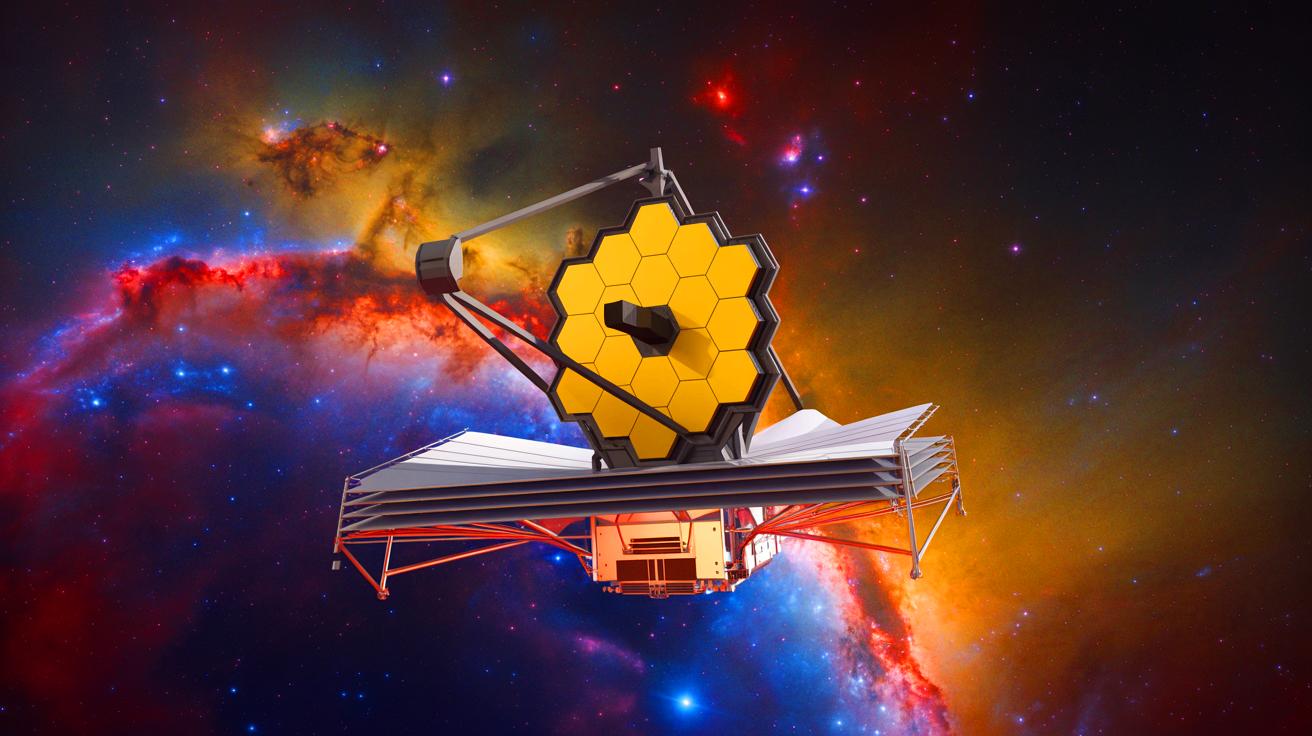
The James Webb Space Telescope continues to open doors to new cosmic revelations, capturing breathtaking images that revisit and expand our understanding of the universe’s infancy. On August 1st, the European Space Agency (ESA) unveiled Webb’s image of the month, a detailed mosaic that reveals over 2,500 galaxies. This image offers a fresh perspective on a celestial region previously explored by the Hubble Space Telescope. With its advanced infrared technology, Webb uncovers galaxies that have remained hidden until now, diving deep into the universe as it existed just hundreds of millions of years post-Big Bang. These insights are reshaping our grasp of cosmic formation and evolution.
The Dawn of the Universe: A Fresh Perspective
The James Webb Space Telescope has been operational since June 2022, and it has already begun to unravel the mysteries of the cosmos with unparalleled clarity. The latest image, released by the ESA, highlights a region of the sky known as the Hubble Ultra-Deep Field. This area is renowned for containing nearly 10,000 galaxies, captured previously by Hubble between September 2003 and January 2004. Webb’s rendition now presents a more detailed view, revealing thousands of distant galaxies, some of which date back to the earliest epochs of cosmic history.
In 2004, Hubble’s Ultra-Deep Field image was considered the most profound view of the universe available. Fast forward to 2025, and Webb’s observations have taken this record further. The telescope’s sophisticated instruments have unveiled galaxies that were previously invisible, offering a new lens through which to examine the formation and structure of cosmic entities. As we peer into the distant universe, we are, in essence, looking back in time, allowing scientists to study how the earliest galaxies formed, organized, and evolved.
Unprecedented Observations With Infrared Technology
Webb’s ability to uncover these cosmic wonders lies in its advanced infrared technology. The recent image was captured using three short-wavelength filters from the Mid-Infrared Instrument (MIRI). This observation spanned nearly 100 hours, marking the longest extragalactic observation by Webb with a single filter. The telescope’s infrared capabilities are crucial for penetrating cosmic dust that obscures celestial objects in visible light. As a result, Webb can detect distant and ancient galaxies that Hubble could not.
The exceptional observation time and high resolution of Webb, even in the mid-infrared spectrum, have allowed for significant advancements. Researchers can now analyze the structure of numerous galaxies and study the distribution of their light. This analysis aids in understanding their growth, morphology, and dynamic evolution. Additionally, these observations enable scientists to map stellar populations and estimate star formation rates in young galaxies. In some cases, they even reveal the presence of supermassive black holes at their cores.
Revisiting Cosmic History Through Advanced Imaging
The unveiling of Webb’s latest image marks a significant milestone in our quest to understand the universe’s origins. By revisiting regions of the sky previously observed by Hubble, Webb provides a more comprehensive view of the early universe. The telescope’s ability to peer into the past offers critical insights into the formation and evolution of galaxies. With each new discovery, Webb continues to answer age-old questions and challenges our current understanding of cosmic history.
The data gathered from these observations is invaluable for astronomers seeking to piece together the intricate puzzle of the universe’s development. By examining the light from these ancient galaxies, researchers can gain insights into the processes that shaped the cosmos in its infancy. As Webb continues its mission, it promises to shed light on the fundamental questions of how galaxies formed and evolved over billions of years.
The Future of Cosmic Exploration
The James Webb Space Telescope is charting new territory in the field of astronomy. Its advanced technology and capabilities are paving the way for future discoveries that could redefine our understanding of the universe. As Webb continues to explore the distant past, it is poised to address questions that were unimaginable just two decades ago. With each new image and revelation, the telescope brings us closer to comprehending the complexities of cosmic evolution and the origins of the universe.
Webb’s ongoing mission is not only to explore the past but also to inspire future generations of scientists and astronomers. The telescope’s ability to unlock the secrets of the universe holds the potential to revolutionize our understanding of space and time. As we continue to delve into the depths of the cosmos, what new mysteries will Webb uncover, and how will they reshape our perception of the universe?