


“These Bombs Are Sitting Ducks”: Chinese Study Reveals US Bunker Busters Shockingly Vulnerable to Anti-Aircraft Fire
 By
Leah Morrison
By
Leah Morrison
| IN A NUTSHELL |
|
The geopolitical landscape is often shaped by advancements and vulnerabilities in military technology. Recent revelations from a Chinese study have highlighted a potential Achilles’ heel in the US Air Force’s GBU-57 Massive Ordnance Penetrators (MOP), better known as bunker buster bombs. This study suggests a strategic method to counter these formidable weapons, which could have significant implications for future military engagements. As nations continuously seek to outmaneuver each other in technological warfare, understanding these vulnerabilities becomes crucial.
Understanding the GBU-57 Bunker Buster
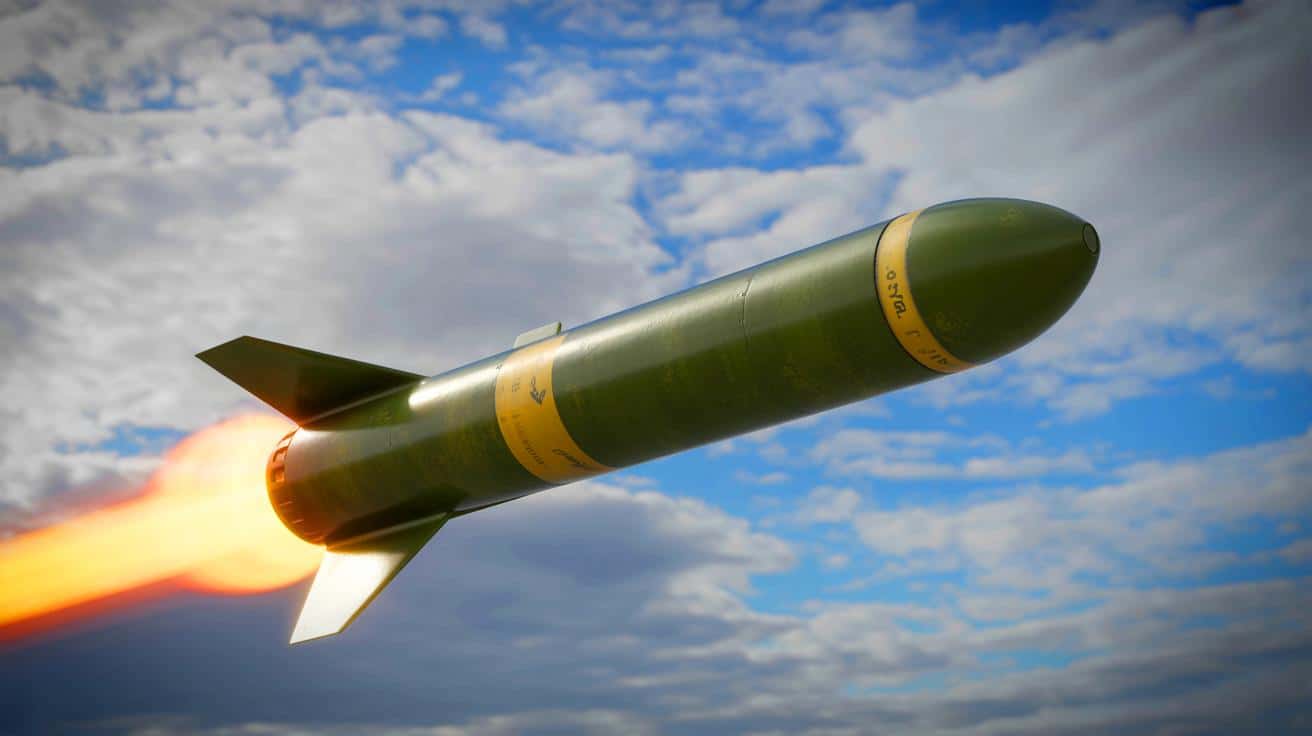
The GBU-57 Massive Ordnance Penetrator is a cornerstone of the US military’s arsenal against fortified underground targets. Designed to penetrate deep into the earth, these bombs are equipped with a heavily reinforced, egg-shaped nose that allows them to burrow through thick layers of concrete and soil. However, according to Chinese researchers, the bomb’s sides are its weak point. The steel encasing the sides is relatively thin, measuring just a few inches in thickness, which makes them susceptible to anti-aircraft fire.
Chinese scientists, led by Cui Xingyi, conducted computer simulations using Swiss Oerlikon GDF guns, which are prevalent in the Middle East. These guns demonstrated a 42% success rate in incapacitating the bombs from a distance of 3,900 feet. The study indicated that striking the bomb’s sides at an angle less than 68 degrees was key to successfully neutralizing the threat. This revelation opens the door to developing countermeasures that can potentially mitigate the threat posed by these formidable munitions.
Vulnerable to Side Strikes
Despite the GBU-57’s formidable reputation, the new study suggests that its vulnerability lies in its side structure. When launched, these bombs are typically expected to face minimal resistance, as was the case when US B-2 bombers targeted Iranian nuclear sites. However, the Chinese study points out that the sides of the bomb, if struck effectively, could lead to its destruction. The key is precision targeting.
For an anti-aircraft shell to penetrate the bomb, it must strike at an angle of less than 68 degrees. Beyond a distance of 4,900 feet, penetration becomes less likely, but within 3,900 feet, the combination of heat and shrapnel could ignite the bomb’s explosives. This discovery hinges on principles akin to World War II armor-piercing tactics, where precise targeting and timing are paramount. The challenge lies in accurately pre-aiming at a specific point in the bomb’s trajectory, a technique dubbed the ‘sniper fire control’ tactic.
Strategy Comes with Caveats
While the Chinese study presents a compelling case for countering bunker busters, its implementation is fraught with challenges. The sniper-style interception strategy requires guns to be pre-aimed, which drastically reduces response time to just one millisecond. This approach is feasible with current technology, making it an attractive option for nations seeking to bolster their defenses against such threats.
However, the unpredictability of real-world combat scenarios cannot be understated. Air forces can preemptively target and destroy anti-aircraft positions, nullifying this defensive strategy. Moreover, the effectiveness of the strategy is limited by the bomb’s ability to perform evasive maneuvers during its final approach, complicating targeting efforts. Additionally, the unique environmental and technological factors in different regions may render this strategy less effective outside of China.
Implications for Global Military Strategy
This revelation from Chinese military scientists could significantly influence global military strategies. As nations race to develop countermeasures, the balance of power could shift, prompting the US and its allies to reinforce or redesign their munitions to address these vulnerabilities. This cat-and-mouse game of military technology underscores the importance of continuous innovation and adaptation.
The potential for such vulnerabilities to be exploited in future conflicts raises questions about the sustainability of current military strategies. As nations invest in both offensive and defensive capabilities, the interplay between technological advances and strategic countermeasures will likely define the future of warfare. In this context, understanding and addressing the weaknesses in existing arsenals become paramount for maintaining strategic superiority.
As the study suggests, the vulnerabilities in military technologies can shape the future of warfare in unforeseen ways. How will nations adapt to these revelations, and what new strategies will emerge to secure their interests in an ever-evolving geopolitical landscape?