

Scientists Claim ‘It’s Coming Back’: This Extinct Bird’s Shocking Return Could Change Nature Forever
 By
Ethan Reid
By
Ethan Reid
| IN A NUTSHELL |
|
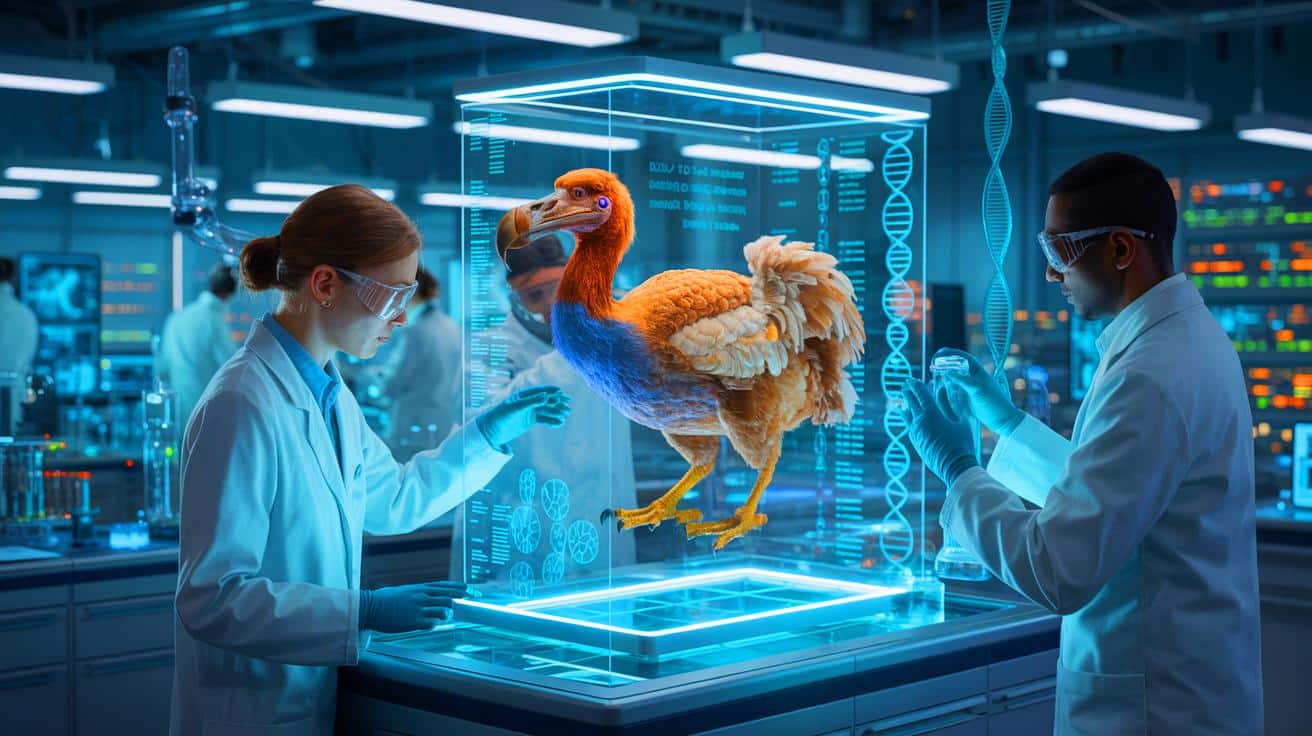
In a bold and ambitious move, Colossal Biosciences claims to have reached a significant milestone in its quest to resurrect the dodo, a bird that has been extinct for roughly 400 years. Known for previous efforts to bring back the woolly mammoth and the Tasmanian tiger, the startup is at the forefront of what some call “de-extinction.” Yet, this scientific endeavor raises complex ethical questions and technical challenges. While the prospect of seeing the dodo once again wandering the Earth captivates the public imagination, it also prompts a deeper reflection on the implications of such scientific advancements.
The Journey Toward Resurrecting the Dodo
Colossal Biosciences has captured headlines by announcing its intention to bring back the dodo, a bird that has become emblematic of extinction. The startup has made progress in pioneering the genetic techniques needed for this ambitious project. However, unlike mammals, resurrecting birds like the dodo presents unique challenges. As Beth Shapiro, Colossal’s scientific director, explains, cloning a bird is not feasible. Instead, the process involves creating two artificial generations and crossbreeding modified genes to achieve the desired outcome.
The recent success with cultivating specialized cells from domestic pigeons marks a promising step. The next phase involves applying these techniques to the Nicobar pigeon, the dodo’s closest living relative. While the public may need to wait a few more years, this scientific milestone brings the dodo’s return closer to reality than ever before. Yet, the complexity of this task cannot be underestimated, as it involves navigating uncharted scientific territories and addressing unforeseen obstacles.
De-Extinction or Genetic Doppelgangers?
The concept of “de-extinction” is somewhat misleading. As Scott MacDougall-Shackleton, an avian specialist, points out, the goal is not to revive the exact dodo but to create an organism genetically similar to it. This process involves crafting a new, hybrid creature that has never existed in nature. The technological feat is remarkable, but it does not equate to a time machine that can bring back extinct species in their original form.
This venture raises critical ethical questions: Are we truly resurrecting life, or merely creating imitations? The implications extend beyond the dodo. Similar techniques could lead to the creation of other extinct animals, each posing its own set of ethical and environmental concerns. The pursuit of de-extinction challenges our understanding of life and forces us to grapple with the consequences of playing a god-like role in the natural world.
Scientific Benefits for Living Species
Despite criticism, Colossal’s project has potential applications for conservation efforts. The techniques being developed could significantly impact genetic resilience among existing species. Professor Cock Van Oosterhout highlights that reintroducing lost genes might bolster the genetic diversity of vulnerable bird populations. This could lead to the development of virus-resistant variants and help restore the genetic health of endangered species.
The revival of the dodo could serve as a high-profile demonstration, drawing attention to broader conservation challenges. While the spectacle of a resurrected dodo captures public interest, the underlying technology could be pivotal in safeguarding species currently at risk. This dual focus, on the extinct and the extant, underscores the complex interplay between technological advancement and ecological preservation.
Technological Triumph and Unanswered Ethical Questions
Resurrecting the dodo is not just about showcasing scientific prowess. It represents a bet on the future of life as we know it. Colossal Biosciences is pioneering a new frontier where genetic heritage can be rewritten and species reimagined. Such endeavors compel us to rethink our relationship with nature, shifting from mere protection to active reinvention.
Yet, this scientific breakthrough leaves us with lingering questions. Will these advances benefit biodiversity, or will they fuel a desire for greater control over life itself? As the dodo potentially returns, we must confront the philosophical and ethical dimensions of what it means to “bring back to life.” The journey of the dodo challenges us to consider the broader implications of our expanding capabilities in genetic science.
As Colossal Biosciences continues its groundbreaking work, the boundaries between science fiction and reality blur. The dodo’s potential return forces us to question our role in shaping the natural world. What responsibilities do we bear as we explore the possibilities of de-extinction, and how will these efforts influence our planet’s ecological future?