


“Shocking Secrets Unearthed” as Researchers Stumble Upon 9,000-Year-Old Relics That Could Rewrite American History
 By
Leah Morrison
By
Leah Morrison
| IN A NUTSHELL |
|
In a remarkable archaeological discovery, researchers have uncovered a treasure trove of ancient human imprints within a cave in southeastern Australia. These findings offer a unique glimpse into the mysterious rituals of the GunaiKurnai people, whose traditions have been passed down through generations. The discovery sheds light on the cultural significance of these rituals and the sacred spaces in which they were performed. This exploration not only deepens our understanding of prehistoric human activities but also highlights the intricate relationships between the GunaiKurnai people and their environment. As researchers delve deeper into these discoveries, the implications for our understanding of ancient societies continue to grow.
Waribruk Cave: A Glimpse Into the Past
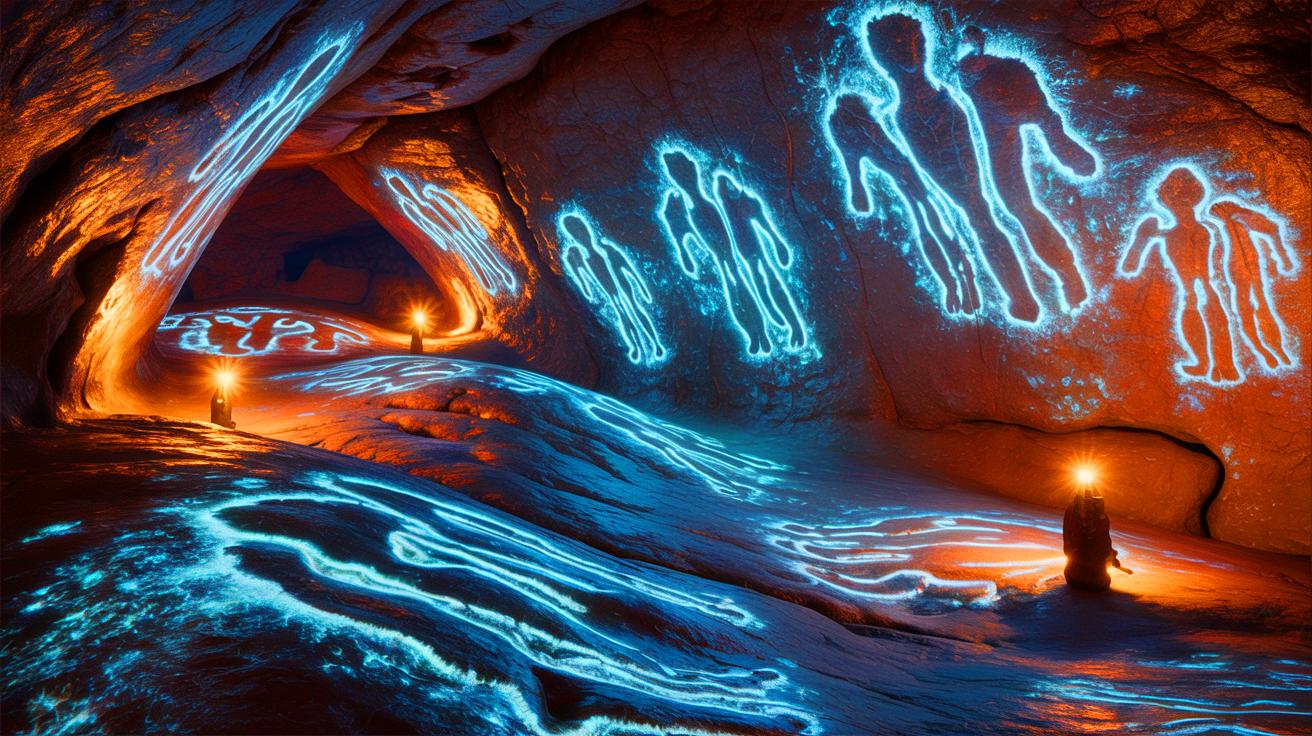
Located in the foothills of the Victorian Alps, the Waribruk Cave has become a focal point for archaeologists seeking to understand the early inhabitants of the region. The cave, a natural formation with walls covered in microcrystals, has revealed 950 human-made marks dating from 8,400 to 1,800 years ago. These marks, traced by human fingers, have been meticulously dated using radiocarbon analysis of charcoal and ash fragments found at the base of the decorated walls.
The unique feature of Waribruk Cave is its luminous walls, which shimmer under artificial light due to the presence of microcrystals formed by bacteria. This has led scientists to speculate that the original participants in these rituals used torches to enhance the visual experience, adding a rich sensory dimension to the proceedings. The cave was not just a shelter but an immersive environment, where light, material, and gesture combined to create a profound experience.
Ritual Gestures: A Structured Legacy
The arrangement of the imprints within the cave suggests a deliberate, structured ritual. The marks are not randomly placed; instead, they follow clear patterns. Some horizontal lines were made simultaneously with multiple fingers, while vertical and diagonal lines intersect them. This indicates a continuity of gesture, likely passed down over generations. The presence of very fine imprints, measuring only 0.12 to 0.2 inches wide, suggests that young children also participated, lifted by adults to contribute to the ritual. This highlights the intergenerational aspect of the practice, crucial for its transmission.
The most marked areas of the cave required participants to crawl or crouch, emphasizing the physical effort needed to reach these sacred surfaces. The arrangement of these imprints suggests adherence to a code, repeated and passed on within a well-defined context, underscoring the sacredness and exclusivity of the ritual space.
A Sacred Space Exclusive to the Initiated
Archaeologists have found no evidence of domestic activity within the cave. There are no complete hearths, tools, or food remains, reinforcing the oral traditions of the GunaiKurnai people, who describe Waribruk as a space reserved for mulla-mullung, healers and keepers of hidden knowledge. The imprints appear only on the shimmering walls, a choice that likely held symbolic significance.
An old account by ethnographer Alfred Howitt recounts a story of a man named Tankli, initiated in a bright cave by his father to learn the power of crystals. This narrative supports the idea that these gestures were part of sacred learning, conducted in a place inaccessible to the uninitiated. The deliberate selection of the cave’s luminous walls for these imprints underscores the symbolic function of the material, reinforcing its sacred nature.
A Living Memory in Stone
Unlike typical archaeological discoveries that yield objects or tools, the true find within Waribruk Cave is the gesture itself. When fingers moved over the still-soft rock, they left precise traces, later hardened by crystal formation, effectively preserving the movement for millennia. This natural archive offers access to a corporeal and spiritual memory.
Through collaboration between scientists and the GunaiKurnai cultural custodians, this ancient ritual is reclaimed as part of our shared history. The Waribruk site is not just an archaeological landmark; it is a place of transmission where the stones continue to speak, offering insights into the cultural practices that have shaped human history.
As we uncover more about these ancient practices, the question remains: How will these findings influence our understanding of cultural evolution and the ways in which human societies have interacted with their environments over millennia?