


“This Is Too Close”: Unknown Asteroid Skims Past Earth at Alarming Distance (and It’s Closer Than You Think)
 By
Ethan Reid
By
Ethan Reid
| IN A NUTSHELL |
|
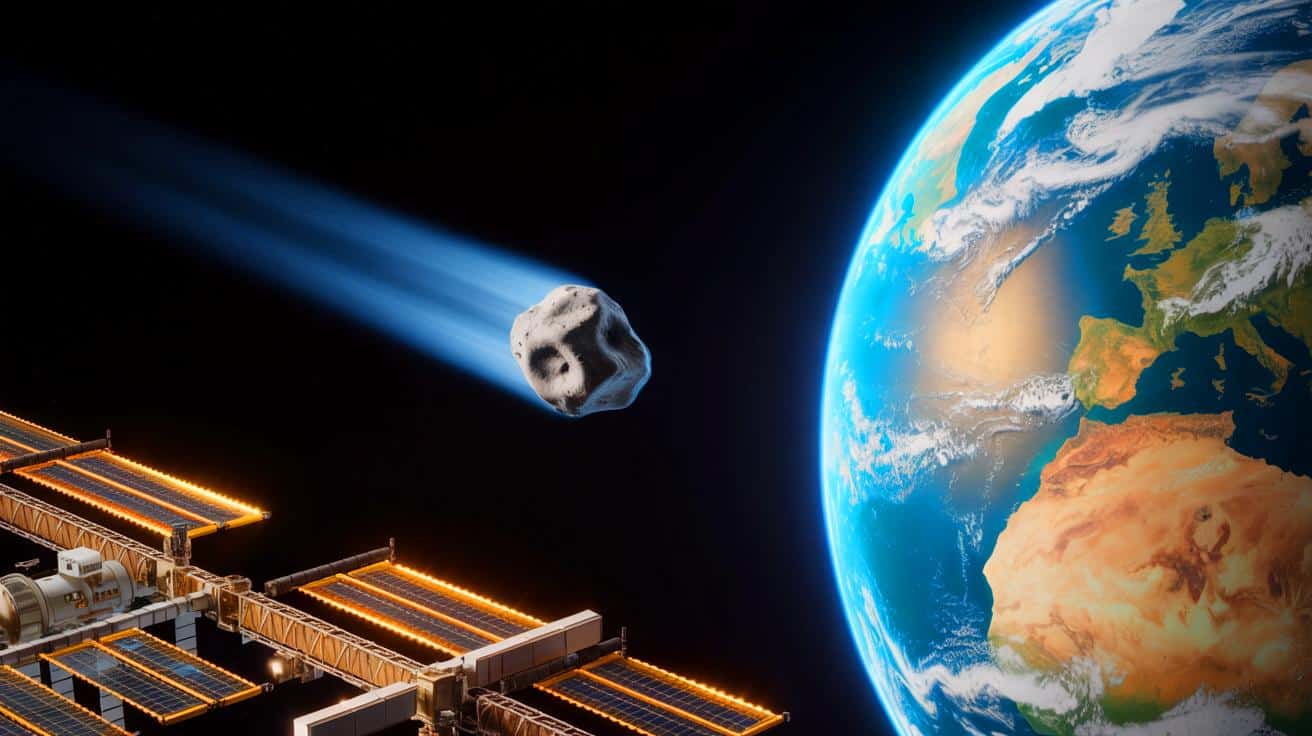
In a striking reminder of our planet’s vulnerability, an unknown asteroid recently skimmed past Earth at a distance equivalent to the orbit of the International Space Station (ISS). This rare cosmic event, confirmed by the European Space Agency (ESA), underscores the unpredictable nature of space and our ongoing efforts to monitor such threats. While this asteroid presented no actual danger, its unexpected appearance raises questions about our preparedness and the measures in place to detect and respond to near-Earth objects. The incident also highlights the fascinating yet precarious position of our planet in the vastness of space.
The Unexpected Visit of Asteroid 2025 TF
On the night of September 30 to October 1, 2025, a small asteroid named 2025 TF passed remarkably close to Earth. This celestial rock, measuring between 3 and 9 feet in diameter, flew by at an altitude of 266 miles, the same level as the ISS. This event marked the second closest recorded approach of an asteroid of this size. The asteroid’s trajectory took it over Antarctica around 9 PM Eastern Time, which was 3 AM in France. Such an event might seem like science fiction, but it was a confirmed occurrence that caught the attention of astronomers worldwide.
What makes this event particularly intriguing is that the asteroid went undetected until it was almost upon us. Despite the sophisticated equipment available to space agencies, the asteroid’s small size and rapid movement made it difficult to spot. This incident serves as a reminder of the challenges faced in tracking small celestial objects that approach Earth from unexpected directions.
Why This Record-Breaking Close Call Was Harmless
Encounters with asteroids as close as 2025 TF are extremely rare. The previous record was set in 2020 when asteroid VT4 passed just 230 miles above the Earth. Despite the proximity of these encounters, experts assure that such events pose no significant threat to our planet. According to the ESA, an asteroid of this size would disintegrate upon entering Earth’s atmosphere, resulting in a spectacular fireball visible from the ground.
The comparison to the Chelyabinsk meteor of 2013, which created a bright explosion in the Russian sky, highlights the phenomenon’s potential visual impact. These fiery displays, while captivating, typically do not result in substantial damage. Occasionally, small meteorites may reach the Earth’s surface, serving as tangible reminders of these cosmic visitors. The rarity and brief nature of these events make them fascinating rather than threatening.
Challenges in Detecting Small, Fast-Moving Objects
The question of how a near-Earth object like 2025 TF could evade detection is pertinent. The answer lies in the asteroid’s small size and speed. Current telescopes, even the most advanced ones, struggle to detect asteroids smaller than 33 feet. Moreover, when these objects approach from the direction of the sun, they are almost invisible to ground-based telescopes.
However, advancements are underway. Both ESA and NASA are working on new detection technologies. Among these is the NEO Surveyor, a space telescope specifically designed to locate near-Earth objects. The goal is to transition from merely reacting to potential threats to proactively predicting them. Such technological progress is crucial for enhancing planetary security and ensuring we are better prepared for future encounters with space objects.
Implications of This Close Encounter for Earth’s Security
This recent close call with 2025 TF emphasizes Earth’s vulnerability to cosmic events. Our planet travels through a celestial shooting gallery, where our safety hinges on our ability to detect these visitors early. While most asteroids that pass near Earth are small, there are larger threats, such as the 2024 YR4, which measures about 197 feet in diameter. A collision with an asteroid of this size could devastate a city.
The dynamic and unpredictable nature of space is both captivating and concerning. These close encounters remind us that we are part of a vibrant and ever-changing cosmic environment. As long as these celestial rocks remain at a safe distance, they serve as humbling lessons in our place within the universe. They challenge us to continue advancing our detection capabilities and to ponder the broader questions of our existence in this vast cosmos.
As technology advances, so does our understanding of the cosmic threats that surround us. The encounter with asteroid 2025 TF serves as a stark reminder of the need for vigilance and preparedness. As space agencies develop better detection methods, we must ask ourselves: How can we balance the awe of these cosmic events with the imperative to protect our planet from potential harm? The answer may shape the future of our exploration and understanding of space.