


“Unbelievable Sights Above”: This Solar Phenomenon Transforms French Skies Into a Dazzling Light Show (and It’s Closer Than You Think)
 By
Leah Morrison
By
Leah Morrison
| IN A NUTSHELL |
|
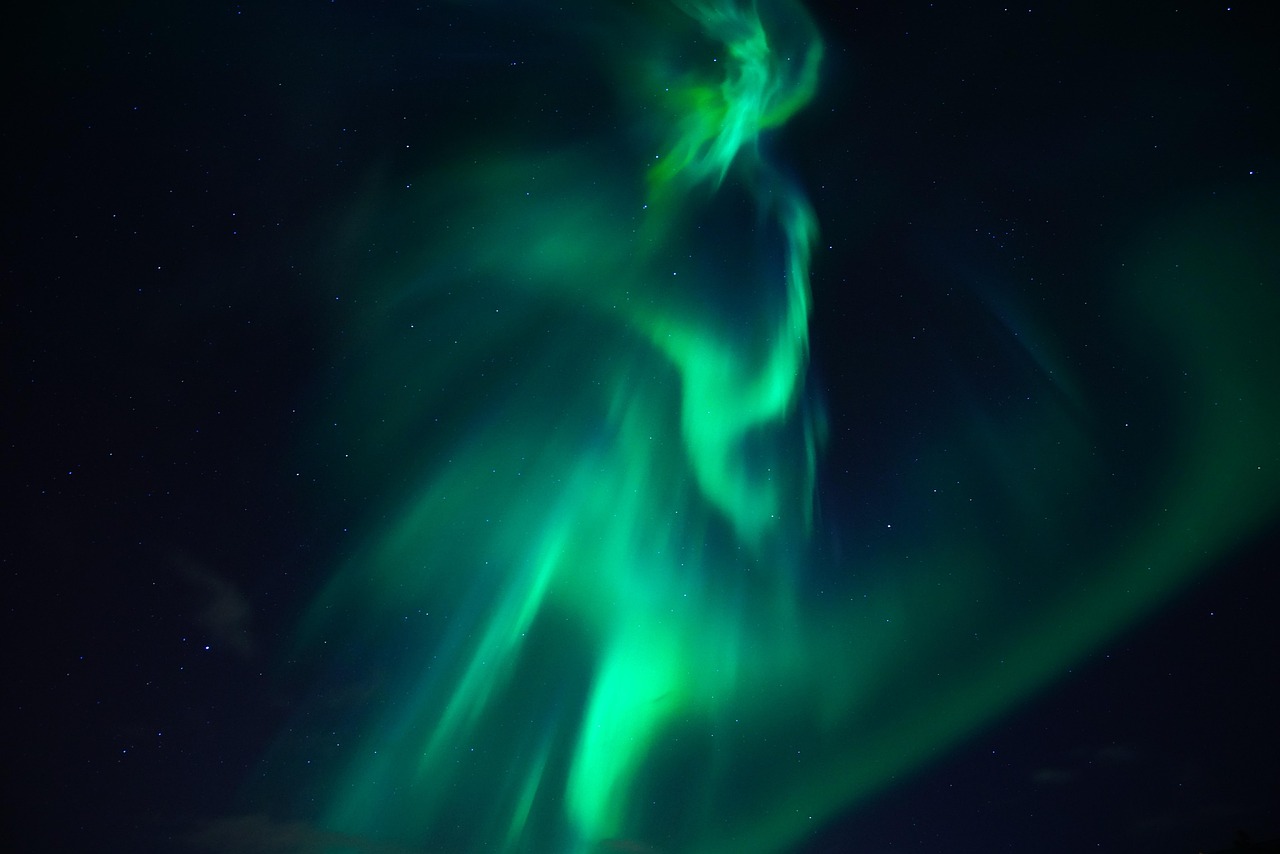
The recent solar activity has set the stage for a rare celestial event in France. Known as the “cannibal storm,” this phenomenon involves successive solar plasma ejections, where the second outpaces and merges with the first, releasing a massive amount of energy. As a result, the usually distant northern lights are expected to grace the skies of France, rekindling memories of similar events from 2003. This spectacle is not just a visual wonder; it encapsulates a fascinating interplay of cosmic forces that has captivated both scientists and sky enthusiasts alike.
The Science Behind a Solar Phenomenon
The term “cannibal storm” might evoke science fiction, but it refers to a real astronomical occurrence. This event involves two consecutive solar plasma ejections. The second ejection, traveling faster, catches up with the first, merging to unleash an enormous amount of energy. Such energy can extend the reach of the auroras, typically confined to polar regions, to lower latitudes like France.
Historically, a similar event unfolded in 2003, allowing people in southern Europe to witness the northern lights. Experts from the CNES predict that 2026 could offer a repeat performance. The prospect of such a grand display has generated excitement among both the scientific community and the general public.
Rare Celestial Displays Over France
While the auroras are a feast for the eyes, the science that makes them possible is equally captivating. As solar-charged particles collide with Earth’s atmosphere, they excite oxygen and nitrogen atoms, producing the mesmerizing green, pink, and violet lights that dance across the sky. Typically, these lights are seen at higher latitudes, but an intense solar storm can push them southward.
Regions like Brittany, Normandy, and the Hauts-de-France might be ideally situated to observe this spectacle. However, several conditions must align for optimal viewing. A clear sky, minimal light pollution, and a bit of patience are crucial, as the exact timing depends on unpredictable solar activity.
Capturing the Beauty of French Auroras
For many, witnessing the northern lights is a personal quest. In Alsace, enthusiasts like Mickaël Groll use dedicated applications to track solar storms. While the naked eye might miss these lights, cameras with long exposure settings can capture their subtle hues. In October 2025, Groll’s camera immortalized a fleeting yet precious moment.
Another aficionado, Marc Geiller, ventures to the ruins of the Fleckenstein castle with his partner, hoping to photograph this once-in-a-lifetime event. He remains cautious, noting that while solar eruptions occur every few weeks, not all result in visible auroras. This uncertainty adds to the allure and challenge of capturing these fleeting lights.
Safe Viewing Tips for the Celestial Spectacle
While the auroras pose no danger to humans, their magnetic intensity can disrupt satellites, GPS systems, and power grids. To enjoy this natural wonder safely, it’s advisable to find a location away from artificial light, monitor alerts through specialized apps like Aurora or SpaceWeatherLive, and have a camera ready for long exposures.
The year 2026 could offer a rare opportunity to witness the northern lights in France. For those unable to catch this display, another chance might not come until 2036 or 2037. This long wait underscores the significance of the upcoming event, encouraging enthusiasts to prepare and seize the moment.
The anticipation surrounding the potential appearance of auroras in France highlights a unique intersection of science and natural beauty. As experts and enthusiasts alike prepare for this potential event, the broader implications of such cosmic phenomena continue to intrigue. What other wonders might the universe reveal, and how will they challenge our understanding of the natural world?