



Astrophotographer Captures “Shark-Shaped Cloud”: Stunning Celestial Beauty Unveiled 650 Light-Years Away in Space Shocker!
 By
Ethan Reid
By
Ethan Reid
| IN A NUTSHELL |
|
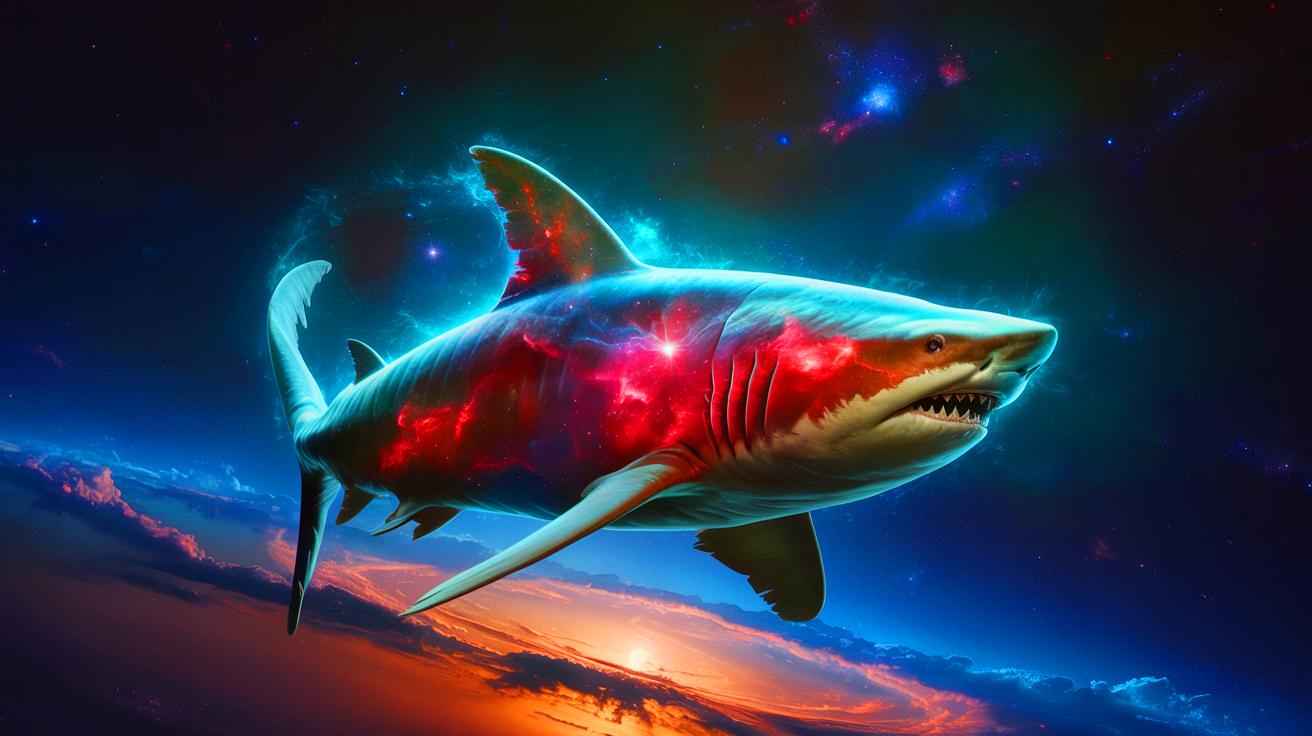
In the vast cosmos, where stars and galaxies weave a tapestry of wonder, a Canadian astrophotographer has captured an image that stirs the imagination. Ronald Brecher, a dedicated observer of the night sky, has immortalized a nebula that curiously resembles a giant shark drifting through space. Located in the constellation of Cepheus, this cosmic structure challenges our perception, illustrating the human brain’s incredible ability to recognize familiar shapes amidst the chaotic beauty of the universe. This phenomenon, known as pareidolia, invites us to explore the intricate dance of light and shadow in the cosmos, reminding us of the boundless creativity of nature.
The Vastness of the Shark Nebula in Cepheus
The Shark Nebula, officially known as LDN 1235, is a sprawling cloud of gas and interstellar dust that captivates astronomers with its evocative silhouette. Stretching approximately 15 light-years across, this nebula is situated about 650 light-years from Earth in the constellation of Cepheus. Its fascinating shape draws the observer’s eye, with the star HD 211300 forming the “eye” of the shark. The nebula’s dorsal and pectoral fins emerge from the dark dust, while the background spiral galaxy PGC 67671 adds depth to this celestial tableau.
These cosmic elements combine to create an image of striking beauty, as if a marine predator were swimming through the starry depths. The Shark Nebula stands as a testament to the creative forces at work in the universe, where massive stars sculpt the surrounding gas and dust into forms that echo familiar shapes from our earthly realm. This interplay of light and shadow, shaped by the powerful winds of massive stars, highlights the dynamic processes that give birth to such stunning cosmic structures.
Ronald Brecher’s Dedication to Capturing the Cosmos
Ronald Brecher’s journey to capture the Shark Nebula was one of patience and precision. Working from his home in Guelph, Canada, Brecher spent several nights between July 23 and July 30, 2025, meticulously photographing this dark nebula. Using a Sky-Watcher Esprit 70 EDX telescope and a QHY367C Pro camera, he navigated the challenges posed by the first quarter moon’s bright light to reveal the nebula’s intricate details.
After collecting the raw data, Brecher employed PixInsight software to process the images, unveiling much more than a simple dark cloud. The bluish regions visible at the top and bottom of the image are reflection nebulae, scattering the light of nearby stars to create dramatic contrasts. For Brecher, capturing the added details of a galaxy and some blue nebulae was an unexpected bonus, akin to finding a cherry atop an already delightful cake.
The Stellar Radiation That Shapes the Cosmic Predator
The resemblance of the Shark Nebula to a squale is no mere coincidence. Its form is sculpted by the intense radiation of massive stars. These stars, with their energetic light and stellar winds, carve the surrounding material into the shapes of fins and a streamlined body. The dark dust, formed in the cold atmospheres of giant stars, behaves like smoke condensed by gravity, creating the spectacular forms admired today.
This nebula contains other deep-sky objects, such as the dark nebula Lynds 1235 and Van den Bergh 149 and 150, which together compose a rare cosmic complex in the heart of Cepheus. As one of the most beautiful examples of dark clouds illuminated by modern astrophotography, the Shark Nebula invites us to ponder the transformative power of stellar radiation in shaping the universe’s tapestry.
The Discovery: Scientists Stunned by Vapor Planet’s Potential, “This Changes Our Understanding”
Pareidolia: Seeing Familiar Shapes in the Stars
The tendency to recognize familiar forms in cosmic clouds is known as pareidolia, a psychological mechanism that encourages our brains to identify known silhouettes in random visual stimuli. In this case, it transforms a cloud of gas and dust into a cosmic shark. Beyond the anecdote, this image underscores the potency of modern astrophotography, revealing details invisible to the naked eye and inspiring awe.
Thanks to the dedication of enthusiasts like Ronald Brecher, the universe unfolds in all its richness. His work reminds us that the sky is full of surprises, occasionally manifesting shapes that eerily echo life on Earth. This interplay between human perception and the cosmos invites us to explore the boundaries of imagination and wonder.
As we gaze upon the celestial wonders captured by astrophotographers, we are reminded of the universe’s infinite possibilities. The Shark Nebula and its intricate dance of light and shadow challenge us to consider the creative forces at play in the cosmos. What other surprising forms and stories might the night sky hold, waiting for us to discover them through the lens of curiosity and exploration?