



NASA Telescope Reveals: ‘Ancient Solar System Clues’ Found in Comet from ‘Extraterrestrial World’ That Could Rewrite History
 By
Ethan Reid
By
Ethan Reid
| IN A NUTSHELL |
|
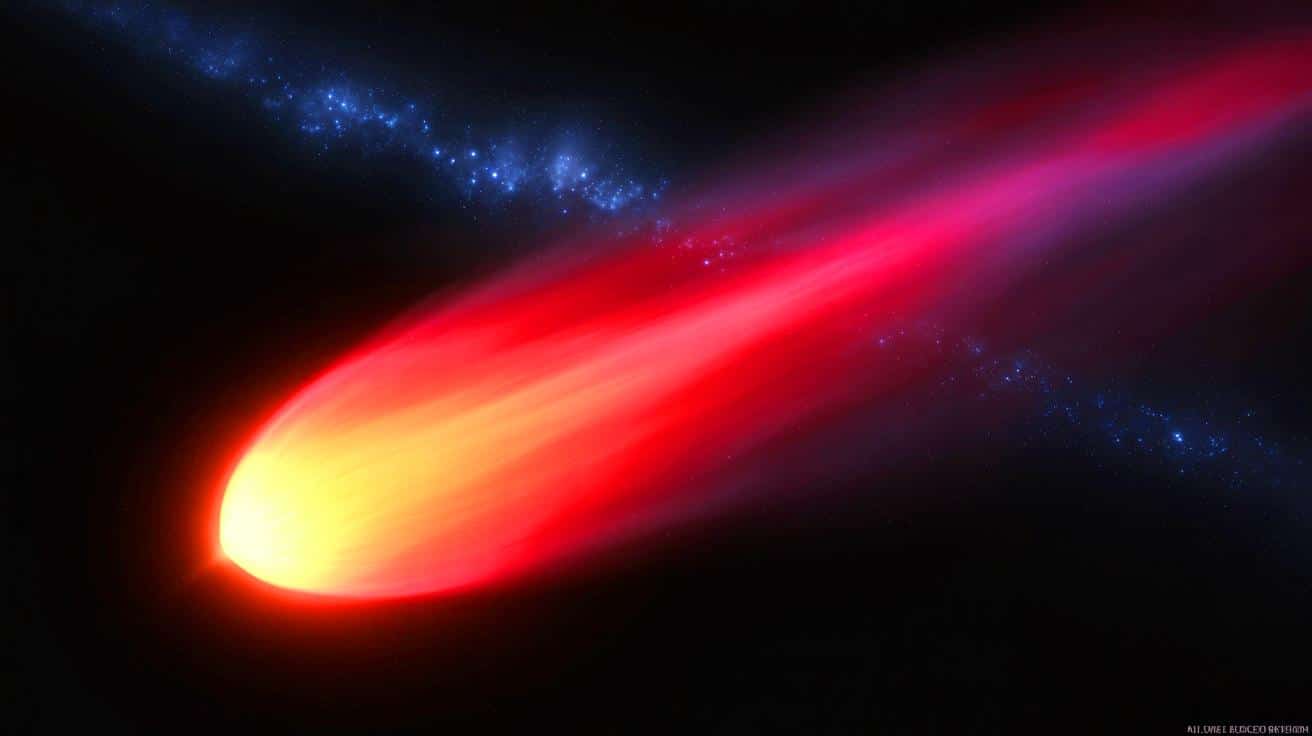
An extraordinary interstellar visitor has made its presence known in our solar system, captivating scientists with its intriguing composition. The comet, identified as 3I/ATLAS, was discovered by the ATLAS telescope and has sparked a flurry of scientific interest. Observations from NASA’s SPHEREx telescope have revealed a surprising abundance of carbon dioxide and water ice, key elements that could provide insights into the comet’s origins. As astronomers eagerly study this celestial body, it offers a unique opportunity to compare its characteristics with those of comets from our own solar system, potentially reshaping our understanding of interstellar objects.
The Comet 3I/ATLAS: An Object from Another Stellar System
On July 1, 2025, astronomers made a groundbreaking discovery with the identification of comet 3I/ATLAS, an object hailing from beyond our solar system. It marks only the third interstellar object ever documented, yet it stands out as the largest and brightest observed to date. In response to its discovery, scientists quickly mobilized various instruments, including the SPHEREx telescope, to conduct a thorough examination of this rare cosmic visitor.
SPHEREx has been instrumental in detecting a significant amount of carbon dioxide within the comet’s coma, the gaseous envelope surrounding its nucleus. Additionally, the presence of water ice was confirmed, suggesting that 3I/ATLAS shares several similarities with comets native to our solar system. This discovery raises intriguing questions about the comet’s origin and the processes it may have undergone in its home system.
An Absence of Carbon Monoxide Reveals an Intense Thermal Past
According to Carey Lisse, a researcher at Johns Hopkins University and a member of the SPHEREx team, comet 3I/ATLAS contains the three primary components typically found in comets: dust, water, and carbon dioxide. However, what sets 3I/ATLAS apart is its unusual lack of carbon monoxide, a feature that suggests a past characterized by intense heat.
This absence implies that the comet experienced significant thermal changes before being ejected from its original system. Such a transformation is akin to the evolutionary processes experienced by comets that have spent extended periods near their parent star. These findings provide a glimpse into the dynamic history of interstellar objects and their potential for transformation over time.
An Ancient Comet Providing Clues About Other Planetary Systems
Researchers believe that comet 3I/ATLAS may have originated from the thick disk of the Milky Way, making it two to three times older than comets found in our solar system. Its ancient nature positions it as a unique witness to the conditions and processes of distant planetary systems. The SPHEREx instrument has enabled astronomers to capture infrared wavelengths typically obscured by Earth’s atmosphere, granting them unprecedented access to the comet’s chemical composition.
These insights allow scientists to draw comparisons between interstellar comets and those formed around the Sun. By analyzing such differences, researchers can enhance their understanding of the formation and evolution of planetary systems across the galaxy, broadening the horizons of astronomical study.
The Discovery: Scientists Stunned by Vapor Planet’s Potential, “This Changes Our Understanding”
An Impending Solar Flyby to Reveal the Comet’s True Nature
In October, comet 3I/ATLAS is expected to reach its perihelion, the point in its orbit closest to the Sun. As it approaches this stage, scientists anticipate observing heightened activity. The sublimation of water ice should result in a denser coma and a more visible dust tail. This period of increased activity will be closely monitored by a range of telescopes, including SPHEREx.
The data collected during this time could significantly enhance our understanding of interstellar objects and the formation of solar systems. Comet 3I/ATLAS holds the potential to become a pivotal element in modern astronomy, offering new insights into the complexities of our universe.
As the comet 3I/ATLAS continues its journey through our solar system, it presents a remarkable opportunity for scientists to deepen their comprehension of interstellar phenomena. Its unique composition and characteristics have already challenged existing paradigms, and its upcoming solar flyby promises to yield even more valuable data. What other secrets might this ancient traveler reveal about the cosmic processes that shape our universe?