


“Unearthly Terror Unleashed”: China’s 36,000-Foot Drill Sparks Fear of Hidden Secrets and Global Consequences
 By
Leah Morrison
By
Leah Morrison
| IN A NUTSHELL |
|
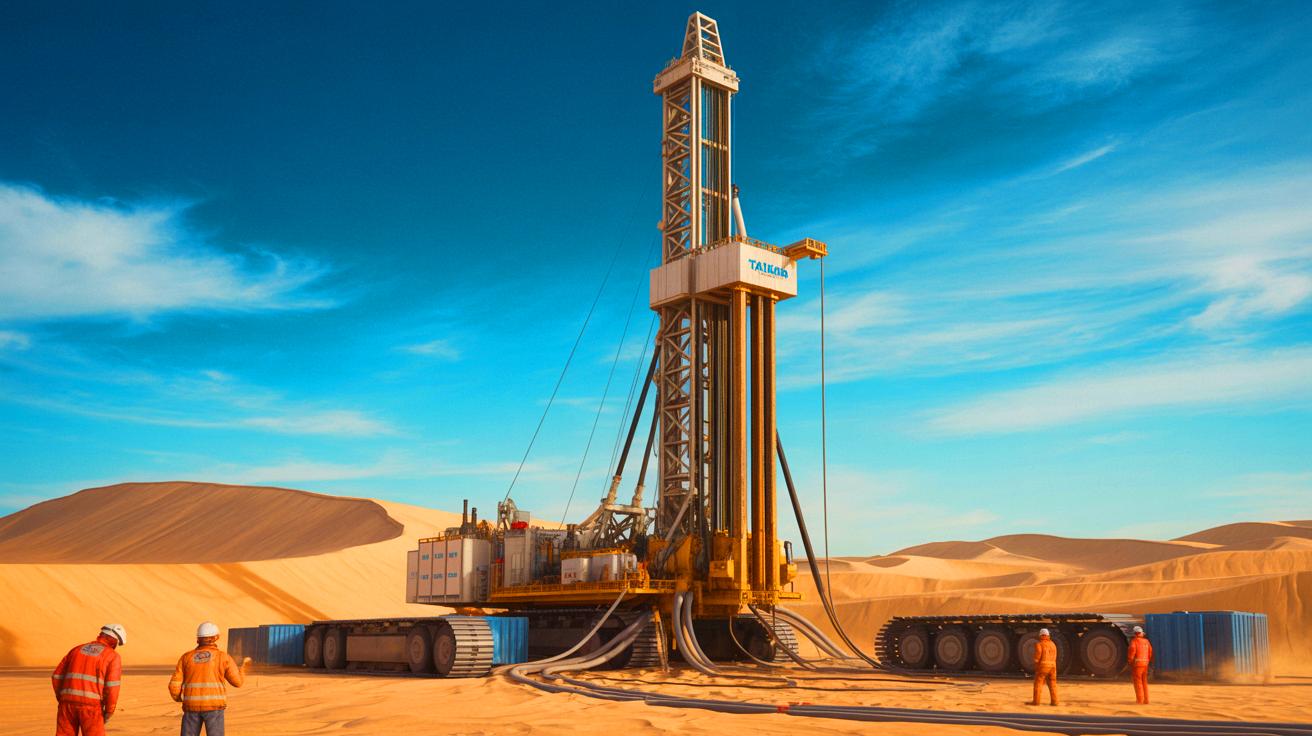
In February 2025, China accomplished one of the deepest drilling feats in modern history. Carried out in the heart of the Taklamakan Desert in Xinjiang, the drill reached an astounding depth of 35,790 feet. This achievement is officially aimed at enhancing our understanding of Earth’s internal structures. However, underlying this mission are potential energy and geopolitical objectives that could have significant global implications.
A 35,790-Foot Well: Technical Marvel and Scientific Asset
Initiated in March 2023 by the China National Petroleum Corporation (CNPC), this monumental project engaged teams for 580 consecutive days. With its depth, it becomes the second deepest drill in the world, trailing only the Russian Kola project, which reached 40,230 feet. China’s stated goal is to uncover geological secrets from the depths to better understand the planet’s history. This program is part of a broader vision that combines scientific exploration, technological innovation, and space ambition.
To succeed, CNPC developed the first automated drill capable of reaching 39,370 feet. This 4.4-million-pound behemoth withstands colossal pressures and extreme temperatures, making it an unprecedented engineering feat. With this tool, China now stands at the forefront of deep drilling technologies. The endeavor represents not just a technological triumph but also a strategic move in the field of global scientific research.
A Geological Journey of 500 Million Years to Rewrite Earth’s History
During the descent, drillers traversed 12 distinct geological formations, some dating back over 500 million years. This access provides invaluable natural archives that offer clues about past tectonic movements, ancient climate changes, and major geological phenomena. These observations have resulted in China’s first ultra-deep stratigraphic profile, revealing insights into Earth’s historical processes.
Moreover, these findings can inform predictive models to anticipate certain natural risks. Consequently, this drilling project transcends mere technical achievement by offering a new lens through which to view the evolution of our planet. The data gathered serves as a foundation for future scientific inquiry and practical applications in environmental and geological sciences.
A Strategically Chosen Site: When Science Meets Energy Strategy
Xinjiang, a vast and relatively untapped region, holds abundant reserves of oil, natural gas, and strategic minerals. China, one of the world’s largest importers of hydrocarbons, aims to reduce its dependence on foreign resources. Therefore, this drilling operation could serve a dual purpose: advancing scientific research while facilitating access to new exploitable resources.
This convergence of knowledge and economic power demonstrates Beijing’s ability to transform a scientific project into a geopolitical lever. Ultimately, it remains to be seen whether this endeavor will be remembered merely as an engineering feat or as a strategic turning point in the global competition for resource control. The implications of this project could extend far beyond its scientific contributions, influencing global economic and political dynamics.
Engineering and Geopolitical Implications
The technological advancements in automated drilling represent a significant leap forward in engineering capabilities. This drill not only withstands extreme conditions but also operates with unprecedented precision. These innovations could lead to more efficient extraction methods, reducing costs and environmental impact. The success of this project could inspire further technological development in the field of deep drilling.
On the geopolitical front, China’s deep drilling initiative positions it as a leader in resource exploration technology. This capability could shift power dynamics in the global energy market, particularly if new resources are discovered and exploited. The project’s success could encourage other nations to pursue similar endeavors, potentially sparking a new era of energy exploration and competition. The impact of this project may extend to international relations, as countries navigate the complexities of resource control and environmental stewardship.
China’s deep drilling project in the Taklamakan Desert exemplifies the intersection of scientific ambition and strategic interests. As the world watches, the outcomes of this endeavor could reshape our understanding of Earth’s history and influence the geopolitical landscape. What new discoveries and challenges will arise from this groundbreaking exploration?