

Why Russia’s Space Experiment With Animals Reveals Shocking Secret That Could Change Mars Colonization Forever
 By
Ethan Reid
By
Ethan Reid
| IN A NUTSHELL |
|
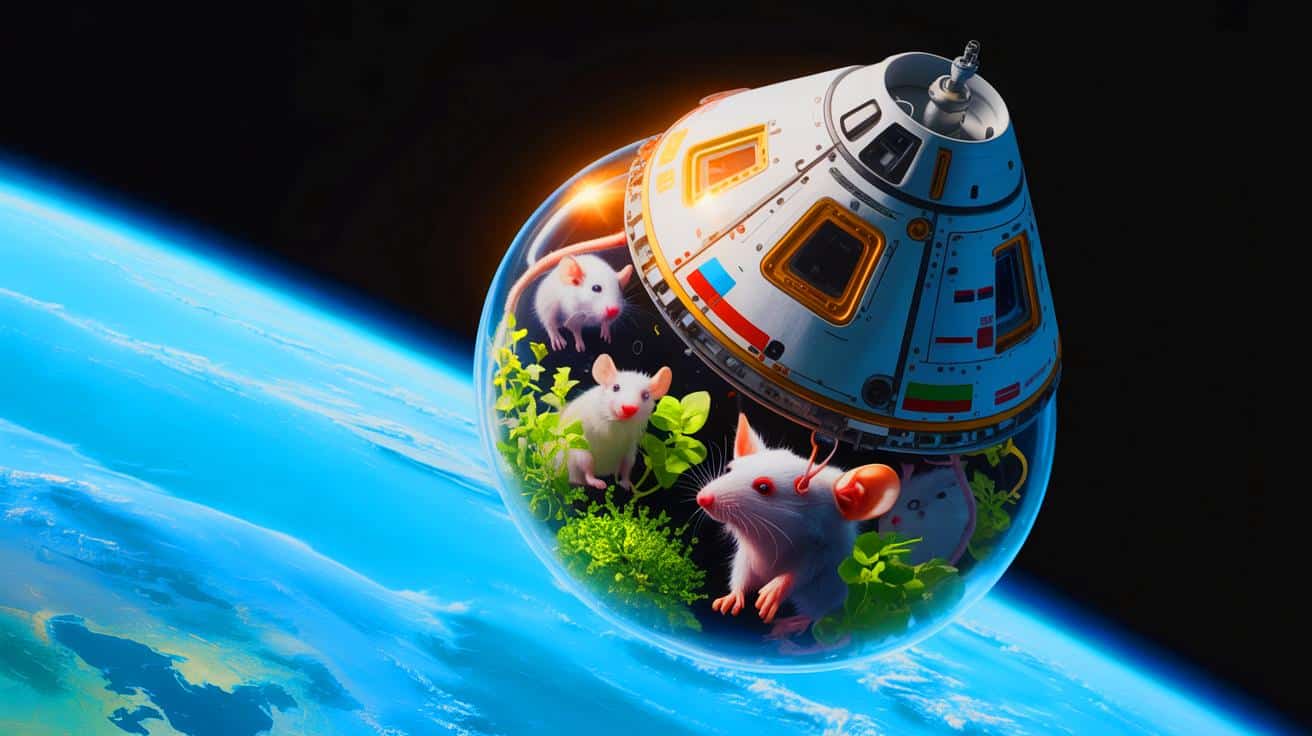
In a groundbreaking endeavor, Russia has embarked on a mission that merges space exploration with biological science. By launching a capsule filled with a variety of living organisms into orbit for 30 days, the nation aims to glean insights pivotal for future Mars colonization and medical advancements on Earth. This modern “Noah’s Ark” serves as a floating laboratory, offering researchers a unique perspective on how life adapts to extreme environments. The data collected could pave the way for establishing bases on the Moon and Mars, and might even revolutionize healthcare as we know it.
Understanding Bion-M2’s Role in Future Mars Missions
The Russian space capsule, known as Bion-M2, successfully returned to Earth on September 19, 2025, after a 30-day mission in orbit. This capsule carried an array of living specimens including mice, fruit flies, seeds, algae, and human cells. The main objective was to study how these organisms withstand the challenges of microgravity and cosmic radiation. Such data are critical to ensuring the safety and survival of astronauts on long journeys to Mars.
This mission follows a previous attempt in 2013 with Bion-M1, which had a high mortality rate among its specimens. In response, researchers have enhanced their protocols this time around, incorporating video surveillance, automated feeding systems, and controlled ventilation. These improvements have allowed for more comprehensive monitoring of the organisms’ health and behavior.
Animal Models and Their Contribution to Space Medicine
The Bion-M2 mission included 75 mice that served as models for studying the impacts of space travel on the heart, bones, muscles, immune system, and reproductive system. Astronauts experience similar effects during extended missions, and these findings are expected to help develop countermeasures against muscle atrophy and bone weakening.
Moreover, the mission featured 1,500 fruit flies to rapidly assess genetic mutations and fertility. Additional experiments with plants, algae, and seeds sought to evaluate the potential for cultivating food in orbit, a crucial step toward achieving food autonomy in space. The study of human and animal stem cells also holds promise for advancing regenerative medicine in space.
Utilizing Extraterrestrial Resources for Construction
Researchers in the Bion-M2 mission also focused on the potential of using simulated lunar rocks that were exposed to vacuum and radiation. The goal was to evaluate their durability and determine if local resources could be used for In-Situ Resource Utilization (ISRU) in constructing habitats.
Building structures from materials found on the Moon or Mars could significantly reduce reliance on Earth-based resources. Additionally, some cell cultures were attached to these rocks to test biological growth on extraterrestrial soil. This raises the possibility of establishing greenhouses or production systems directly on the lunar or Martian regolith.
Another notable experiment, dubbed “Meteorite,” involved embedding bacteria within basaltic rocks, which then survived re-entry into Earth’s atmosphere. These findings could bolster the panspermia hypothesis, suggesting that the origins of life might be cosmic.
Implications for Medical Research and Ethical Concerns
The outcomes of the Bion-M2 mission have the potential to transform terrestrial medicine. Understanding the effects of microgravity and radiation may lead to new treatments for diseases related to aging, chronic inflammation, and muscle degeneration. Such space-based experiments serve as accelerated aging models and open new biomedical pathways.
However, ethical questions loom large: How far should we go in animal experimentation? During the 2013 Bion-M1 mission, many mice did not survive. Researchers claim to have improved animal welfare this time, yet no official report has been released. The debate persists: Is it justifiable to sacrifice animals for the sake of advancing space exploration?
As the Bion-M2 mission demonstrates, space exploration continues to be an extraordinary frontier for scientific discovery. The intersection of biology and space technology holds the promise of breakthroughs in both extraterrestrial colonization and healthcare innovation. Yet, as these experiments progress, ethical considerations regarding animal welfare and the limits of scientific inquiry remain crucial. What ethical guidelines should govern the future of space research involving living organisms?