

“Your Crown Nightmare Ends”: New Tech Reveals 3D-Printed Zirconia Dental Crowns in Just Hours (and It’s Revolutionary)
 By
Ethan Reid
By
Ethan Reid
| IN A NUTSHELL |
|
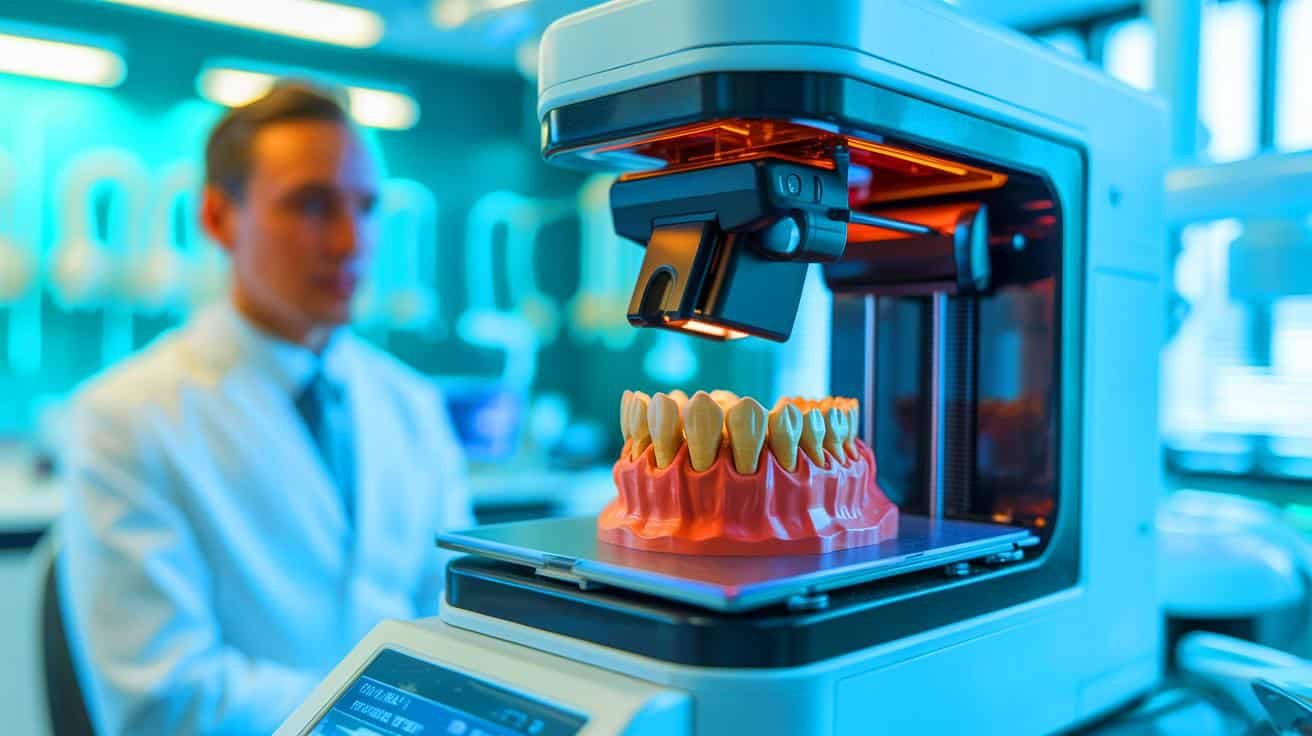
In a groundbreaking development, researchers at the University of Texas at Dallas have unveiled a technology that promises to revolutionize dental care by enabling the chair-side production of 3D-printed zirconia crowns. This innovation addresses a significant bottleneck in dental technology by drastically reducing the debinding time, a critical step in the process of fabricating zirconia crowns. Traditionally, patients could wait days or weeks for permanent dental restorations, but this new technology allows for the completion of a permanent crown in just a few hours. The implications for dental practices and patient care are profound, with potential benefits ranging from reduced costs to enhanced patient satisfaction.
Solving the Debinding Bottleneck
The UT Dallas team’s significant breakthrough lies in overcoming the lengthy debinding process associated with 3D-printed zirconia crowns. Debinding is a stage where the resin that holds zirconia particles together is removed, and it has traditionally required 20 to 100 hours to complete. This lengthy process made same-day zirconia restorations impractical. Dr. Majid Minary, a professor of mechanical engineering, explained that speeding up this process without compromising the crown’s integrity was a substantial challenge. If the resin burns off too quickly, the gas produced can lead to cracks or fractures in the crown.
The researchers have managed to reduce debinding time to under 30 minutes using innovative techniques involving porous graphite felt and enhanced heat transfer. This method ensures that the gas escapes efficiently, and a vacuum system helps remove it, preventing structural damage. As Dr. Minary noted, this technological advancement allows dental practitioners to offer same-day zirconia crowns chair-side, providing patients with permanent restorations in a matter of hours.
Advantages of 3D-Printed Zirconia Crowns
The introduction of 3D-printed zirconia crowns marks a significant advancement over existing options. Current same-day dental crowns typically use ceramic resins, which, while convenient, lack the strength and durability of zirconia. Zirconia is considered the gold standard for permanent dental restorations due to its superior strength and aesthetic qualities. However, the milling process traditionally used for zirconia is limited in design complexity and carries risks of micro-cracking.
By enabling 3D printing of zirconia crowns, the researchers have opened the door to more customizable and complex designs with reduced risk of fractures. This could potentially lower material waste and associated costs, providing dentists with a powerful tool to offer truly personalized and efficient dental care. The team is collaborating with industry partners and has received significant funding to support the commercialization of this technology, promising improvements in both the speed of treatment and patient experience.
Collaborative Efforts and Future Prospects
The project is a collaborative effort involving UT Dallas researchers and industry partners, including Pan-AM Dental Laboratory and 3DCeram Sinto Inc. The team has also secured a $550,000 NSF Partnerships for Innovation, Technology Translation award to aid in bringing this technology to market. The funding will support efforts to integrate this innovative approach into dental practices, potentially transforming the landscape of dental restorations.
As Dr. Minary highlighted, this approach offers greater personalization and convenience, allowing patients to receive a permanent restoration in a single visit. The technology not only promises faster and more efficient dental care but also aligns with a broader trend toward personalized medicine. With further clinical validation and regulatory approval, this innovation could soon replace the traditional waiting periods for permanent crowns, enhancing patient satisfaction and outcomes.
Implications for Dental Practices and Patients
The successful implementation of this technology could have far-reaching implications for dental practices and patients alike. For dentists, the ability to produce high-quality, durable restorations on-site means a reduction in reliance on external laboratories and the associated delays and costs. This shift could lead to more streamlined operations and potentially lower prices for patients.
For patients, the convenience of receiving a permanent crown in a single visit cannot be overstated. This not only reduces the need for multiple appointments but also alleviates the discomfort of temporary crowns. As this technology becomes more widely adopted, it will be important to observe how it influences patient behavior, expectations, and overall satisfaction with dental care.
As the dental industry continues to evolve, the introduction of chair-side 3D-printed zirconia crowns represents a significant leap forward. The potential for same-day permanent restorations could redefine patient experiences and expectations. How will this technological advancement shape the future of dental treatments, and what further innovations might emerge as a result?