



Ancient Roman Woman’s Face Reveals Hidden Secrets That Shatter Everything We Knew About Her Mysterious Power
 By
Leah Morrison
By
Leah Morrison
| IN A NUTSHELL |
|
In the world of archaeology, discoveries that shed light on historical figures are rare and exhilarating. Such is the case with the recent re-emergence of a marble head sculpture in Crimea, believed to represent a woman named Laodicé. This artifact, hidden for centuries, has surfaced to offer insights into the political dynamics of ancient Rome and the role women played within it. Found in the ancient city of Chersonesus Taurica, the sculpture provides a window into the life of a woman who played a significant part in her community’s political landscape.
The Discovery at Chersonesus Taurica
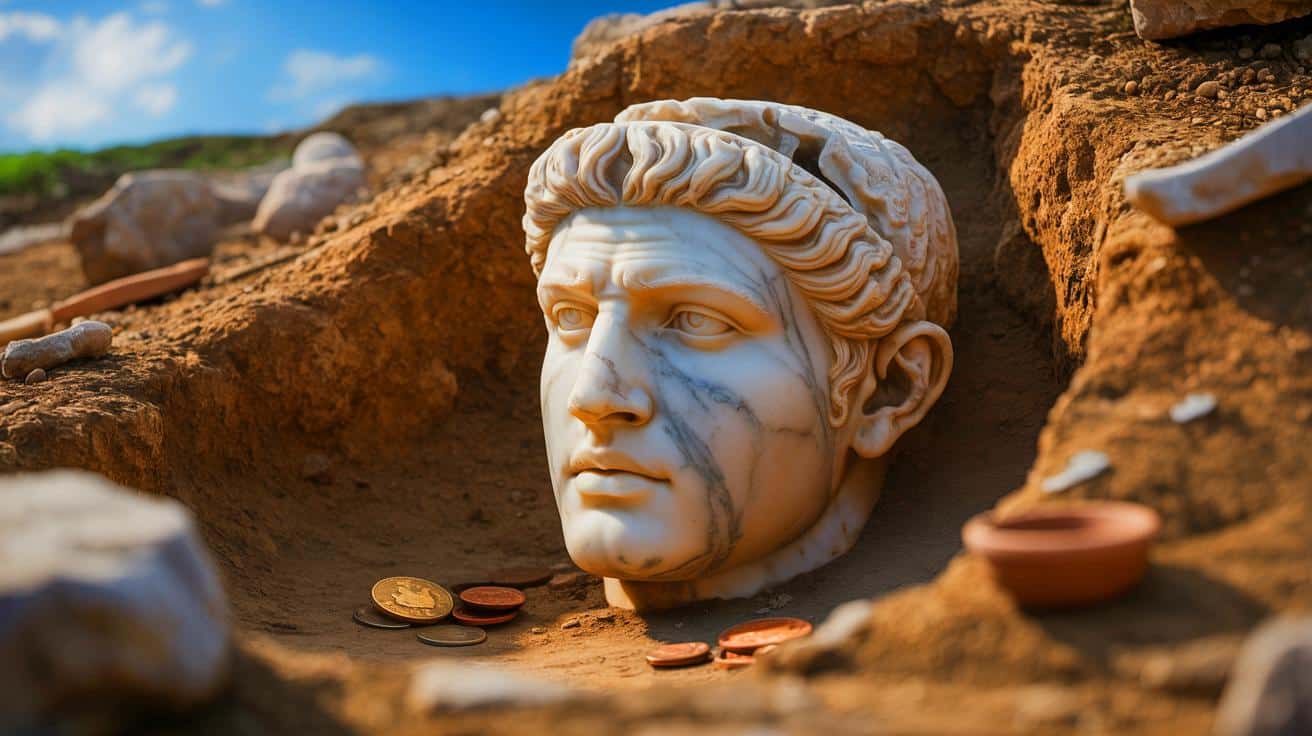
In 2003, a team of archaeologists embarked on a mission in Sevastopol, Crimea, at the site of Chersonesus Taurica, a city that transitioned from Greek to Roman control. During their excavations, they discovered a remarkably well-preserved marble head in a semi-basement of a large 7,728-square-foot house near the ancient theater. Surrounding this artifact were coins, pottery, and a ceramic altar depicting Artemis and Apollo, which helped date the site to between 60 and 240 A.D. The analysis suggested that the statue had been concealed at the end of the second century.
The marble head, despite damage to its nose and facial features, retained impressive elements. Traces of red pigments were still visible, and the marble’s origin was traced back to the renowned quarries of Paros. A metal fitting at the neck indicated that the head was once part of a two-meter-tall statue, likely displayed in the agora before being buried. This context underscores the significance of the sculpture and its subject in the city’s public life.
An Artistic Masterpiece of Power and Status
This marble head is not just a relic but a standalone work of art. Detailed analysis revealed the use of eleven different tools, including fine chisels and delicate abrasives, showcasing the sculptor’s meticulous craftsmanship. The style of the sculpture reflects a blend of Roman realism, visible in the subtle wrinkles and detailed ears, and Greek idealism, evident in the soft, harmonious facial features. The hairstyle follows the “melon” style, popular among empresses like Faustina the Elder, further indicating a high social standing for the subject.
These artistic elements suggest that the woman depicted held a prominent position in society. Her education, respectability, and influence are implied by the presence of a public statue in her honor, a rarity for women during that era. The artistry and the public nature of the statue signify her importance and the respect she commanded within her community.
Laodicé’s Role in Securing Autonomy for Chersonesus
Years after the initial discovery, a pedestal bearing an honorary inscription was found, celebrating Laodicé, the daughter of Heroxene and wife of Titus Flavius Parthenocles, one of Chersonesus’s most powerful figures. The city dedicated a statue to her, suggesting her significant political role. Researchers believe she played a crucial part in securing the status of Eleutheria, or free city, granted by Emperor Antoninus Pius in the 140s. This status allowed the city a degree of autonomy while remaining loyal to Rome.
Although the specifics of her actions remain unknown, the public acknowledgment of her influence is unmistakable. She was viewed as a figure of peace, stability, and civic engagement. Her contributions to the city’s political standing were significant enough to warrant such a rare honor for a woman of her time.
Ancient Tunnels Stun: A 4,500-Year-Old Secret Shatters China’s History Forever
Revisiting the Role of Influential Women in Antiquity
The rediscovery of Laodicé’s portrait challenges modern perceptions of women’s roles in Roman history. Often absent from official narratives, some women played pivotal roles in shaping their communities, sometimes quietly and other times, as in this case, quite prominently. Advances in archaeology, art history, and science have enabled Laodicé to emerge from obscurity, reminding us that politics in antiquity was not confined to palaces and senates. It also unfolded in public spaces and, at times, was embodied in the courage and diplomacy of a woman.
As we reflect on the significance of Laodicé’s contribution to her society, we are compelled to consider the broader implications of uncovering such histories. How many other influential figures remain hidden in the annals of history, waiting to be discovered and their stories told?