


“Nature’s Grim Secrets”: This 16-Foot Great White Shark Caught Off Sète Harbored Two Dolphins and a 1956 Mystery
 By
Leah Morrison
By
Leah Morrison
| IN A NUTSHELL |
|
In the mysterious depths of the Mediterranean Sea, a tale unfolded in 1956 that continues to captivate scientists and enthusiasts alike. This is the story of a remarkable great white shark caught off the coast of Sète, France, a creature that would become legendary not just for its size but for the secrets it carried within. This giant predator, spanning nearly 19 feet and weighing over 4,000 pounds, revealed a stunning discovery in its stomach, providing a window into the enigmatic life of one of the ocean’s most formidable inhabitants.
When a Sète Fisherman Hauled in a 2-Ton Monster
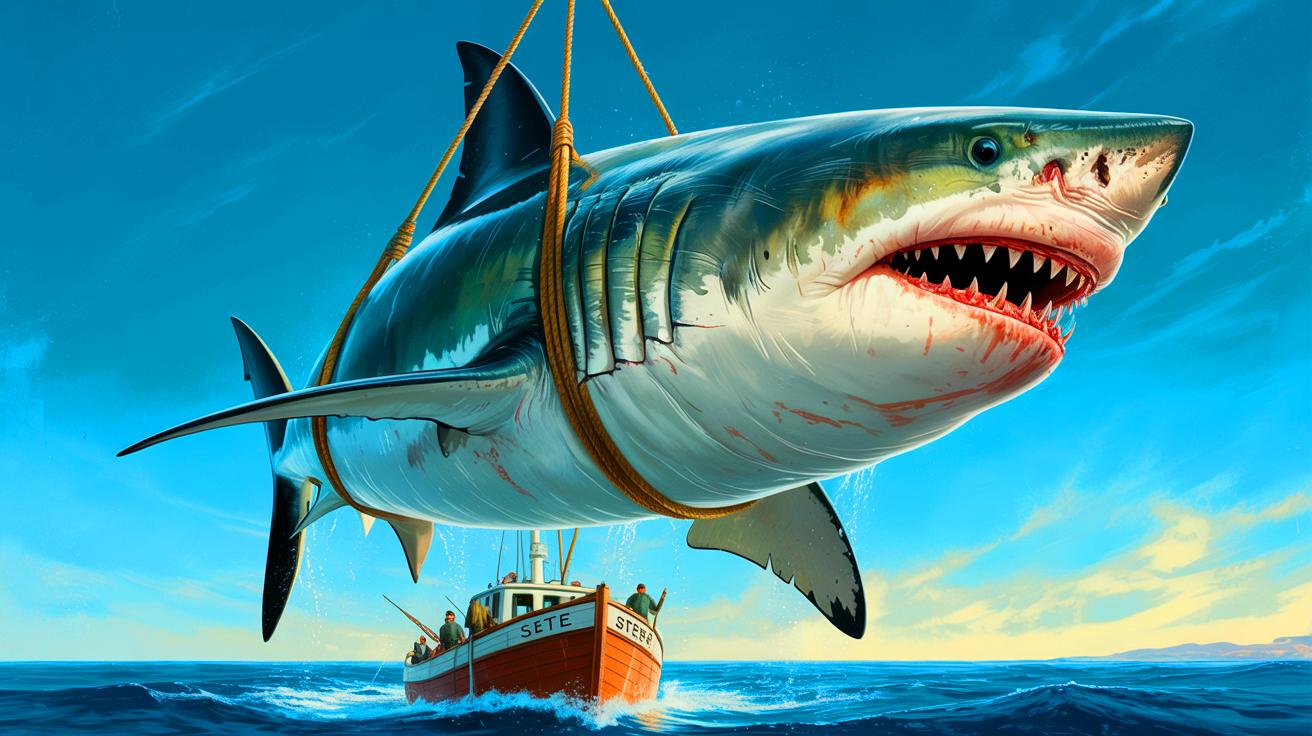
On the fateful day of October 13, 1956, a tuna fisherman from Sète experienced a catch like no other. As he cast his nets into the Mediterranean waters, he ensnared not merely a fish, but a massive female great white shark measuring an astonishing 19 feet. This colossal predator, weighing over 4,000 pounds, succumbed shortly after being hoisted aboard, leaving the crew in awe of its grandeur. However, the true shock lay within its belly, where the remains of two large dolphins, each nearly 6.5 feet long, were discovered.
The incident quickly sparked a sensation, reaching the ears of the Lausanne Zoological Museum. Curiously, the museum purchased the shark’s carcass for a sum much lower than the sensationalized figures reported in the press, paying 50,000 Swiss francs rather than the alleged 500,000. Transported via refrigerated truck, this marine behemoth embarked on a new chapter as a museum specimen, forever immortalized in scientific and cultural lore.
The Mysterious Casting of Lausanne: A Carcass, Teeth… and Possibly a Bottle of Rum
Since 1958, the renowned Palais de Rumine in Lausanne has displayed the shark to the public. Given the cartilaginous nature of its body, the museum opted to create a plaster cast supported by a metal framework. Visitors can still marvel at its original teeth, dorsal fin, and fins, although three teeth have disappeared over time, prompting replacements with replicas.
An intriguing rumor adds to the mystique surrounding the casting. According to taxidermist Alain Keiser, the original taxidermist might have secreted a bottle of rum inside the mold. The internal compartments make it impossible to verify this claim with cameras, thus perpetuating the myth of the Sète shark. Furthermore, the origins of the casting remain shrouded in mystery, as Keiser’s inquiries to his predecessor yielded no definitive answers. This lingering silence continues to fuel the enigmatic allure of this remarkable creature.
What Scientists Can Truly Say About This Extraordinary Shark
The lore surrounding this remarkable shark often portrays it as a “man-eater,” yet scientific investigation tells a different story. Experts confirm that no human remains were discovered in its stomach, only the two dolphins, challenging persistent stereotypes about great white sharks.
This particular specimen, classified under the species Carcharodon carcharias, stands as one of the largest reconstructed great white sharks globally. Its immense size and the numerous mysteries associated with its capture and preservation continue to fascinate zoologists, taxidermists, and oceanographers. The shark’s story is a testament to both the enduring allure of the sea’s giants and the scientific intrigue they inspire.
Should We Fear Great White Sharks in the Mediterranean? What Science Truly Reveals
While the presence of great whites in the Mediterranean is conceivable, such occurrences are exceedingly rare. Data from the Pelagis Observatory (CNRS) indicates fewer than ten sightings per decade, typically in the fall, far from human-populated areas, when migration conditions and prey availability align.
Experts emphasize several key points:
- The great white shark naturally avoids densely populated human areas.
- No recent fatal attacks have been confirmed along the French coast.
- The shark prefers deeper waters, distant from coastal zones.
Consequently, the fear of great white sharks often stems from misconceptions. In reality, the risk to swimmers is exceedingly low, if not nonexistent. The Sète shark, part legend, part mystery, embodies this intriguing paradox, a creature both feared and misunderstood, yet possessing immense scientific value.
As we ponder the enigmatic life of the Sète great white shark, we are reminded of the ocean’s vast mysteries that await discovery. How many more secrets lie hidden in the depths, waiting to challenge our understanding of the natural world?