

“These Haunting Sounds Foretell a Glacier’s Fate”: Witness the Chilling Audio of Ice Slowly Succumbing to Climate Change’s Relentless Grip
 By
Leah Morrison
By
Leah Morrison
| IN A NUTSHELL |
|
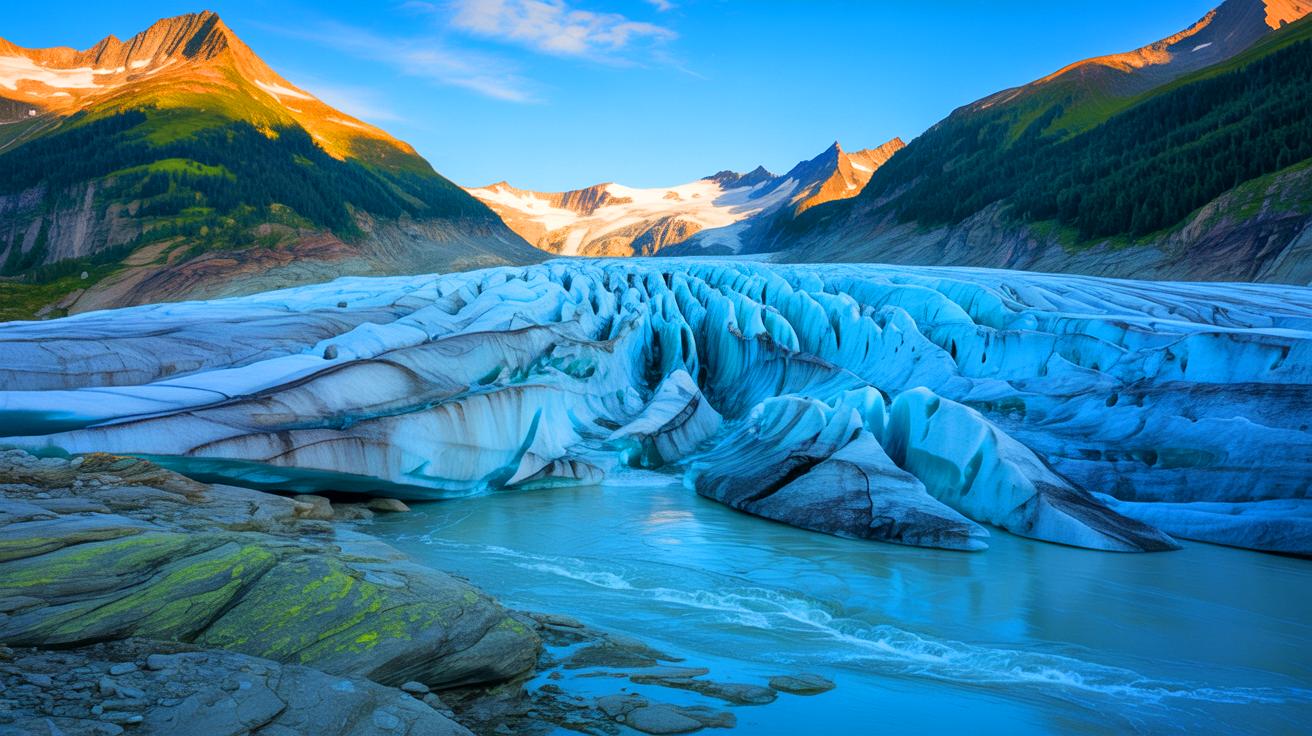
The haunting sounds of melting glaciers have captured the world’s attention, providing an audible symbol of climate change’s relentless march. Recently, French sound artist Ludwig Berger recorded the Morteratsch Glacier in the Swiss Alps, capturing its demise. This compelling project, titled Crying Glacier, offers a unique auditory experience that underscores the urgent need for environmental awareness and action as we confront the realities of global warming.
The Crying Glacier: An Artistic Exploration
Ludwig Berger’s project, Crying Glacier, serves as an evocative exploration of the Morteratsch Glacier’s slow disappearance. The name itself is a powerful metaphor, suggesting the glacier’s sorrowful demise. In a short documentary produced by Danish studio El Flamingo, the project was highlighted by the New York Times, bringing global attention to the phenomenon. The sounds recorded by Berger are unexpectedly lively and complex, filled with liquid murmurs that might initially remind listeners of a cheerful stream rather than a dying icy giant.
These recordings reveal a rich tapestry of sounds, from the gentle bubbling of ancient air pockets to the more dramatic cracks and pops that echo through the glacier. Each sound is a piece of history, encapsulated in ice for centuries or even millennia, now released as the glacier melts. This auditory experience creates a crescendo of activity, only to transform into a somber rumble that suggests the glacier is drowning.
Understanding the Sounds of a Dying Glacier
The sounds captured by Berger are not just a collection of noises; they represent the glacier’s life and its inevitable death. As the glacier melts, water flows more freely, creating a symphony of sounds that seem paradoxically full of life. However, Berger notes that the more alive the glacier seems, the closer it is to its end. This dichotomy raises critical questions about the environmental changes we are witnessing.
The recordings offer a visceral reminder of the consequences of climate change. As temperatures rise, glaciers worldwide are melting at unprecedented rates, contributing to rising sea levels and altering ecosystems irreversibly. The Morteratsch Glacier exemplifies these changes, serving as both a subject and a storyteller through its sounds. Berger’s work highlights the importance of understanding and preserving these natural archives before they are lost forever.
Implications of Melting Glaciers on Global Ecosystems
Glaciers are crucial components of Earth’s climate system, acting as freshwater reservoirs and influencing weather patterns. As these glaciers melt, they release vast amounts of freshwater into the oceans, disrupting marine ecosystems and affecting global sea levels. The recent collapse of a glacier section into the frigid waters of Antarctica, captured by Steve Allen, serves as a stark warning of the fragility of polar ecosystems in the face of rising temperatures.
These events have far-reaching consequences, potentially altering ocean currents and impacting global weather patterns. The loss of glaciers also threatens biodiversity, as species adapted to cold environments face habitat loss. The recordings from Crying Glacier serve as an urgent call to action, reminding us of the interconnectedness of our planet’s ecosystems and the need for immediate efforts to combat climate change.
The Role of Art in Raising Climate Awareness
Art has long been a powerful medium for raising awareness and inspiring change. Berger’s Crying Glacier project exemplifies how art can engage the public in environmental issues by offering a new perspective on climate change. By transforming the sounds of a melting glacier into an emotional experience, Berger invites audiences to connect with the issue on a personal level.
The project also underscores the importance of interdisciplinary approaches in addressing complex global challenges. By combining art, science, and technology, Berger’s work bridges the gap between data-driven research and public engagement, fostering a deeper understanding of our planet’s changing climate. As we listen to the sounds of the Morteratsch Glacier, we are prompted to reflect on our role in the planet’s future and the actions we must take to ensure its preservation.
As the world grapples with the ever-increasing impacts of climate change, the need for innovative approaches to raise awareness and inspire action has never been greater. Crying Glacier stands as a testament to the power of art in catalyzing change, urging us to listen and respond to the warnings of our planet. How will we rise to the challenge of preserving these natural wonders for future generations?