


This Asteroid Terrifies Scientists And Could Shatter Your Space Dreams: Hidden Dangers Lurking In The Cosmos
 By
Ethan Reid
By
Ethan Reid
| IN A NUTSHELL |
|
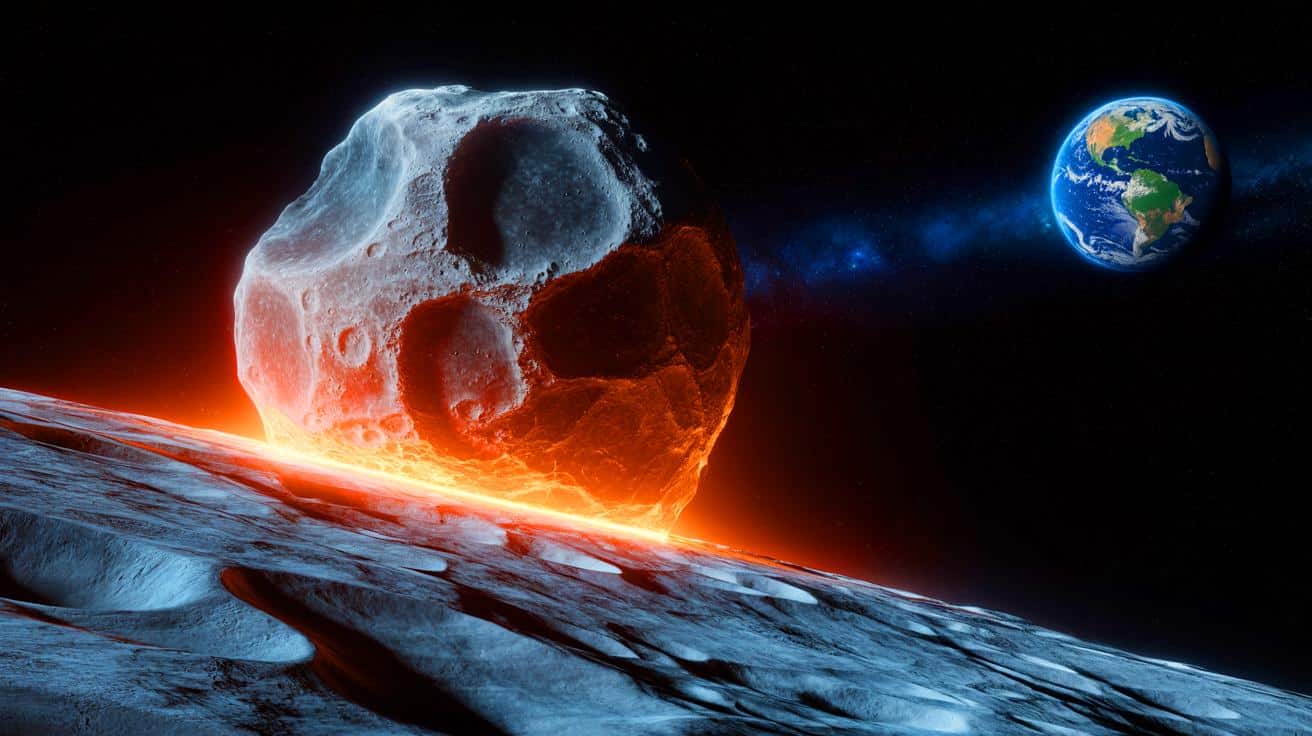
In recent years, space exploration has become an intrinsic part of our technological and scientific endeavors. A potential asteroid impact on the Moon by 2032, however, poses a significant challenge to these ambitions. The asteroid, known as 2024 YR4, is being closely monitored by astronomers due to its potential to collide with our lunar neighbor. While the risk to Earth has been ruled out, the implications of such an impact could be far-reaching, affecting everything from satellite operations to future Moon missions. This looming threat serves as a reminder of the vulnerabilities in our cosmic neighborhood and the importance of planetary defense strategies.
Potential Lunar Collision: A Small Chance with Big Implications
The asteroid 2024 YR4 initially raised alarms with the possibility of impacting Earth. Fortunately, further orbital calculations have eliminated this threat. However, the danger has not completely dissipated. There remains a 4% chance that it could strike the Moon by 2032. While this probability may seem negligible, the potential consequences are anything but.
The Moon, though barren and uninhabited, plays a crucial role in modern space exploration efforts. It is a key player in scientific research and a potential hub for future infrastructure. The possibility of an asteroid impact underscores the fragile nature of our near-space environment. Even an indirect collision with the Moon would necessitate a comprehensive reassessment of navigational, communication, and exploration strategies.
The scenario highlights the necessity of vigilant monitoring of celestial objects that could disrupt our space endeavors. The scientific community must be prepared to address such threats, ensuring that our technological progress remains unhindered.
Impact Debris: A Threat to Earth Orbit
The Moon is increasingly seen as a strategic platform for observation and exploration. An asteroid impact could eject a substantial amount of lunar debris into space. These fragments may not remain harmless, as they have the potential to contaminate Earth’s orbit.
The debris could threaten low-Earth orbit satellites and the International Space Station (ISS). Moreover, it could jeopardize the Artemis program’s planned manned missions. If any debris crosses paths with our orbital infrastructure, it could lead to catastrophic collisions or severe malfunctions.
Space agencies are particularly concerned about a Kessler syndrome-like cascade effect. In such a scenario, one collision could trigger a chain reaction, destroying additional objects in orbit. This potential for widespread destruction underscores the need for proactive measures to safeguard our space assets.
Mitigation Strategies: Uncertain Pathways
Diversion of 2024 YR4 is currently the preferred mitigation strategy. However, this approach requires precise knowledge of the asteroid’s mass, density, and composition. Current estimates suggest its mass could range from 33 to 930 million pounds, highlighting the uncertainties involved.
The optimal window for a detailed analysis mission will not open until 2028, leaving limited time to implement a safe diversion plan. Consequently, space agencies are also considering more radical options, such as kinetic impact or controlled nuclear disruption. These methods carry inherent risks, as poorly executed interventions could disperse fragments rather than neutralize the threat.
The potential effects of an explosion in lunar space must also be considered. Such an event could create unpredictable debris fields and disrupt future missions to and beyond the Moon.
A Unique Opportunity for Planetary Defense
Beyond the immediate risks, 2024 YR4 presents an invaluable opportunity to test planetary defense capabilities. Even if the asteroid never collides with the Moon, tracking and analyzing its trajectory can enhance our models and intervention strategies.
This scenario serves as a large-scale exercise for space agencies, allowing them to refine response protocols and prepare for more critical future threats. While the Moon offers a testing ground, Earth cannot afford to be caught off guard by a direct threat.
International collaboration is key, and this event could foster greater cooperation among space agencies, research institutions, and political bodies. It might accelerate the development of a comprehensive global space defense strategy.
Ultimately, this asteroid is more than a distant threat; it is a clarion call to bolster humanity’s preparedness against cosmic dangers. It could transform a potential risk into a scientific and technological opportunity, paving the way for advancements in planetary defense.
As we continue to push the boundaries of space exploration, the looming possibility of an asteroid impacting the Moon serves as a sobering reminder of the challenges we face. How can we ensure that our technological advances are safeguarded against such unpredictable cosmic events?