


“This Changes Everything”: Human Remains in Antarctica Uncover Chilling Secrets of Polar Exploration (and It’s Just the Beginning)
 By
Leah Morrison
By
Leah Morrison
| IN A NUTSHELL |
|
In 1985, a startling discovery on a frozen Antarctic beach reignited debates over the true history of human exploration in this remote region. The unearthing of a young woman’s skull on Yámana Beach by a Chilean professor set off a chain of questions that remain unanswered. Who was she, why was she there, and how did she die? These questions challenge the officially recorded timelines of Antarctic exploration. As researchers delve deeper into this mystery, they find themselves confronting the silence of the ice, uncovering a past that may have been forgotten but continues to captivate and perplex.
The Unexpected Discovery on Yámana Beach
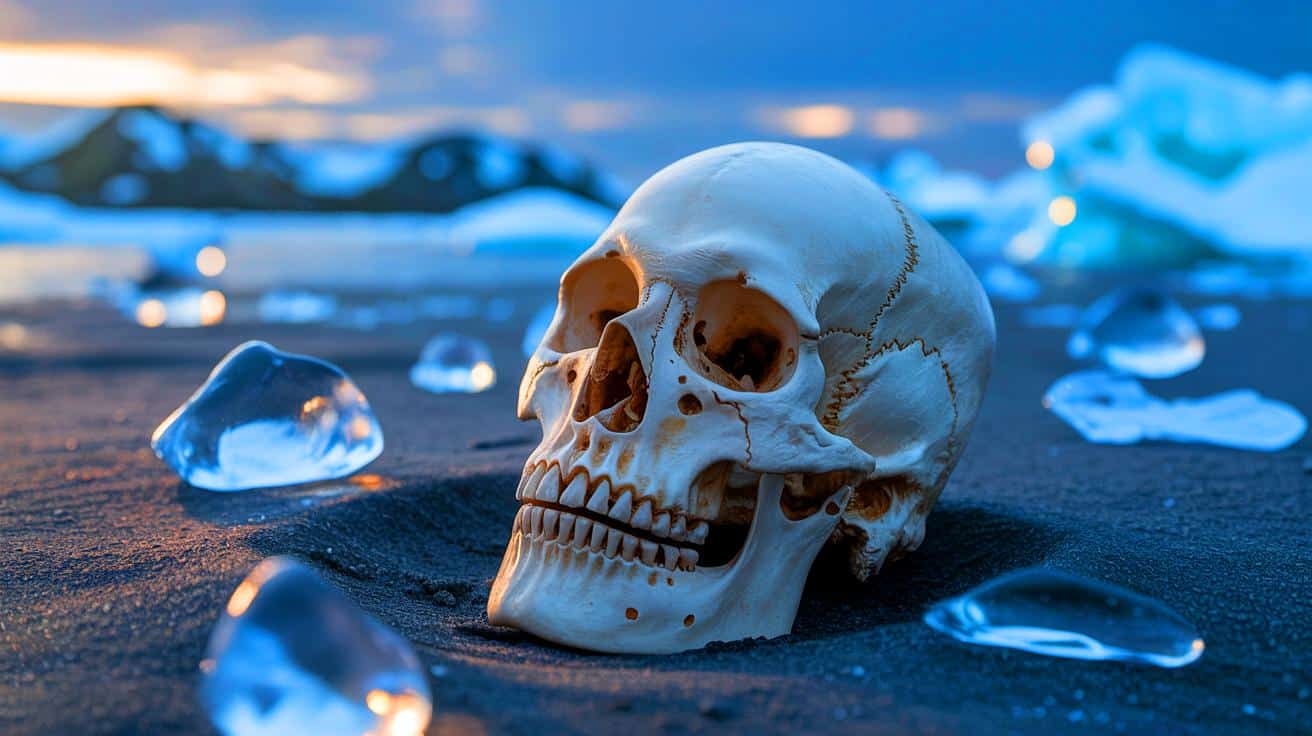
In 1985, Daniel Torres Navarro, a professor at the University of Chile, made a discovery that would challenge conventional historical narratives. During a routine beach cleanup on Yámana Beach, he stumbled upon a partially buried human skull. This find immediately raised numerous questions about its origin and the circumstances surrounding its presence on the icy shore. The skull was identified as belonging to a young Chilean woman who died between 1819 and 1825. This period is significant as it predates the first official recognition of Antarctica. Alongside the skull, a femur was found, suggesting a tragic end on these remote shores.
Navarro’s discovery prompted a re-evaluation of what was known about early human presence in Antarctica. The presence of a human skull from a time before acknowledged expeditions suggests that there may have been other, undocumented visits to the continent. This find not only intrigued archaeologists but also highlighted the potential for unknown histories lying beneath the Antarctic ice.
Speculation and Theories: Unraveling the Past
The discovery of the skull has led to a wide array of theories. Some speculate that the woman may have been a seal hunter, while others suggest she might have been abandoned or perished in a shipwreck. Another plausible theory is that she was buried at sea, with ocean currents eventually depositing her remains on the beach, where birds and other wildlife contributed to their dismemberment.
The harsh polar conditions have erased most traces of her presence, leaving no clothing or personal artifacts to aid in identification. This lack of physical evidence adds to the mystery and frustrates attempts to piece together her story. The absence of a visible grave or any personal belongings complicates the investigation, leaving researchers with more questions than answers.
Challenging the Chronology of Polar Exploration
This discovery has significant implications for our understanding of polar exploration. If the woman died between 1819 and 1825, her presence predates the first official observation of Antarctica by Russian navigator Thaddeus von Bellingshausen in 1820. This raises the possibility that other undocumented explorers reached the continent before recognized historical records.
Some researchers have even explored ancient Polynesian legends, such as that of Hui Te Rangiora, who may have seen lands covered in ice far to the south. Could ancient peoples have reached Antarctica? The lack of tangible evidence makes it difficult to confirm these theories, yet the persistence of these ancestral narratives maintains the intrigue and speculation surrounding early exploration.
Antarctica: A Continent of Mysteries
The discovery of this woman’s remains raises fundamental questions about what else Antarctica may be hiding beneath its ice. Far from being just a barren ice desert, the continent is a repository of memory, where the past is preserved in the silence of its frozen expanse. Each new find has the potential to upend accepted historical narratives.
This skull serves as a reminder that human exploration does not always adhere to official maps and timelines. The history of human presence in Antarctica might still be incomplete, and the continent’s secrets may only be revealed one discovery at a time. Such findings compel us to reconsider our understanding of history and to remain open to the possibilities of the unknown.
As the investigation into the origins of the young woman continues, researchers remain determined to uncover more about her life and death. The mystery of her presence on the Antarctic shores serves as a compelling reminder of the vast unknowns that still exist. What other secrets does Antarctica hold beneath its icy surface, waiting to be discovered by future explorers?