



“Whales Help Fight Climate”: These Giants’ Secret Role in Saving the Planet Revealed
 By
Ethan Reid
By
Ethan Reid
| IN A NUTSHELL |
|
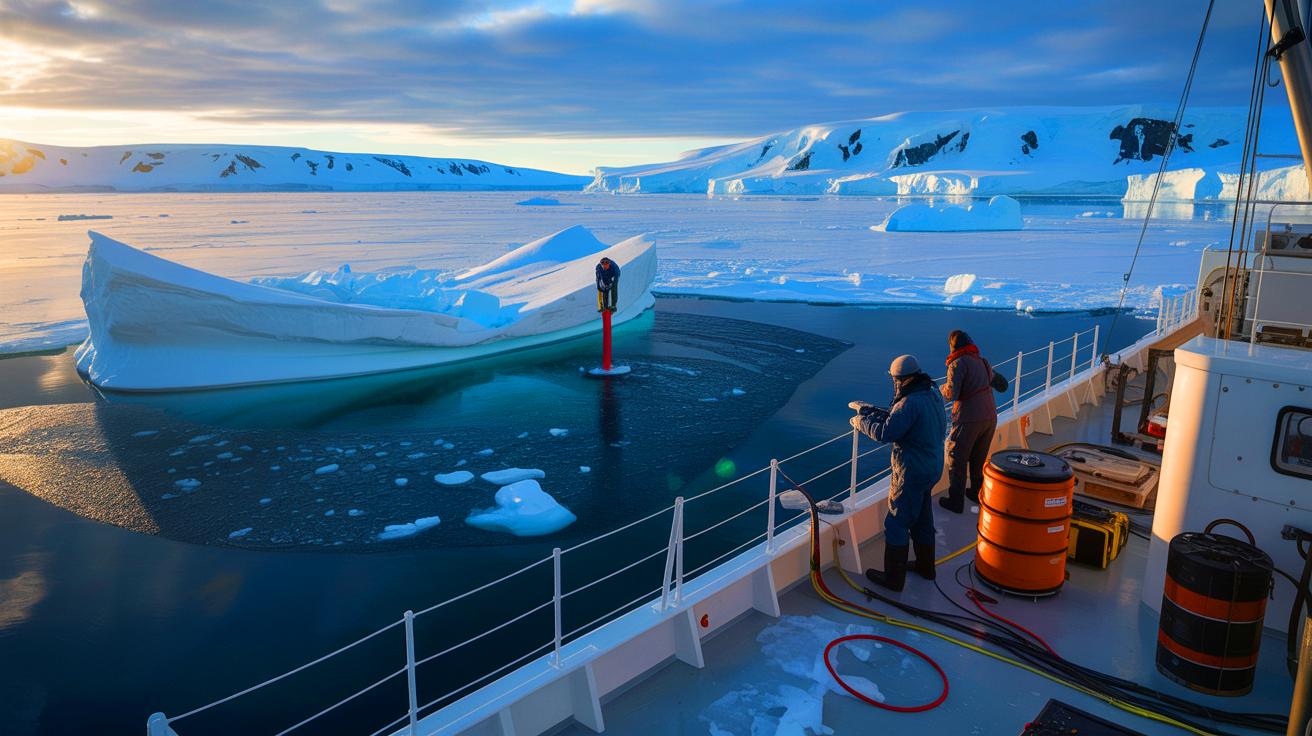
In the icy expanse of Antarctica, a groundbreaking exploration is underway, uncovering the vital ecological role of whales in regulating our planet’s climate. Scientists are delving deep beneath the Antarctic Peninsula, retrieving sediment cores from the ocean floor to understand the historical interplay between marine life and environmental changes. These cores, preserved in extreme conditions, offer invaluable insights into how these marine giants contribute to carbon cycling and support marine ecosystems. As researchers analyze these natural archives, a clearer picture emerges of how historical whale populations have influenced global climate dynamics, offering potential pathways for future conservation efforts.
The Quest for Antarctic Sediment Cores
Underneath the Antarctic Peninsula, researchers are conducting a meticulous investigation, extracting sediment cores from up to 1,640 feet below the ocean’s surface. These cores serve as a stratigraphic record, capturing the ecological and climatic history of the region. This area, once a vibrant marine sanctuary devastated by industrial whaling, now offers a unique glimpse into the past. Each layer within the cores acts as a temporal marker, revealing shifts in marine populations and environmental conditions over time.
Once retrieved, the cores are kept at an extreme temperature of -112°F to maintain their integrity. Scientists then dissect and distribute these samples across institutions for detailed analysis, investigating the biological, chemical, and climatic traces preserved within. This process is akin to reading Earth’s historical narrative, revealing changes in krill, fish, and whale populations alongside human-induced disruptions like plastic pollution.
For researchers, these cores are not mere relics of the past. They are pivotal in predicting how marine ecosystems might respond to current and future climate changes, providing a crucial understanding of the intricate balance within oceanic environments.
Unveiling Secrets with Environmental DNA
Environmental DNA (eDNA) analysis has revolutionized the study of past whale populations, enabling scientists to trace genetic remnants of these majestic creatures. This technique sheds light on how the depletion of whale numbers has altered the ocean’s carbon sequestration system, a natural process known as the biological carbon pump.
eDNA acts as an ecological time capsule, unveiling not only extinct species but also illustrating the global impact of their absence on climate balance. By quantifying the climatic implications of extensive whale exploitation over the past century, scientists aim to foster a deeper understanding of the interconnection between marine biodiversity and climate change.
This innovative approach is reshaping our comprehension of marine ecosystems, potentially guiding the development of ambitious conservation policies that recognize the critical role of marine mammals in carbon management and climate regulation.
Ancient Tunnels Stun: A 4,500-Year-Old Secret Shatters China’s History Forever
The Multifaceted Role of Whales in Carbon Cycling
Whales play a multifaceted role in carbon cycling, extending far beyond mere carbon storage. Upon their death, whales contribute to carbon sequestration through “whale falls,” where their carcasses sink to the ocean floor, creating nutrient-rich habitats that drive biological pumps. A single whale fall can equate to thousands of years of natural carbon flux concentrated in one area.
Furthermore, whales’ nutrient-rich excrement fertilizes phytoplankton at the ocean’s surface, providing essential elements like iron, nitrogen, and phosphorus. This fertilization enhances the entire marine food web, leading to increased carbon dioxide absorption through photosynthesis.
Each living whale sequesters significant amounts of CO₂, often surpassing the carbon capture capacity of terrestrial trees. This process, known as the “whale pump,” involves these marine giants redistributing nutrients between the ocean depths and surface, augmenting the photosynthetic activity of microalgae.
Consequently, a higher population of whales correlates with greater oceanic respiration and carbon fixation. As nature-based climate solutions gain traction in global discussions, protecting and restoring whale populations emerges as a credible, impactful strategy.
Conservation Implications and Future Directions
As the intricate relationship between whales and climate regulation becomes increasingly clear, the importance of marine conservation has never been more evident. Efforts to restore whale populations could significantly enhance the ocean’s capacity to sequester carbon, offering a natural solution to mitigate climate change.
Current international debates emphasize the necessity of integrating marine conservation into broader climate strategies. By safeguarding these key species, we not only preserve biodiversity but also fortify our planet’s resilience against environmental changes.
Looking ahead, the challenge remains: how can we effectively balance human activities with the need to protect these crucial ecosystems? As we strive to implement sustainable practices, the role of whales in our climate’s future invites further exploration and action.
As the scientific community continues to uncover the profound ecological functions of whales, their role in climate mitigation becomes an essential narrative in the broader environmental discourse. The potential of these marine giants to influence global carbon dynamics is both profound and promising. What innovative strategies will emerge to balance human development with the conservation of these indispensable oceanic allies?